
>> BALDWIN COUNTY
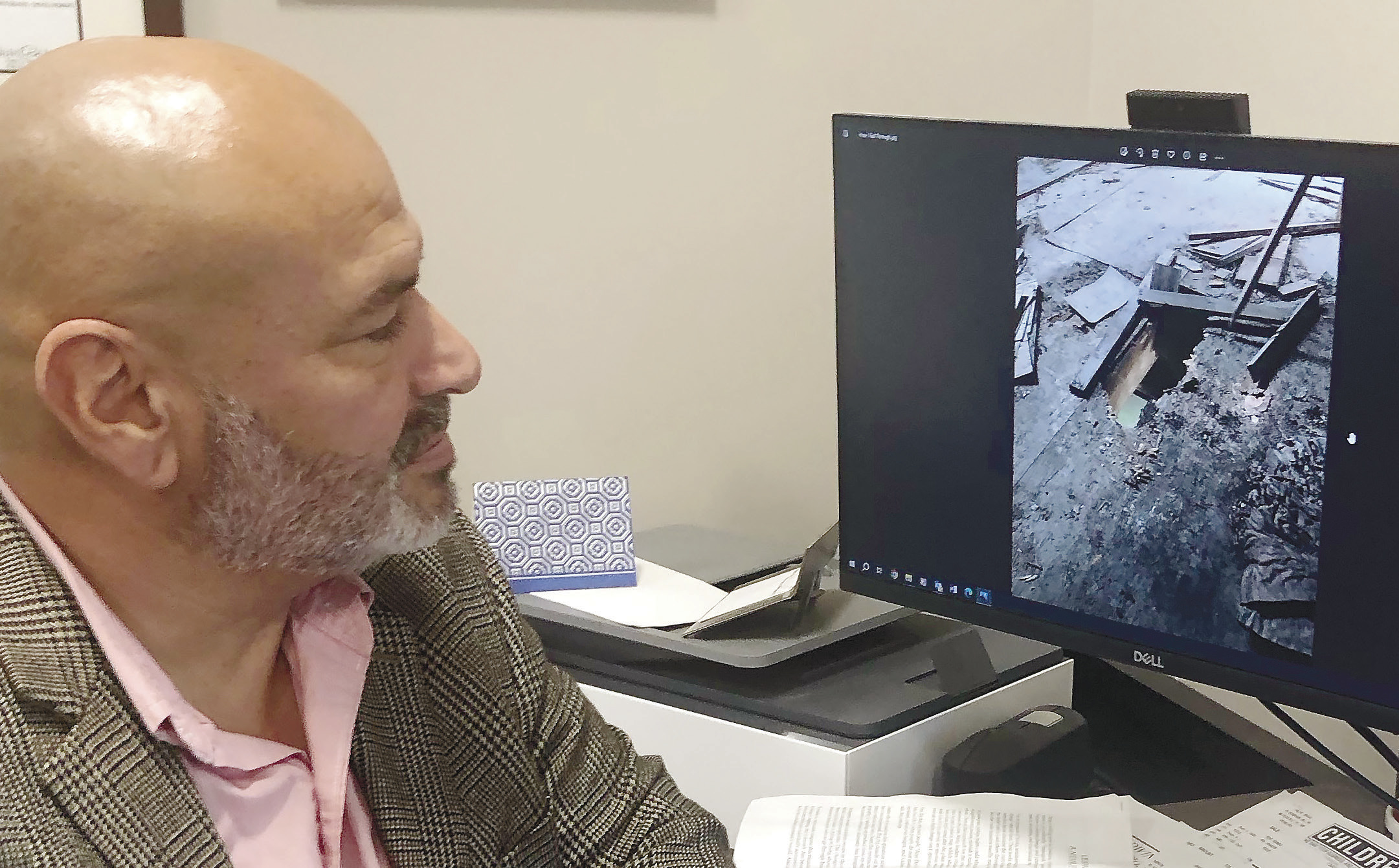
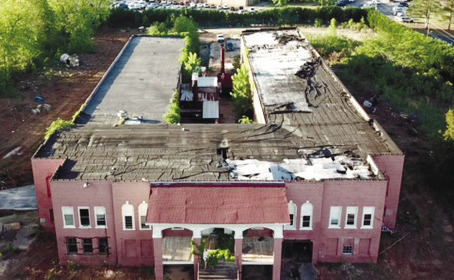
Baldwin County Manager Carlos Tobar has directed the transition of prison to watery playground since the beginning. His first-hand involvement includes facing the dangers of a dilapidated building, documenting the Old State Prison’s history, heading demolition of the prison and beginning preliminary work for the county’s new aquatic center.
Tobar assumed his duties in early January 2018, shortly after the saga of the building known as the Old State Prison on Highway 22 just west of Walter B. Williams Park began.
The prison was built in 1911 and served as the site of electrocution for individuals convicted of death penalty crimes. Electrocutions continued there until the facility’s closure in 1937. By the time the prison closed, 162 convicts had been executed in the chair.
Edward Atkins, whose grandfather was a chaplain at the prison, showed considerable interest in the property at the time Tobar was hired as county manager.
“He called and said he wanted to do a documentary,” Tobar recalled. “And, at that same time, one of the commissioners made the comment he would love to see that prison come down.” Those two conversations led to a visit to the aging structure by Public Buildings Superintendent Bruce Solomon and Tobar. The pair discovered how dilapidated and unsafe the building was after Tobar suffered a misstep during their exploration.
“We went to the side of the building that looked a little stronger. I walked toward the front where the admin’s office had been. As I started walking on the plywood floor, lo and behold, I fell through a hole in the plywood. Luckily, I was able to hang on to a floor joist and pull myself up so I wouldn’t fall through,” Tobar recalled.
After experiencing his own accident, Tobar expressed concern for youngsters climbing the fence and going on the prison site. He realized the danger the building posed and did not want anyone else getting potentially injured there.
“After seeing kids climb the fence, that’s when I told the commissioners we should consider tearing that prison down,” said Tobar.
The County Commission decided then to pursue demolition.
An extensive inspection of the prison was ultimately done, and a lengthy, detailed report was issued. That assessment concluded it would take $5.2 million to stabilize the building, with considerable additional funds required to make it usable.
From documentary to demolition
According to Tobar, Atkins wanted the county to donate the building to him so he could transform it into a “haunted house experience.” However, there was no feasible way for Atkins to raise the $5.2 million and donating the building was not an option for the county.
“Mr. Atkins was upset I did not inform him the county was going to tear down the building,” Tobar said. “From experience at other jobs, I was concerned he would trespass and chain himself to part of the building when we tried to tear it down. So, I wanted to avoid the drama and informed the contractor to tear it down starting from the back.”
The commissioners in May of that year discussed the issue and decided to allow Atkins the opportunity to film his documentary before demolition began, but with restrictions. Atkins was not allowed inside the building or underneath it due to safety concerns. Once that filming was done, demolition was the plan, but there was a small problem.
“The commissioners did not have any money budgeted to tear down the building, and they did not want to allocate money for it. They told me to get creative,” said Tobar.
Tobar contacted some companies, and one contractor made a good offer for a public-private partnership.
“The company would tear down the building in exchange for the bricks. It only took a day to tear that thing down,” Tobar said. “The guy cleaned up the bricks and stacked them on pallets. He hauled the bricks off and sold them.”
The county cleared the remainder of the debris.
“Once the bricks were removed, the Road Department moved in and started recycling the concrete and cleaning up the site. Inmate laborers contributed greatly to the cleanup,” Tobar said. “Most of the recycled concrete foundation was used as a road base for Cabin Creek Road off Log Cabin.”
New beginnings
After demolition, the site would eventually be given a new purpose: to become home to Baldwin County’s Aquatic Center. The Aquatic Center is a water park modeled after one in Dublin funded by SPLOST proceeds and grant.
“We were awarded a grant from the governor’s office through the Office of Planning and Budget in the amount of $2.2 million, and that will be matched by SPLOST funds in the amount of $2,135,000,” Tobar said. “All that will go towards Phase 1 of construction.”
The initial phase of the park will include a lazy river, swimming pool, bathhouse and picnic shelter. Phase 2 will include a splash pad, water slide, and a kid-oriented splash area, bringing the projected cost of work in that phase to just under $900,000, with half of that coming from SPLOST funds and the remainder hopefully from a Land and Water Conservation Fund grant, which the county has applied for.
The county manager is hesitant to give a timeline for the work to start.
“The final design plans should be done in the next four to six weeks,” Tobar said. “I would say that construction documents should be ready later this summer. We can then advertise Phase 1 for construction.”
The Land and Water Conservation Fund grant will determine the schedule from that point.
“We will know about the grant in September,” Tobar confirmed. “It could very well be that we combine both phases and bid out one project if the funding comes through for Phase 2.”
If that grant is not approved, SPLOST funds will be used and likely would delay any later phases.
The county manager is proud be part of offering a new beginning to the former site of the Old State Prison.
“It’s a little surreal,” he said. “We are excited that this once-blighted property will have new life and will create new and wonderful memories for our young people for generations to come.”