
>> LAW ENFORCEMENT
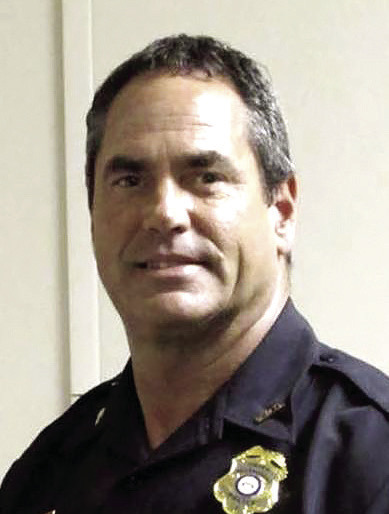
‘ If at first you don’t succeed, try again’ is a popular phrase, and Milledgeville’s head police official is taking that slogan one step further.
Milledgeville Police Chief Dray Swicord said this past Tuesday he desperately needs the city council to approve a significant pay increase for his patrol officers and investigators, so he is upping his request.
“Last year, I asked for a 10 percent increase in pay, and they didn’t give it to me,” he said. “This year, I’m asking for 20 percent.”
Swicord, now in his 11th year at the helm of the police department, said that increase would still leave the city paying $5,000 less than the county pays a starting deputy, and the situation is critical.
“I have 46 sworn (slots); that’s my patrol and detectives,” he said. “I’m down 13. And, I’ve got about 10 in the hopper, waiting on some kind of clarification of what council is going to do. It’s very possible if this doesn’t come to some sort of understanding or agreement that, by July, we would be at half staff, which would be devastating.”
The city’s fiscal year runs from July 1 to June 30, and Swicord met with the mayor and council two weeks ago to make his argument for the pay increase. He told council members the starting pay for a Milledgeville police officer is $36,652.13, or between $17 and $18 per
It’s very possible if this doesn’t come to some sort of understanding or agreement that, by July, we would be at half staff, which would be devastating.
– Milledgeville Police Chief Dray Swicord hour.
“The Sparta police department pays $20 per hour, in the $40,000s,” Swicord said. “The City of Gordon, Mcintyre, Ivey, they pay $20 per hour.”
The chief said the increase would only get his officers about even with some other departments, still behind others.
“If we get the 20 percent increase, if they give me what I am asking for in this budget cycle, my starting pay will go from $36,652.13 to $43,982.56. That’s right at $20.04 per hour. We will be comparable with Sparta. We will not be comparable with Baldwin, Putnam, Jones, those counties.”
He said those local governments and others start deputies at between $50,000 and $51,000 annually.
Swicord said his department receives thousands of calls for all types of services annually, and the number appears to be increasing.
“Last time I checked, for last year, we had 90,000 calls for service. That’s a police officer going to an actual call. We roughly average on a good night 50 calls a night, between four police officers.”
He added that the city police force worked about 1,900 wrecks in Milledgeville last year.
Swicord said overtime is about the only way to make up for lack of personnel.
“I’m almost to the point where I have people burned out,” he commented, pointing out that some officers will give up weekends off to work.
He also noted that the situation is more complicated by private parties paying officers for services such as security at functions.
“My fee is $50 an hour, four hours minimum. And these people don’t blink an eye. So, why would you want to come in and work downtown at $19 per hour when you can make $50 an hour sitting in your car?”
Milledgeville Mayor Mary Parham-Copelan said the city is going through the budget process for all departments.
“Once we hear everyone’s requests, we will sit down and see what we can do,” she said. “The thing with all of us, mayor and council, is feasibility and sustainability. We would love to give them exactly what they want because every employee is highly valued with us.
“We’ll never be able to pay them what they are worth,” she continued. “But, we certainly have to become more competitive, to be more than a training ground, yet become a retention ground.”
Swicord explained that other cities and counties are taking advantage of federal COVID relief funds to help with salaries. He said Milledgeville has the use of over $6 million to use.
“It’s free money, but it has to be spent by 2026,” she said.
Swicord said he believes City Manager Hank Griffeth does not feel the increased salaries will be sustainable with local funds once the federal money is gone.
“I said, ‘You’re going to have to do something to figure out how to make it sustainable… You’re going to have to do something. Every other city and county is using these funds. They’re doing the same thing.’ But,” he added, “they’re retaining public safety. We’re not.
“You either spend it now or you’re going to spend it later.”
Parham-Copelan confirmed approximately $6.5 million in the relief funds had been received by the city. She said she was aware that other cities and counties are using the funds for salary purposes but was hesitant to say that money should be used to leverage local salaries.
“A majority of your counties and cities are using that money to leverage new officers, new hires, rehires,” she said, but noted, “you use that money, once it is gone, how will you be able to sustain those pay increases? You don’t want to give someone a raise and then have to go back and say, ‘Okay, now we have to step back and kind of have to drop the levels down.’ That wouldn’t be good, certainly wouldn’t be good for morale.”
Swicord said, if the city leaders don’t grant the pay hike request, the consequences could be severe.
“You will lose personnel. They will have to make a decision on the services the police department is going to give the community. It’s not there, can’t be sustained with the number of people I have.”
Parham-Copelan said final budgetary decisions must be made at least by June in order to have a balanced budget July 1.