
The Baldwin County School District is the only district in Georgia to be awarded a $50,000 Farm to School Turnkey Grant from the United States Department of Agriculture (USDA).
The Farm to School program is a part of the BCSD Wellness Initiative and works to inform students about agriculture and to incorporate gardening in STEAM classes.
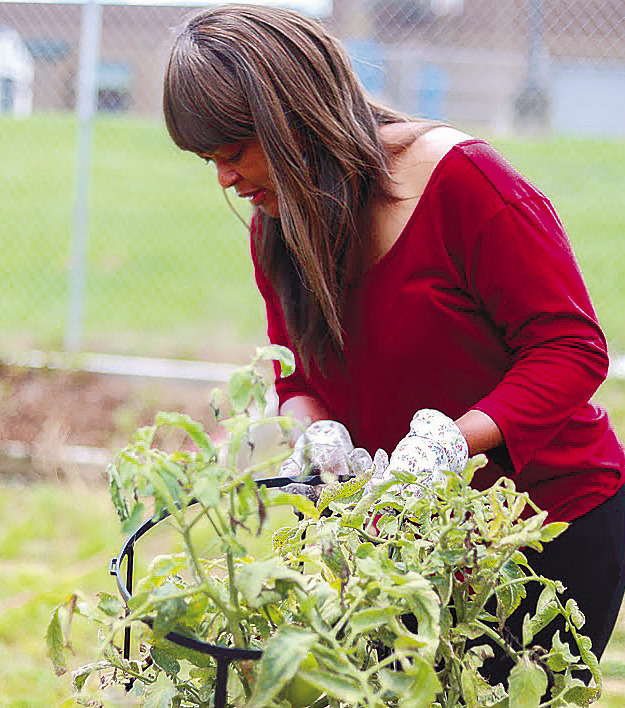
“Here at the Baldwin County School District, we are teaching our young people about where their food comes from, how to grow their own food, when it’s grown, how to harvest it and how to cook it. We’re also using our gardens in the classrooms as an interactive learning tool,” said A’Keti Mayweather, the wellness coordinator and garden project manager for the Baldwin County School District.
According to Mayweather, the gardens are incorporated into math, science, social studies and reading classes in the majority of the schools. Due to this, the school district also works to improve the garden to bring that STEAM component into the agricultural lessons as well.
“We wanted to expand our Farm to School efforts by showing our students another way of growing food,” said Mayweather.
“So, our students will be learning how to grow food traditionally with hydroponics and will also learn how to grow food aquaponically.”
There are currently 97 beds across seven of the schools. According to Mayweather, all of these gardens will have a proponent of the grant.
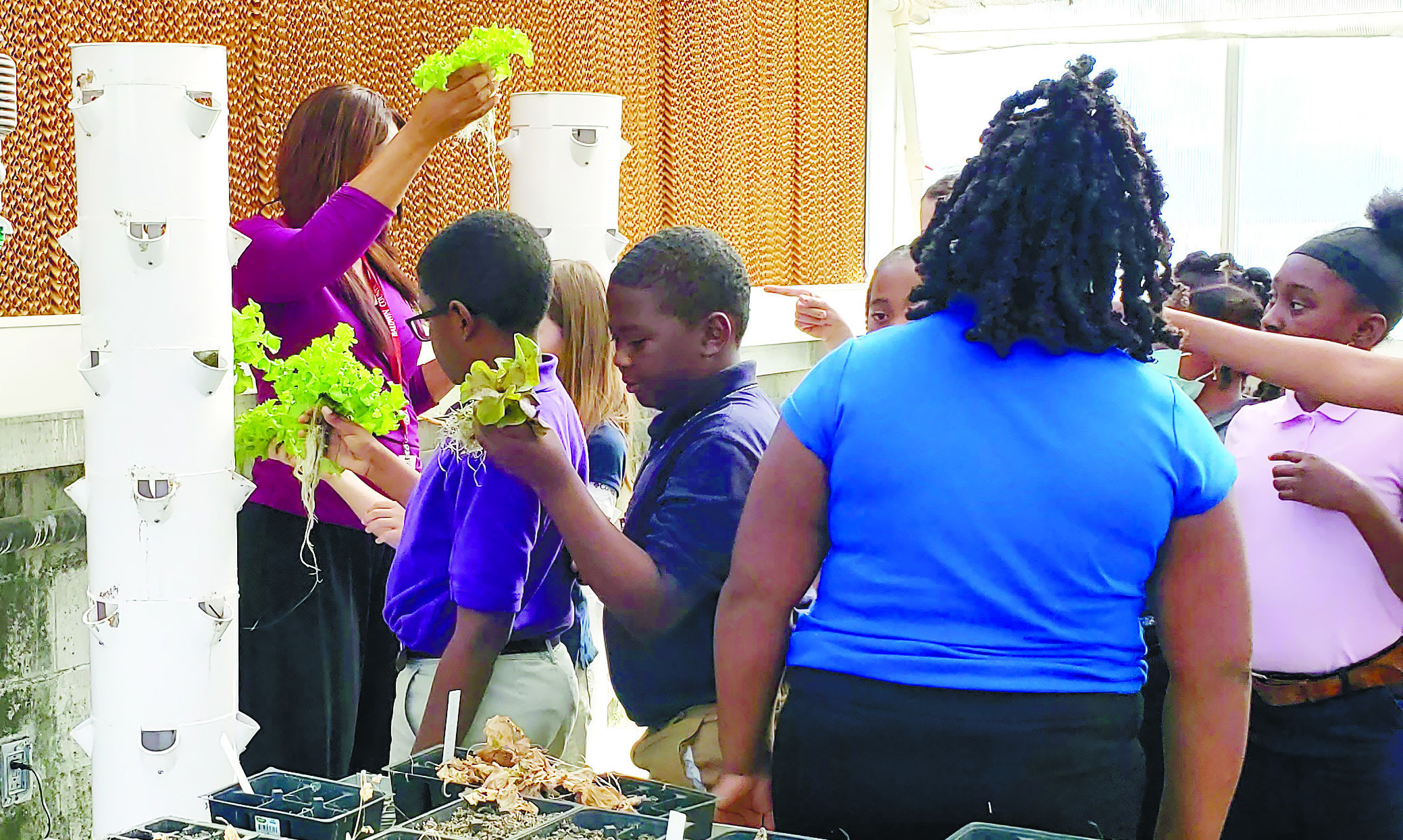
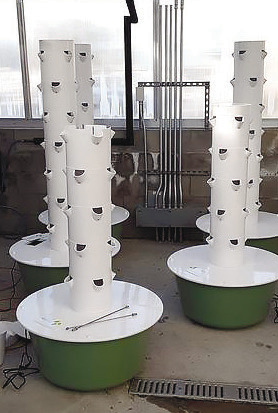
The grant allows for the use of hydroponics and aquaponics within the District’s STEAM labs.
Hydroponics refers to the growth of produce using only water and minerals, and aquaponics refers to the growth of produce using waste from fish, which is a type of fertilizer.
“All of our STEAM classrooms will have hydroponic systems as well as aquaponics systems,” said Mayweather. “Students will learn about the ecosystem it takes in order to grow food, take the pH balance of the different nutrients and the waters that the vegetables will grow in and so much more. It’s an entire scientific process that they’re about to engage in.”
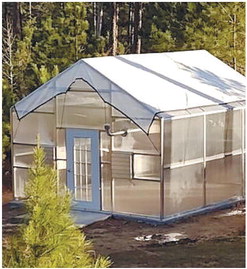
These systems will be in effect from kindergarten through middle school in what is referred as ‘growing labs’. At the high school, the school district has partnered with Fort Valley State University to build an additional greenhouse for a bigger aquaponics unit. The greenhouse is hoped to be finished and ready to be used by October.
“We’re hoping that as the kids matriculate through the school system, they can see the smaller growing systems in the elementary schools and see larger systems in place as they transition into middle school and further into the high school,” said Mayweather. “Teaching gardening and gardening principles throughout their educational journey offers teachers an excellent way to reinforce their curriculum standards by giving our students a hands-on opportunity to engage in that whole process.
That is why we’re always looking for creative and innovative ways to bring the garden into the classroom.”
Beyond the classroom, the Farm to School program has Americorps service members known as Foodcorps that teach gardening, offer taste testing and work with teachers to create curriculum around the garden.
In addition, any produce grown in the gardens, students can sell back to the cafeteria, give it to the school based farmers market or food may be donated to food pantries, soup kitchens or food boxes.
“Through this program, we’re teaching our students how to be self-sustaining and self-sufficient. In addition, we teach them entrepreneurial skills and how to enterprise,” said Mayweather. “These are all essential skills that will go beyond the classroom and impact their futures.”
The Farm to School program is always looking for ways to improve their curriculum, grow the gardens and involve the community.
“We have been very blessed, not only for this grant but to receive help from our service members, the community and local donors,” said Mayweather. “Thank you to everyone who has assisted us in growing the Farm to School program.”