
Photos and Story by Bailey Ballard
bailey@msgrnews.com
Georgia’s Old Capital Heritage Center at the Depot and the Ocmulgee Archaeological Society (OAS) hosted Milledgeville Archeology Day on Saturday at the Depot.
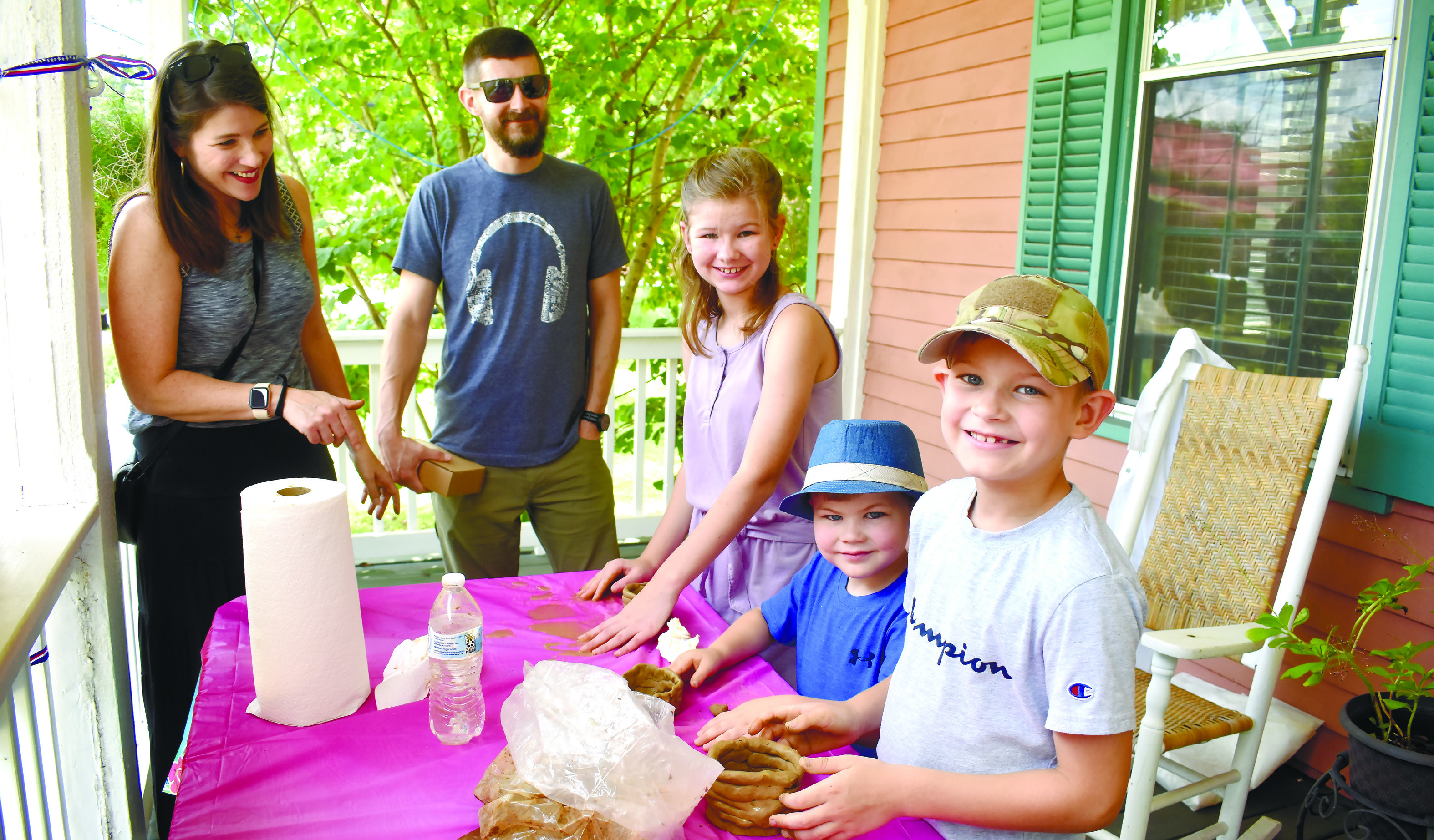
The Depot had two activity rooms inside and a pottery workshop on the front porch. The entire event was hosted by members of the GOCHC and OAS along with several volunteers.
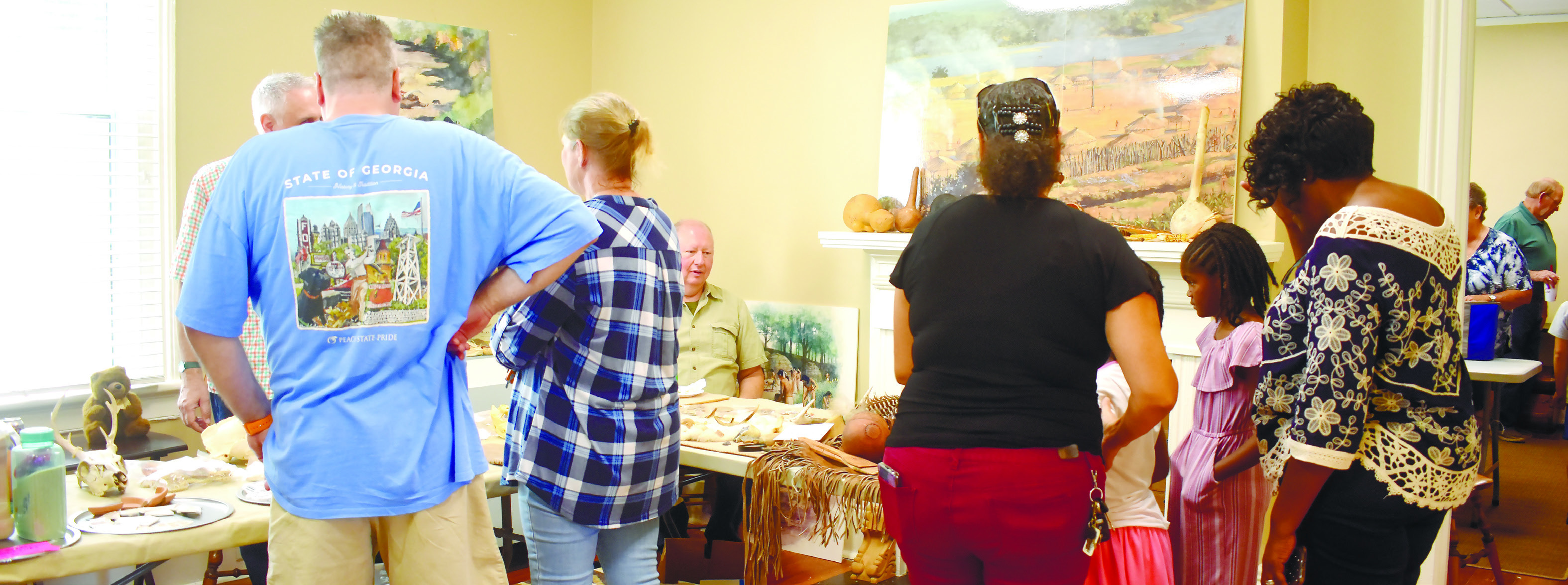
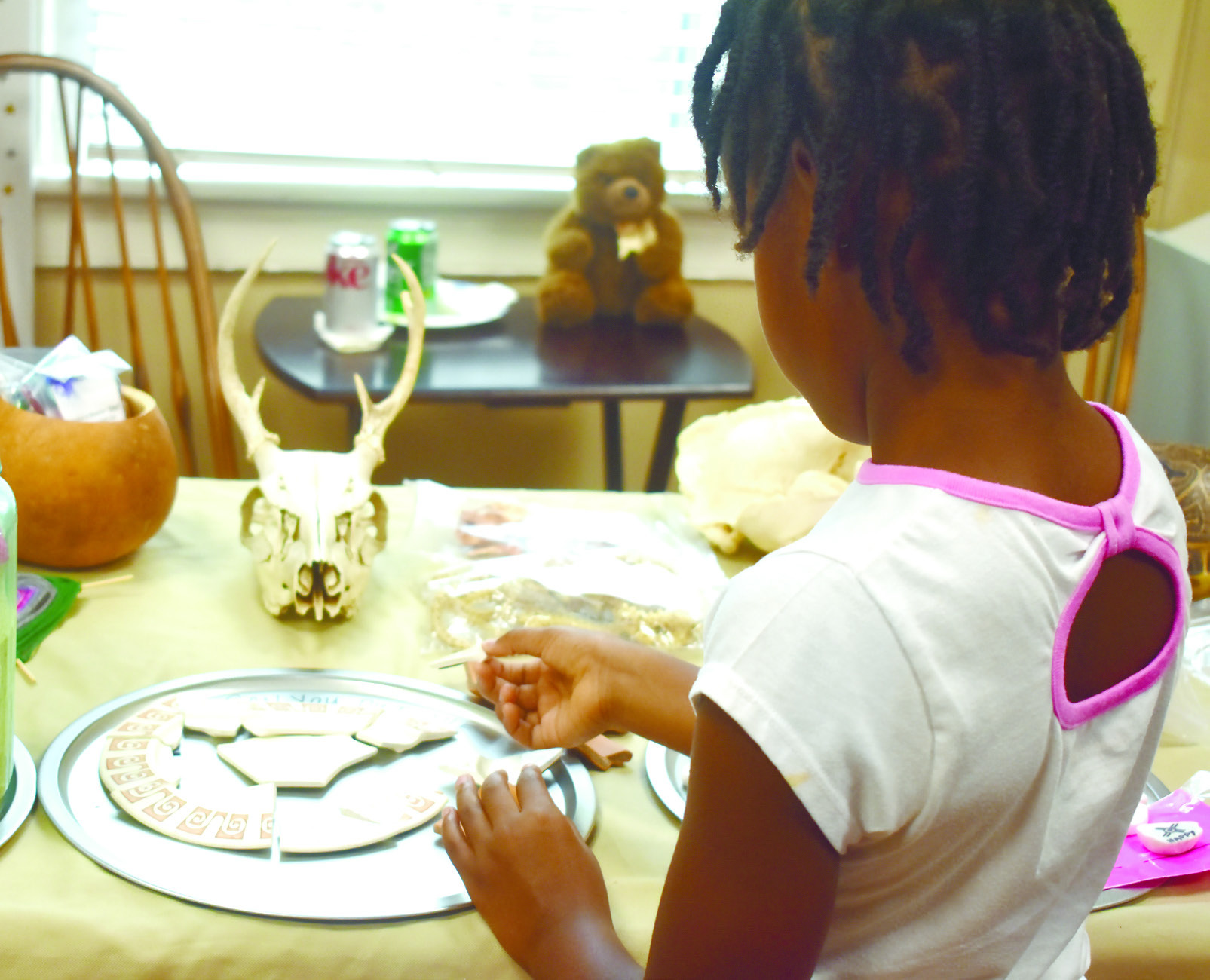
The stations were split by Native American lifeways, artifact identification, and pottery-making. Native American Lifeways taught attendees about different aspects of Native American life, including clothing, animals, environments, pottery and their language. The activity was led by volunteers Bill Grimes and Frank Brown. Many participants enjoyed ceramics mending, trying to guess what happened in an environment based on things buried in the sand, and seeing an arrangement of animal skeletons and examples of food, clothes and more along the table.
Artifact identification allowed attendees to take a closer look at pottery and projectile points over a historic timeline.
Former president of OAS John McBride assisted visitors in learning not only about the timeline of the pottery presented but how it was made. OAS member David Mincey was a projectile point expert and described the display and its timeline to guests. OAS secretary and professional archaeologist Stephen Hammock also helped to answer questions.
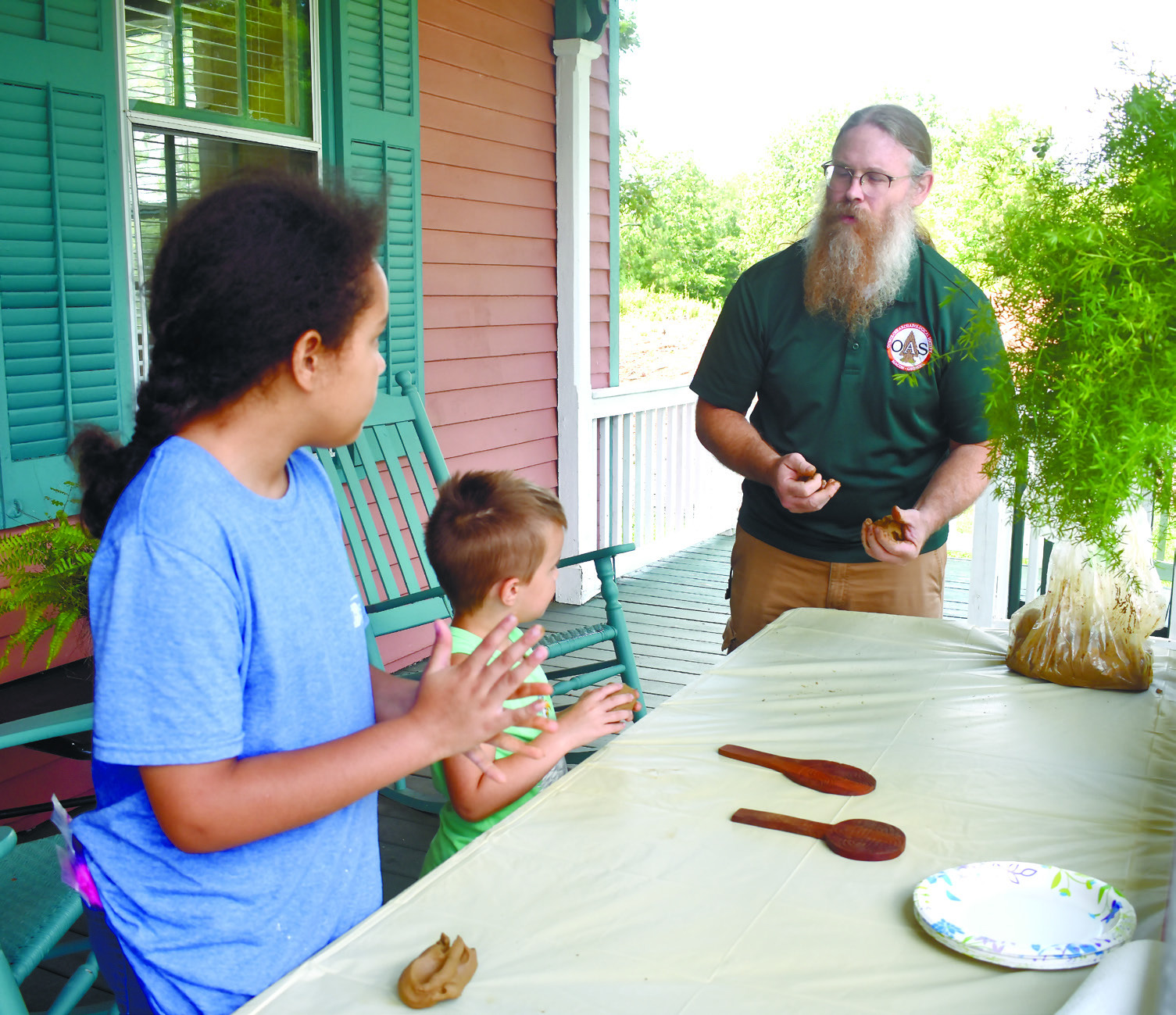
Pottery-making was hosted by OAS members Tim Elliot and Peg Jones. Using clay, participants made pots, bowls, coil pots, and even animals.
Wooden paddles were used to carve designs into the pottery, just as the participants learned through the pottery display in the artifact identification room.
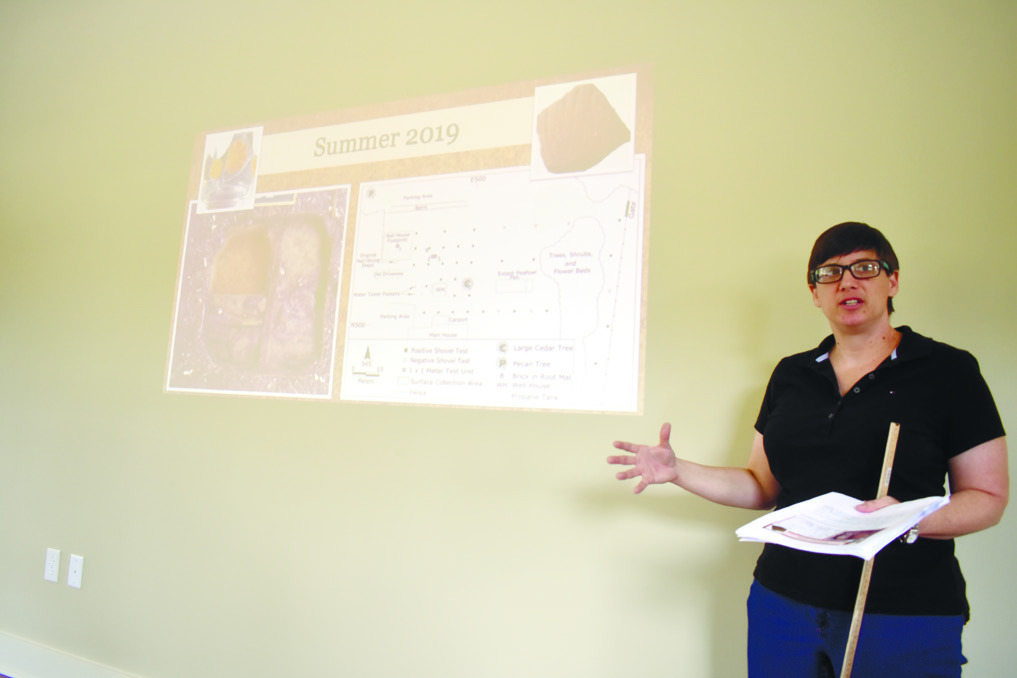
To end the day, Archaeologist Elizabeth Williamson with Southern Research Historic Preservation Consultants discussed archeology at Andalusia Farm. Williamson discussed the many soil tests done at Andalusia from 2019-21. During these field seasons, the alliance was looking for evidence of other buildings on the property, the brick paths that helped Flannery O’Connor walk around the farm, and an antebellum occupation.
The presentation walked attendees through the process of a field session, what they were looking for, what was found and what those findings did or were speculated to mean.
Milledgeville Archeology Day was a success according to both host groups and GOCHC and OAS look forward to hosting it again next year.
More photos will be featured on our Facebook page.