
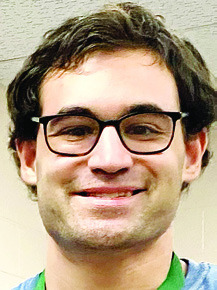
A Milledgeville man was indicted by a federal grand jury last week on charges that originated during early voting in Jones County last month.
Nicholas Wimbish, 25, is charged in the indictment with mailing a bomb threat, conveying false information about a bomb threat, mailing a threatening letter and making false statements to the FBI.
According to a press release by the Middle District of Georgia U.S. Attorney’s Office, Wimbish was indicated Nov. 19. If convicted, he faces a maximum penalty of 10 years in prison for the bomb threat count and five years each for the other three counts.
Wimbish was arrested Nov. 4 and made his initial appearance in the Middle District of Georgia Circuit Court Nov. 5.
The indictment states that the defendant was serving as a poll worker at the Jones County Elections Office Oct. 16 and had a verbal altercation with a voter. Later that evening, Wimbish allegedly conducted an online search and the following day mailed a letter to the Jones County Election Superintendent, purportedly from a “Jones County voter.”
The letter appeared to have been written to make it look as if it was written by that voter and contained threats against election staff. It concluded with a handwritten note that contained the bomb threat.
Wimbish is one of four interns from Georgia College & State University who volunteered in Jones County’s May primary election as well as November’s presidential election.
Unlike the other students, Wimbish was also an associate professor who was working toward a graduate degree.
The initial complaint was received by the Jones County Sheriff’s Office Oct. 22 after the letter was received at the Elections Office. Gray Police Department Lt.
Thaxton Pennamon was dispatched to the call due to the Government Center being in the city limits.
The initial report focused on the irate voter, who was the first person of interest. After taking the report, Pennamon took possession of the letter as evidence and contacted GPD Investigator Maj. Mark Robinson.
One interesting note about the original GPD report was Pennamon’s initial contact at the elections office was with Wimbish, who directed him to Election Superintendent Marion Hatton.
In a Nov. 21 interview, Robinson said he was at home when Pennamon called him about the letter, and he came back to the office. He said, based on the information received at that point, the investigation narrowed to the voter being a person of interest, and he tried to contact him.
The attempt was unsuccessful, and the major said he reached out to a contact in the FBI the next morning.
“That was because the letter was mailed and the nature of what was in it,” Robinson said.
He said he briefed the contact about the letter, and an agent returned the call within the hour.
Robinson said he turned the letter over to the FBI. He said the FBI took over the investigation from there, but he assisted with the interviews.
The major admitted, when he turned over the case, he had an uneasy feeling that the letter was not what it had at first appeared.
According to information in the DOJ press release, ultimately the investigation shifted to Wimbish, and the letter was found on his home computer.