
>> COUNTY RECREATION
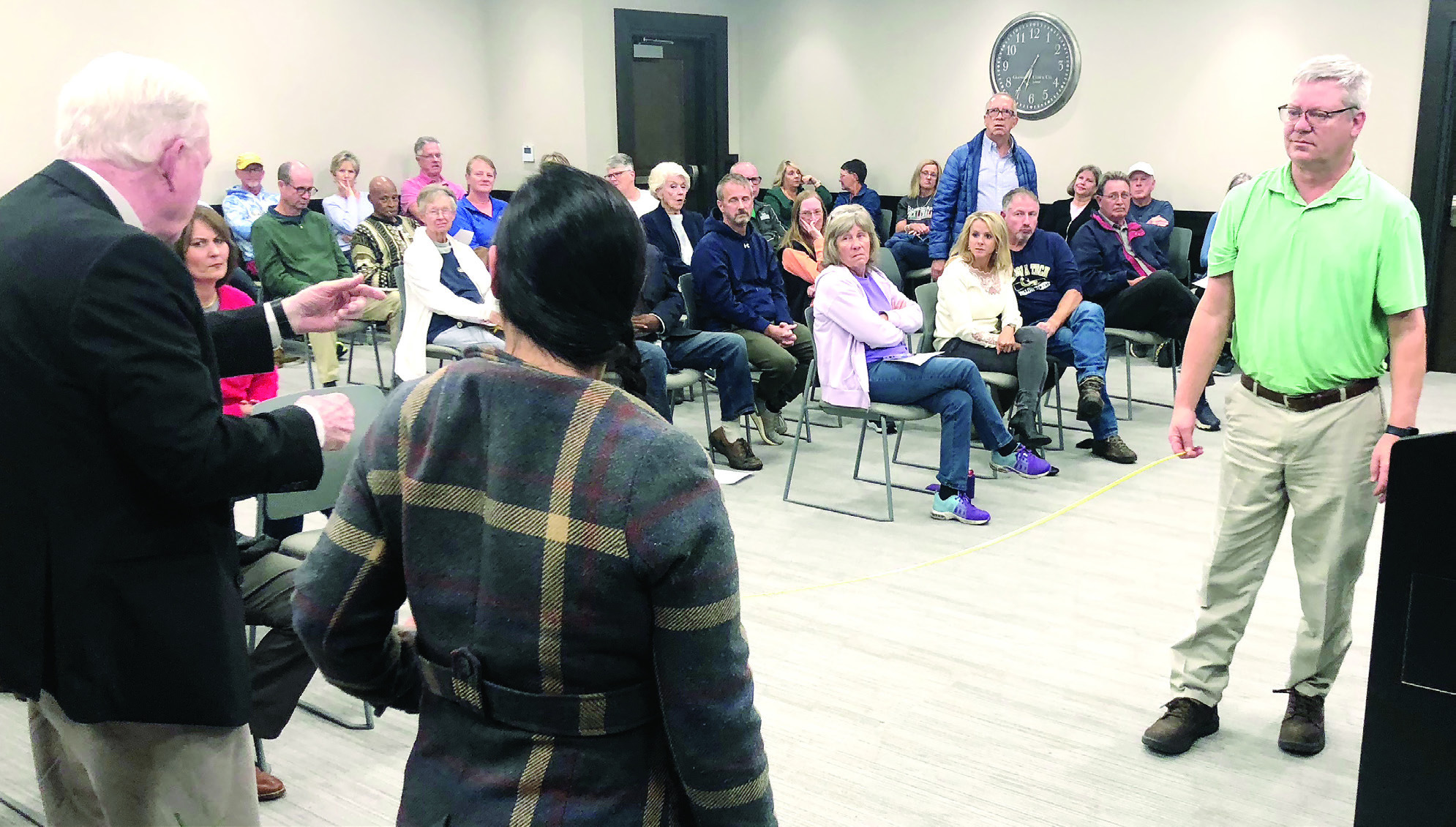
The Baldwin County Board of Commissioners Tuesday night agreed to spend extra money in the short-run with the goal of minimizing costs later.
Following a thorough discussion and input from three local pickleball enthusiasts, the commissioners voted to approve the reconstruction of the four tennis courts at the county’s recreation complex at Walter B. Williams Park. The plans call for two of the four existing tennis courts to be converted for pickleball play only.
The total cost of the project is estimated to be around $120,000, and approximately $40,000 of that will come from the Milledgeville Pickleball Club (MPC), a non-profit corporation that has already raised that money. The balance will come from SPLOST funds, County Manager Carlos Tobar said after going through the details of the work.
Tobar explained that two proposals were received, one with a fiberglass overlay at a lower cost with a lifespan of five to six years, the other starting with the total removal of the existing courts and installing a new base/foundation and new surface with a top coat.
Considerable discussion ensued, much of it focused at first on which courts would be improved. Initially, there was confusion as to whether the proposal was for the tennis courts or the eight courts dedicated to pickleball play adjacent to those. Ultimately, it was agreed that the proposal was for the tennis courts, but not before District 5 commissioner Johnny Westmoreland said the greater need was not there.
“You’re talking about changing the ones on the tennis courts, to fix that,” he told Tobar. “We’ve got problems on the other side. This is the main place people are playing,” he continued, using the diagram of the pickleball courts. “This is the liability right now.”
District 4 commissioner Henry Craig said there was a reason to improve the tennis courts first.
“If we do the tennis side, there’s a place to play while that side is out of service,” he suggested. “They can still be playing on the rough side.”
The issue of space between the new courts drew considerable debate, and Craig used a tape measure to demonstrate how narrow eight feet is. The tentative outcome was 10 feet between courts, reducing the number available for play to six.
Before the commissioners’ vote, individuals from the audience addressed the board.
Tony Ross said he was the person who had initiated a discussion about a public-private project, and, as part of that process, he obtained a proposal to upgrade both sets of courts. The quote of Barber Tennis LLC out of Florida was to convert the entire existing playing area into 20 newly-surfaced pickleball courts for $120,000.
The contract included a two-year guarantee for surface peeling and fading but not structural cracking. Ross disagreed with Tobar’s assertion that the lifespan of the fiberglass overlay was five to six years. He said minor adjustments to the surface possibly would be needed then, but not replacement MPC President Jeff Moore, who took office Dec. 1, briefly discussed the virtues of pickleball play and highlighted the increase in the number of participants.
“In the past year we have increased from 60-70 players playing three to five times a week to now we have upwards of 250 players coming out a week to play in the mornings, the evenings, and weekends.”
Commissioners resumed discussion, and Craig subsequently made a motion to approve the project as outlined by Tobar. Following a second by Westmoreland and questions as to the net price to the county, Craig added that his motion was contingent upon receipt of the $40,000 in private funds. The motion passed unanimously.
MPC is committed to enhancing pickleball play in Baldwin County through monetary contributions, promotion of activities, and volunteer labor for improvements at the recreation complex, Moore told the commissioners. Following the meeting, he stated the money was available.
When asked his opinion on the condition of the eight pickleball courts, Moore said, “If there is a hard ground freeze before spring, those cracks will be gullies. Because that’s where the water is going. As that ground swells, it pushes the asphalt apart.”
Tobar said he anticipates work will start in early January, weather permitting.