
(Ed. Note: This is the fourth in a series of articles dealing with mental illness from a Baldwin County viewpoint. This week: a look at the challenges facing the District Attorney and Public Defender’s Office.)
The District Attorney and Circuit Public Defender in the Ocmulgee Judicial Circuit by the nature of their positions represent opposing interests, but the two of them agree that mental illness is a serious problem in Georgia, particularly in the operation of the courts.
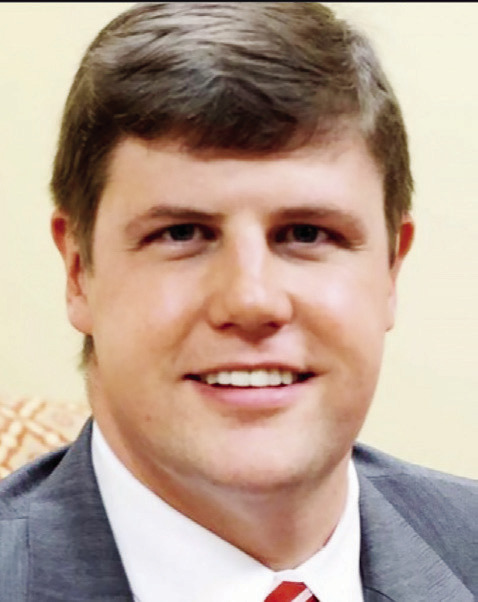
Ocmulgee Judicial Circuit DA Wright Barksdale and John Bradley, chief public defender for a circuit, both understand their agencies face obstacles and challenges in dealing with individuals who are mentally challenged and are charged with criminal acts. The two agree on the severity of the problem and the need for financial help for local governments and the judicial system.
Barksdale is not shy in stating he has a serious concern about the lack of state support in the mental illness arena. He started the conversation in an interview last week by citing a recent incident in Jones County. In that case, a female was accused of shooting her boyfriend in the head and has been in the Jones County jail for 740 days waiting on a mental health evaluation, according to Barksdale.
The district attorney said the Georgia Department of Behavioral Health and Development Disabilities (DBHDD) did not know if the defendant was in or out of custody. Because of incidents such as this, he said, the Ocmulgee circuit has become more proactive.
Circuit Chief Judge Brenda Trammell has initiated steps to force some response.
“She’s done ‘show cause’ hearings with the (DBHDD) director because it’s a court order for them to have the mental evaluation done,” Barksdale said. “When it goes two years without having an evaluation, it’s costing the taxpayers locally a ton of money. It’s not fair to the victims, and it’s not fair to the defendant.”
The Ocmulgee circuit has gone a step further, according to Barksdale. Psychologists’ findings of competency have been challenged.
“The doctor does an evaluation and says somebody’s competent. (Based on) sheriff’s offices, defense attorneys, my observations, they’re not competent,” he said. “So, we will set it down for a hearing, have the doctor testify, and the state and the defense attorneys argue to the judge, because, ultimately, it’s the judge’s decision.”
The doctor’s conclusions have on occasions been overturned, Barksdale said.
“Judge Trammell has been finding people incompetent and committing them to the custody of the Department of Behavioral Health, against what the evaluation says.”
Bradley agrees with Barksdale that there are considerable delays in the mental evaluation process.
“The wait times for evaluations have been a problem,” he said. “It’s oftentimes been months from the time the evaluation is ordered until the evaluation is done. And, the majority of those people are still in jail.”
Bradley said the process moves just as slowly once the evaluation is done. The CPD said that delay can and often does cause other problems, particularly for those in the county jail.
“It delays a resolution of the cases promptly. But, I think, it also adds a lot to what goes on in the jail,” he added. “The jail is not meant as a long-term placement. People cannot get mental health treatment in jail. They do get medication, but the jail is not set up for that.”
Barksdale agreed with the assessment that the extended time in the jail can lead to safety problems.
Bradley said he checked the Sept. 29 trial calendar for Baldwin County and found that out of 157 cases, 13 had pending competency evaluations or criminal responsibility evaluations. Ten of those were in jail. In addition, he noted that four of the 13 had been pending for six months or longer. He said as of this past Saturday, two of those four had been evaluated.
Bradley said he has no hard evidence to support it, but he believes there may be something of an emerging pattern in evaluations.
“If someone was looking at the trend in the numbers, they would probably see that DBHDD is recommending more outpatient competency restoration,” he said. “I think maybe DBHDD is feeling the pressure.”
Some of that pressure is coming from the Ocmulgee Circuit. Trammell is keeping tabs on evaluations, Bradley pointed out.
“Before each calendar call, she gets in touch with DBHDD and checks on those on the calendar waiting for evaluations.”
Both attorneys said additional funding is critical for counties and courts to make more progress in dealing with mental illness issues, but Bradley believes another factor may also be affecting the number of mental health professionals available as well as bed space.
“I think it’s probably about some of the hiring problems in every sector. Ever since COVID, a lot of different areas of hiring are down,” he observed. “ I think that’s part of it, and that’s probably part of what the problem is in getting people bed space; once they’ve been sentenced to inpatient (treatment), there may not be enough staff to use all the beds.”
Barksdale contends there are multiple issues involved.
“There has to be more funding, more bed space,” he confirmed, pointing out that psychologists may be affected by the lack of resources. He gave the example of two defendants being evaluated, one facing a drug charge, the other accused of shooting someone. The one with drug charges will be found competent, the other held for further evaluation and treatment.
However, Barksdale believes the state’s excuses are not excuses.
“There needs to be more accountability,” he said. “Just saying you don’t have enough people, you don’t have enough resources, is not a valid excuse.”
The district attorney said the state must do its part financially to address mental health issues.
“The State of Georgia continues to try to pass more and more financial responsibility to the counties,” he asserted. “Whether it’s treating mental illness, whether it’s housing inmates, the counties are paying the cost.”
Barksdale pointed out that the wait time for a bed for a substance abuse treatment program in prison is now 24 weeks, with the defendant sitting in jail in most of those cases, and he encouraged the use of more practical post-sentence treatment.
“The state needs to invest in transition facilities that are accessible at the time of the plea, sending them to a facility where they go get a job, they’re in a lockdown facility overnight, they get counseling, therapy and services like trying to attain a GED,” he said. “When they leave that facility, they have $5,000 in their pocket, a job they wanted, and housing placement.”
Barksdale went on to say he has been told more help was available in the 1980s than in recent years. He recalled that long-time DA Fred Bright gave him his assessment when he retired in 2015.
“He told me there were more services available for those suffering from mental health issues, more options available in the criminal justice system to address those that are suffering from mental health issues in the 1980s than there were at that time. And,” Barksdale added, “it’s only gotten worse.”
(Next week: A look at how mental illness problems affect the Sheriff’s Department and Superior Courts.)