
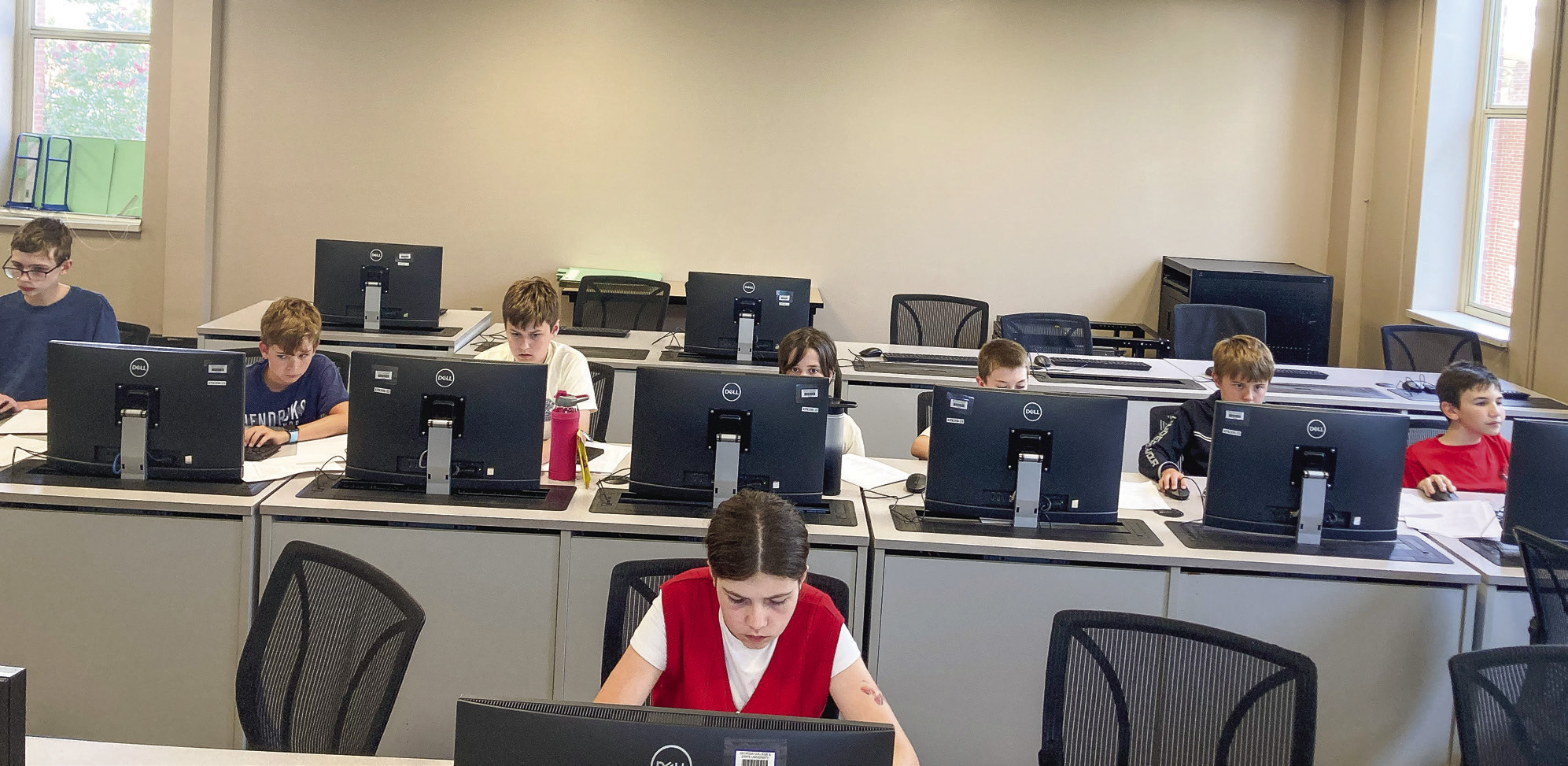
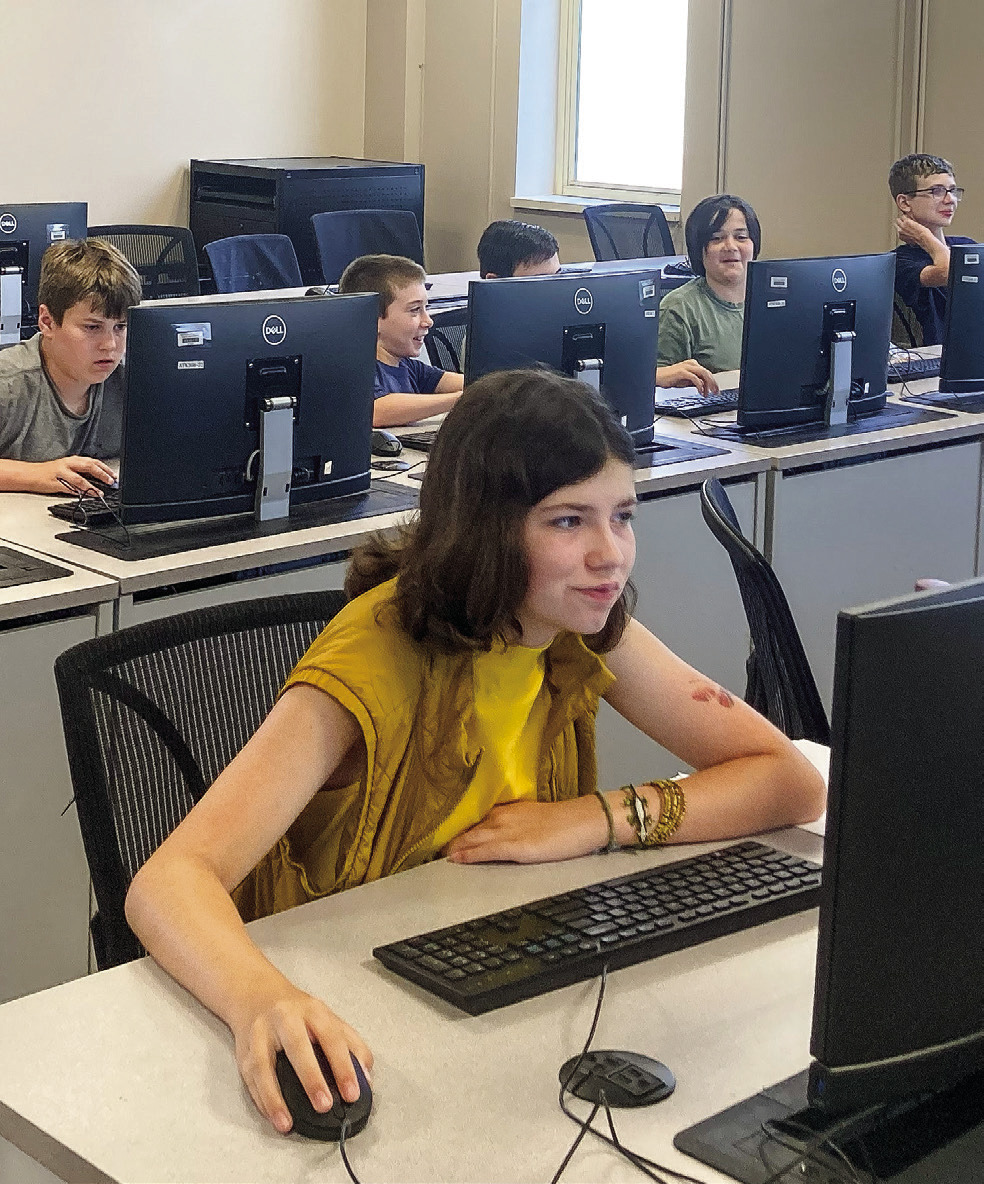
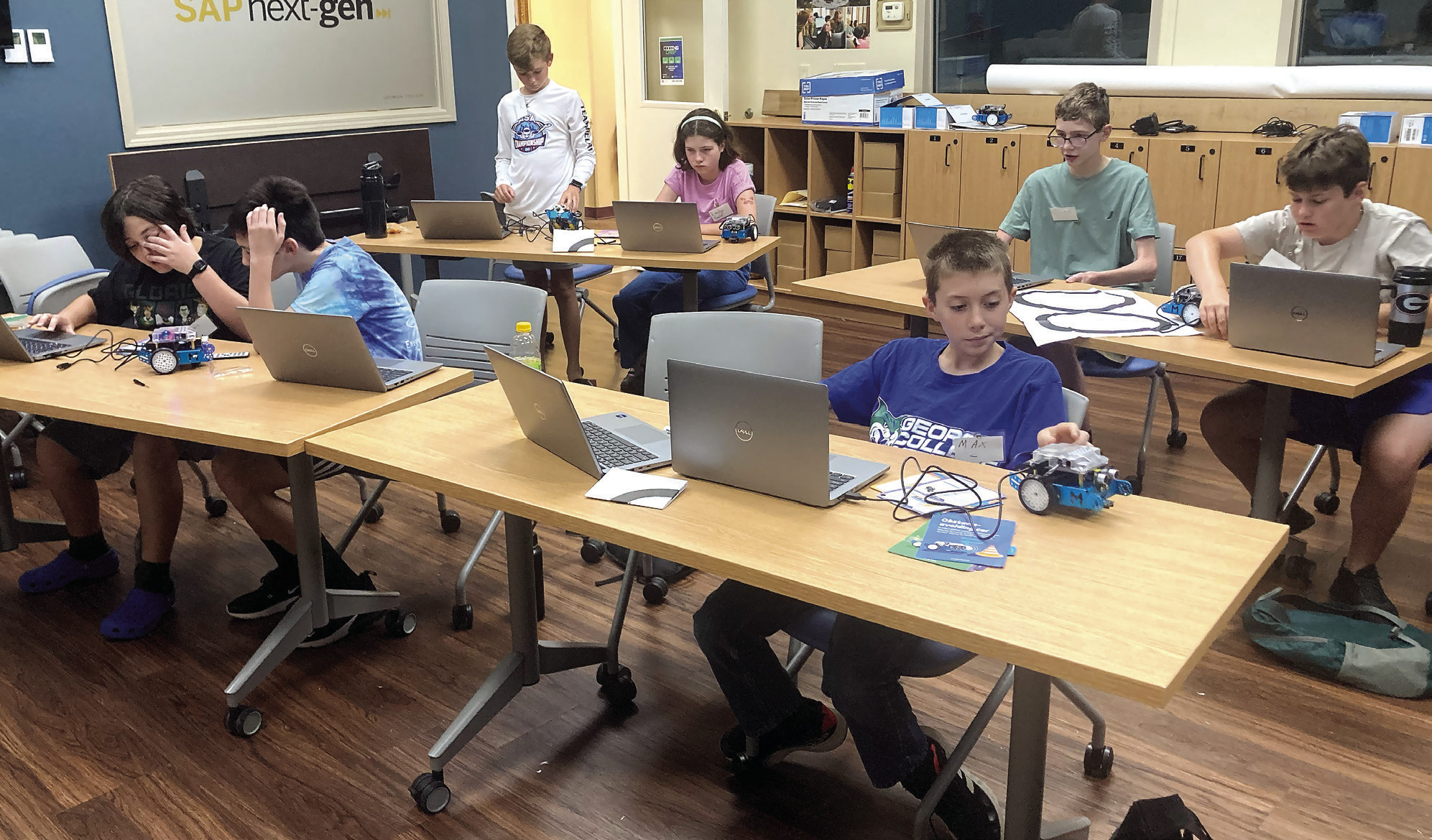
Georgia College & State University’s Continuing & Professional Education Department debuted its coding camp July 7-11, introducing eight sixth-through- ninth graders to the science behind our everyday technology.
Continuing & Professional Education Program Coordinator Kirsten Schipper had been working for over a year to introduce a coding camp to the list of options for summer camps.
“We recognized a need in the community for more middle school camps and STEM (science, technology, engineering, and mathematics) courses,” said Schipper. “This was my baby project for the last year and through partnering with our camp instructor Jeannie Pridmore, we were able to make it a reality.”
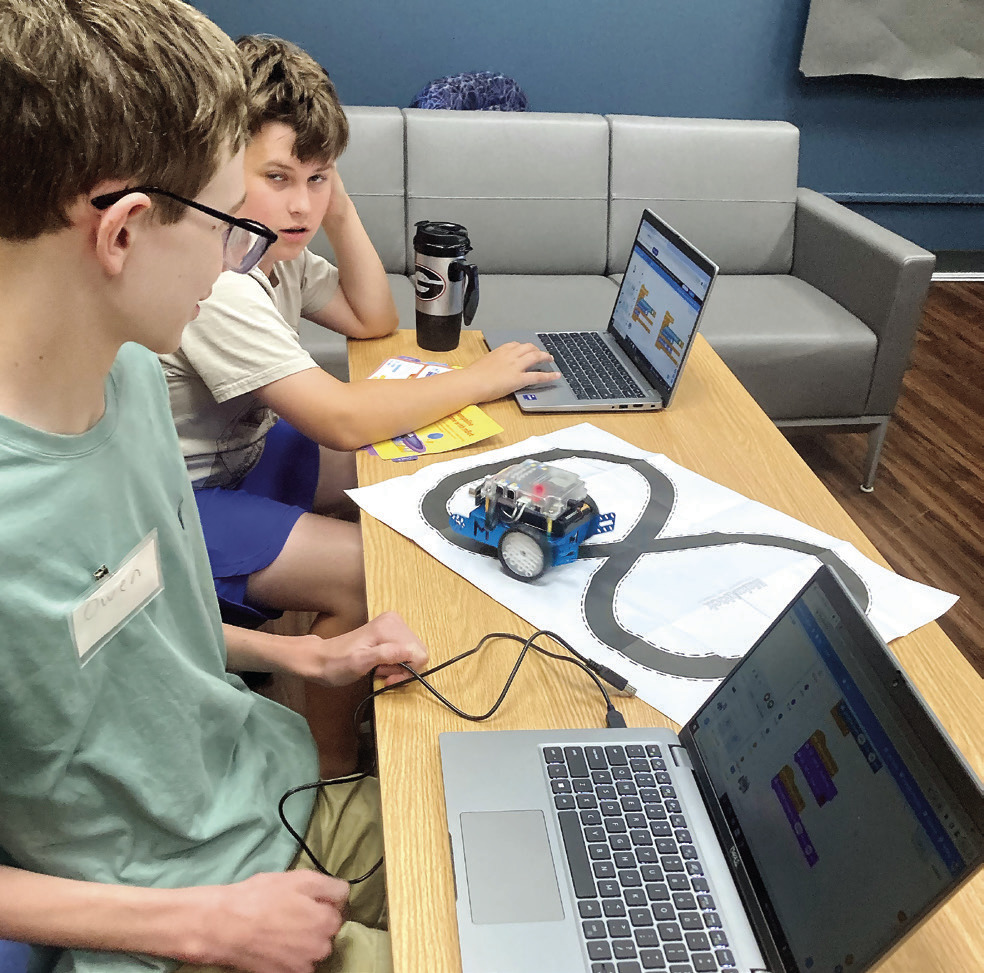
The camp took place from 8 a.m. to noon with the goal of teaching coding basics and leading students to code their own self-driving robots. Pridmore had been looking to introduce a coding program and the partnership was the open door to that wish and to support the learning center in the College of Business.
GCSU’s College of Business hosts the Learning Center of Technology and Empowerment, founded in December 2024, which aims to prepare the next generation for technology pathways and encourage interest in the field.
“We have a lot of jobs coming in the technology field and a lot of jobs currently available because we do not have the right talent and number of people,” said Pridmore. “We outreach to middle and high school students. We host events and programs throughout the year. The money from the coding camp will go toward the center, rather than paying me, to support programs and events.”
For Pridmore, the goal of the camp was to get students active with technology rather than consuming through it, encourage interest in technology, teach them how to be creators, and to teach awareness of how to be safe online and aware of how online data is tracked.
“I want them to take away that they can be a creator and give back to the world,” said Pridmore. “Our week was a mix of coding blocks and testing their programs. I want students to know that anyone can program that can read and that logical thought and critical thinking are essential to coding.”
The week began with the basics of coding through coding blocks and teaching students how to move the robot through structures, loops, and functions. The robots offer “immediate feedback” through direct visualization as students watch their coding in action. So, the first two days were spent with students learning and troubleshooting.
“Coding blocks are the best way to learn the structure and flow of coding. However, somebody had to program those blocks, so if you do not want to be tied to those blocks, you have to be able to do the structured text programming,” said Pridmore. “So, we moved from code blocking to using Python, which gave the students more power.”
Using Python, students completed three “art projects” including a spinal graph, a print statement, and a random code project to draw 20 snowflakes in different colors. Students also attempted to complete a “joke chat bot” using Python.
“I had only one student, our one female student, complete the joke bot. It was a more advanced project and was 93 lines of code,” said Pridmore.
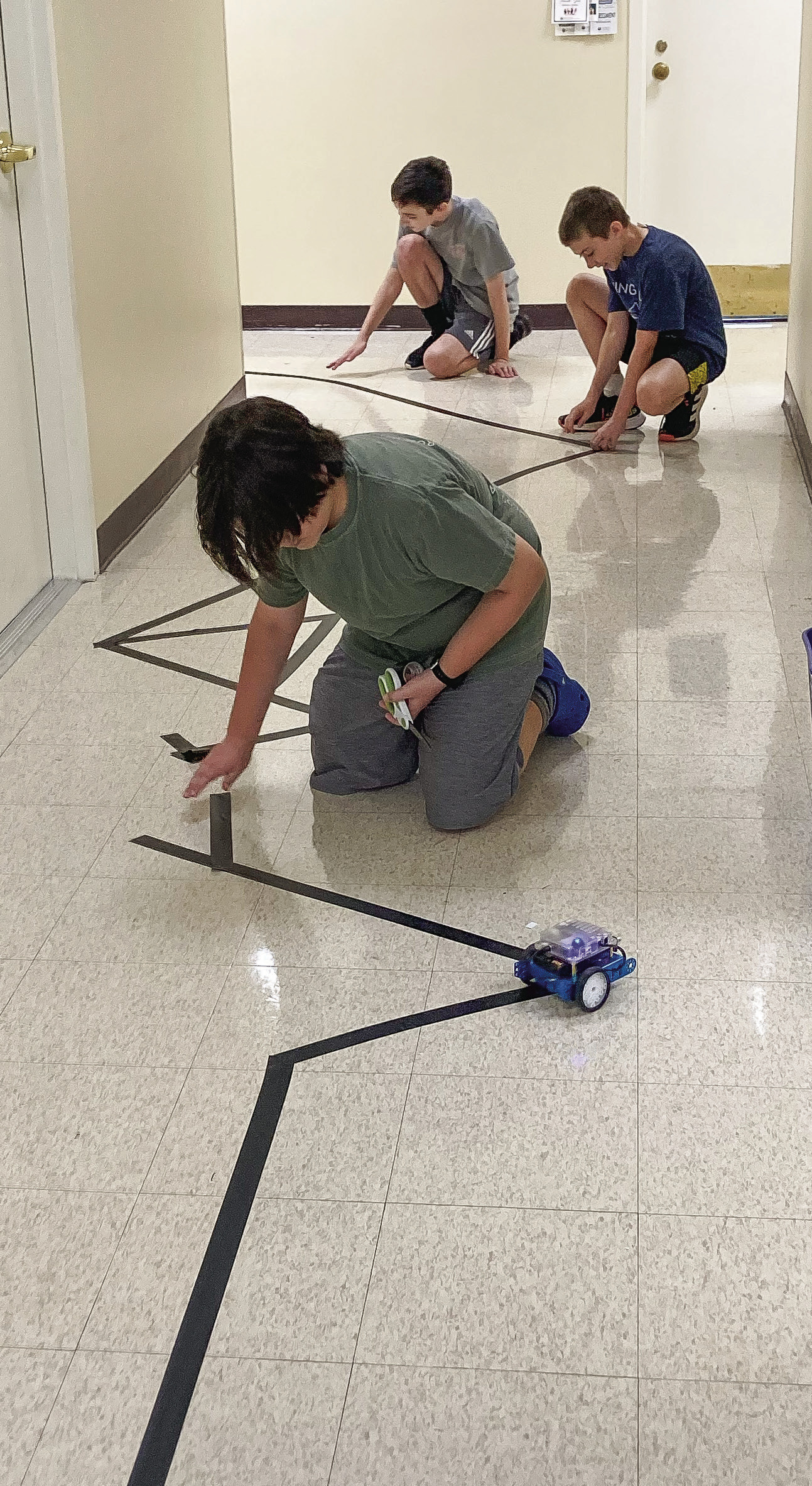
On July 10, students programmed the robots to be self-driving cars and navigate an obstacle course. Then, Friday morning, Pridmore introduced them to artificial intelligence, machine learning, and data science and students completed a small amount of binary coding.
“I wanted to introduce them to those topics because that is at the top of the list for what is a critical need. I wanted to offer them some vocabulary and what opportunities may exist for them by the time they reach college,” said Pridmore. “And at the end of the day students presented everything they learned to their guardians, including their Python programs, a video game they made using a block program, and their self-driving robots.”
Pridmore and Schipper aim to host this event again next year, potentially making the length of the camp day longer and adding more activities to the curriculum.