

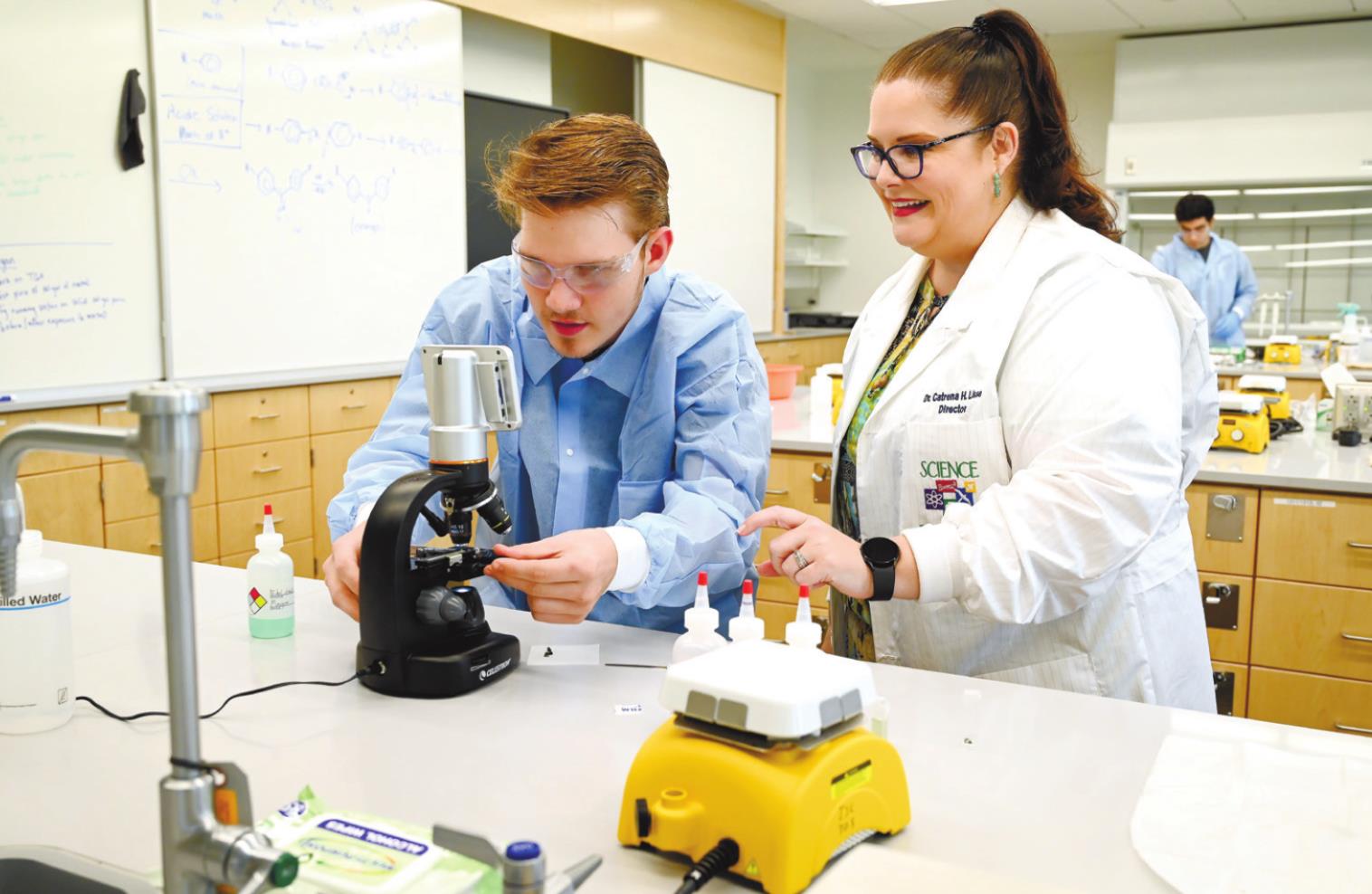
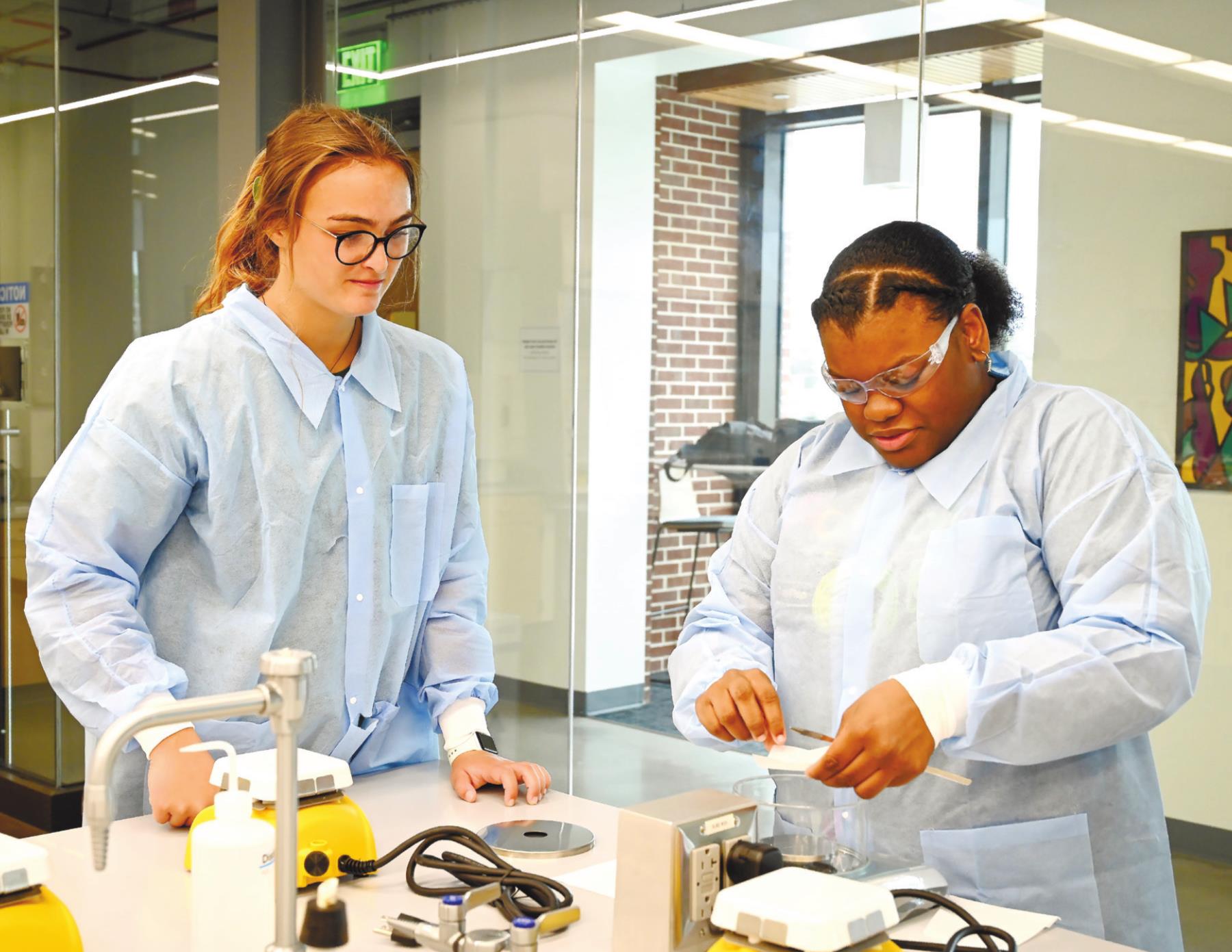
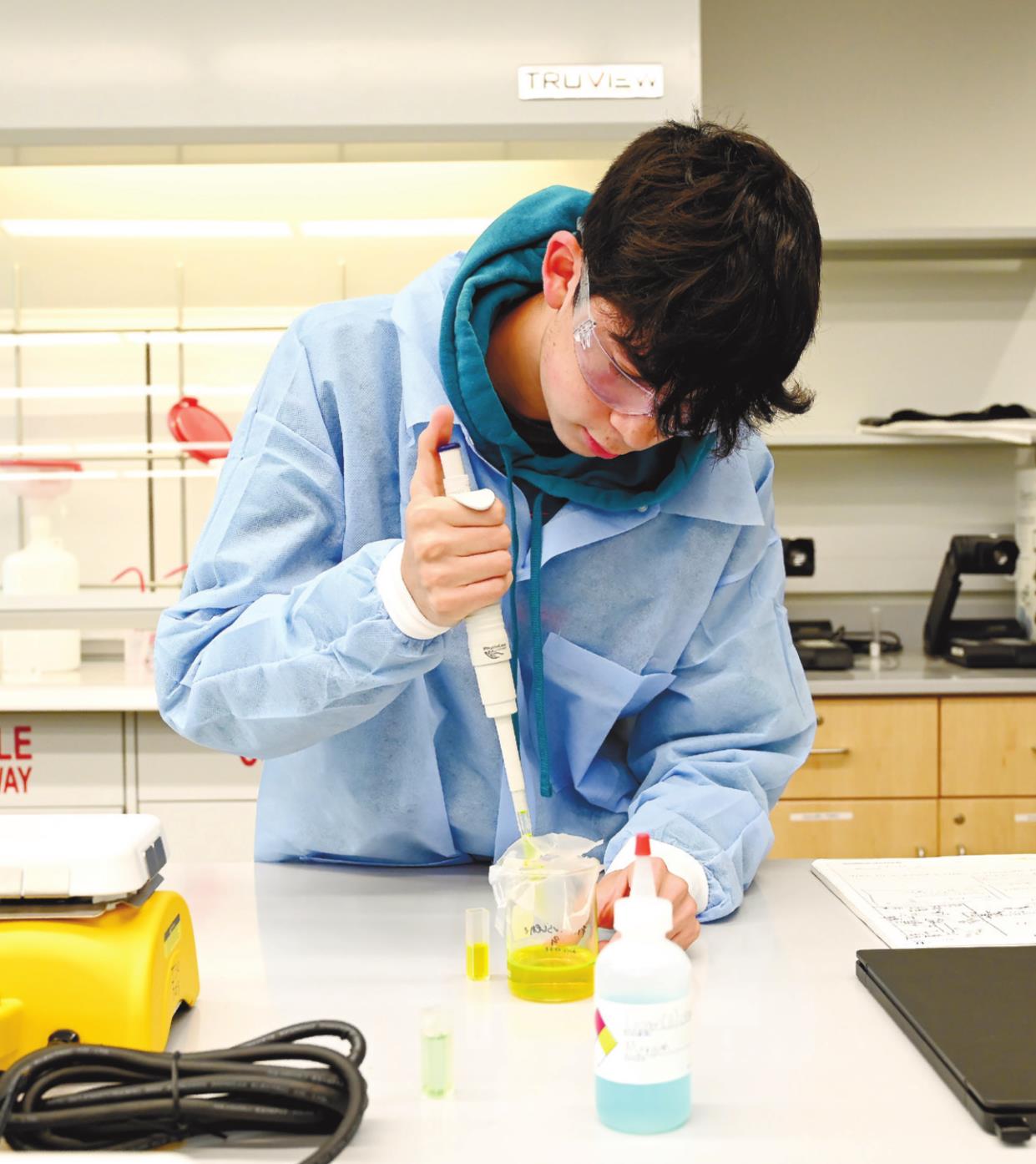
Georgia College & State University hosted the Young Scientists Academy (YSA) Internship Research Program over the last six weeks with seven high school participants.
The YSA Internship Research Program is hosted by Georgia College’s Science Education Center and began in 2007. It allows high school students to explore university-level research while working side by side with GC faculty and mentors. This year the academy was taught by Dr. Catrena Lisse and undergraduate mentors Callie Miller and Cole Smith.
According to the description of the program, “YSA Internship students tackle real-world individual research projects and acquire valuable technical and analytical skills, culminating in data analysis and a YSA symposium.”
In order to be selected for the program, each student went through an interview process with director of the Science Education Center Dr. Catrena Lisse, chemistry faculty Dr. Peter Rosado-Flores and Dr. Wathsala Medawala, lead STEM advisor India Jones with Academic Advising, and Admissions Counselor Rachel Belcher.
This year, seven rising seniors from all over Georgia became interns in the academy and developed their own projects. The seven participants were: Morgan Collins, Claire Buck, Alec Ortiz, Will Ratajczak, Trinity Johnson, Nathanael Walsh and Pouriya Mosayebi.
“I honestly was nervous when I found out about half of my participants had never been in a real lab. Many of them had virtual lab experiences prior to this,” said Dr. Lisse. “But seeing their maturity and their seriousness, I describe them as little sponges. They're just soaking up all the information that we're giving them, and you can see them being thorough and really wanting to do it correctly.”
Johnson is a rising senior at Baldwin High School and was one of the only students with prior lab experience. Her project was titled “Synthesis and Characterization of Silica Sol-Gel Monoliths as Glucose Biosensors” and was meant to develop a glucose sensor to better detect sugar levels in samples. She hoped her research could potentially benefit diabetics.
“For me, I really appreciated the exposure that this program offers and the opportunity to actually have that hands-on experience,” said Johnson. “This is fun even when we don't get the results we wanted, or we run into a little hiccup.”
Ortiz is from Warner Robins and is a rising senior at Veterans High School. Ortiz had no prior lab experience before the academy and expressed he was impressed to be in the new Integrated Science Complex. His project was titled “Detection of Nitroaromatic compounds using Porphyrin-Doped Silica Sol-Gels” and its purpose was to develop a forensic method of detecting explosive residue by using a color-changing reaction.
“I’ve learned a lot about being in a lab,” said Ortez. “There's a lot of instruments and chemicals we've never used and that's just been a really good learning experience for me.”
Buck is from Sandersville and is a rising senior at Washington County High School. She was another student who had little experience in a lab prior to the academy. Her project was titled “Synthesis and Characterization of Silica-Porphyrin Heterogenous Sol-Gel Catalysts” and the purpose of it was to create a reusable catalyst to speed the time it takes for a chemical reaction to occur.”
“In the chemical industry, time is money and faster production is very beneficial,” said Buck. “'Through my project, I’ve worked to create a catalyst in the center and that was really exciting. I could see particles forming and learned a lot about organic chemistry and free radical formations.”
Mosayebi is a rising senior at GMC Prep and had prior lab experience before the academy. He was very outspoken for his love of this research program and encourages others to take part in the academy next year. His project was titled “Qualitative Detection of Illicit Drug Use in Hair Samples via GC/MS Analysis.” The purpose of his research project was to find a better way to detect drugs in strands of hair with more reliable results than urine testing.
“I had to synthesize an explosive so, while making it, it was kind of scary but also pretty cool,” said Mosayebi. “The academy is definitely worth the time. We have a great teacher and great mentors.”
Through their projects, students learned about the scientific process, safety, research ethics, how to read a peer-reviewed research paper, how to make and deliver a scientific presentation, and how to network in the science and engineering fields.
“On day one, I told them I would push them out of their comfort zones, and I think every project has encountered something that, you know, made them want to throw a textbook at me,” Dr. Lisse said with a laugh. “But that's how I know I'm doing my job. I’ve challenged them and they’ve grown confident in everything they have learned.”
All seven students presented their projects at the YSA symposium on July 22. During the symposium, the students presented their projects through a five-to-seven-minute presentation and participated in the lab coat ceremony recognizing their graduation from the Young Scientists Academy.