
Stacks of pill bottles, a father and daughter, paratroopers jumping from planes, these were some of the pictures on exhibit giving campus and community a glimpse into the lives of veterans.
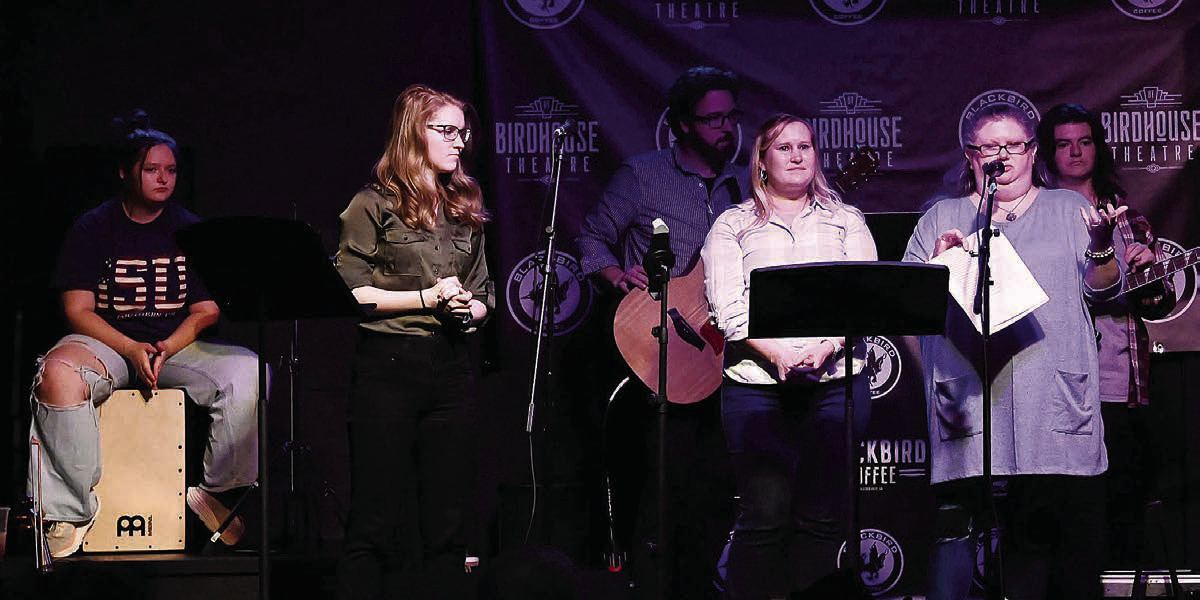
The immersive gallery and live-music performance Nov. 12 at Blackbird Coffee in Milledgeville was the result of more than a year of collaborative research between Georgia College & State University students and four members of the U.S. Armed Forces.
“Sights and Sounds of Veteran Identity” gave veterans an equal stake in academic research.
“Most of these veterans just want to be a part of the community again. They want to feel like we're listening,” said Dr. Stephanie Jett, associate professor of psychology. “For some of them, there's been an uncorking. This research partnership allowed them to express things in a safe way that they haven't been able to express before.”
A graduate student mastering in music therapy and a dozen psychology students used qualitative methods, Photo Voice and Lyric Analysis, to help former soldiers open up about their military experiences.
A simple picture or song can break down stereotypes, underscoring the individuality and distinctness of each veteran’s story. This research helped each veteran pinpoint feelings, analyze memories and deal with their emotions in a way that was meaningful to them. Students created the study’s original framework, interviewed veterans, evaluated data, wrote story summaries and coordinated music routines.
Songs were performed by a music therapy professor and graduate student, along with other music therapists from the local area.
Selections included “It’s Called: Freefall” by Rainbow Kitten Surprise, “Get Up” by Shinedown, “A Broken Wing” by Martina McBride and “Dragonfly,” a Shaman’s Harvest song about rebirth and reclaiming joy.
Sara Carr, of Augusta, is getting her master’s in music therapy. This experience showed her the importance of participant- based research and moving beyond statistics to include the human element.
Carr sang and played instruments in several performances. Her father was among the veterans in the study. He chose “Ashokan Farewell” by Jay Ungar and Molly Mason — a song Carr used to play as a violinist growing up. Tuesday night was the first time he’d heard the song performed with lyrics. His daughter played the electric violin.
“Music has the capability to express emotions that can be hard to put into words,” Carr said, “and lyrics can poetically embody someone’s experiences in a way they can personally relate to.”
Original and faculty-mentored research like this is vital to psychological science and contributes to the success of Georgia College’s highly rated psychology program. In its 2025 rankings, U.S. News & World Report named Georgia College’s psychology major No. 1 in the regional South for public state universities and No. 293 nationally.
Senior psychology major Trenholm Fahy of Marietta learned a great deal from this project.
“A lot of researchers come into these communities, and vets don't ever see any benefit from that,” Fahy said. “For some of these veterans, this is their first time talking with anybody else. That can be a very freeing thing and at the same time, it can also be very emotional.”
– Courtesy of University Communications