
Harold Lawrence grew up in a mill town in South Carolina, and all one has to do to learn about his life as a youngster is to read some of his poetry and short stories.
Lawrence is a Milledgeville resident and retired minister, stepping down in 2015 after 43 years with various Methodist churches, including Milledgeville. His tenures included 13 years as pastor at First United Methodist, as it was called then.
“I was here when the church moved from downtown to Log Cabin Road,” he said, explaining that he left Milledgeville in 2004 to pastor in LaGrange until his retirement.
Lawrence, 79, picked up the pen well before he commenced his studies in preparation to becoming a minister.
“I started writing in the eighth grade,” he began. “I’ve been writing all my life. When I was a small child, I was read to a lot. So, I picked up early an appreciation for the written word.”
Lawrence shared that his poetry and short stories are drawn from personal experiences.
“It’s my childhood, pretty much,” he said. “Most of them are from incidents or situations when I was a kid or young adult. That got me started in writing.”
Lawrence began his writing career with poems. Before he ventured into fiction, he owned and operated a historical genealogical publishing company that he and a business partner started in the late 1970’s.
“Before I started trying to be a writer, I was pretty much a historian,” Lawrence said. “I’ve done a great many history books, compiled them, wrote a few, edited a number of them, published a number of them.”
The versatile writer has authored more than 100 pieces, including novels, short stories, poetry, and magazine and newspaper articles. In addition, he has edited or published close to 100 works of others.
Lawrence started writing fiction in 1992, when he published his first of three volumes of poetry, Southland. Memory Hill (1994) and Voice of the Turtle (1995).
“It was good practice in writing,” he described. “Like columns for a journalist. It’s good practice for something larger down the road. Poetry was like that for me.”
The Milledgeville author said he was not drawn to the longer novels early on.
“I never really cared for novels,” he confessed. “But then I sat down and tried to write one. It was easier than I thought, I think because I had spent most of my life writing talks and sermons.”
Before he left LaGrange, Lawrence started a fivevolume series of what he termed ‘borderline sci-fi stuff’, beginning in 2013 with Chip, book one of The Steward Series.
The plot, the writer details, centers on a youngster who has problems at home and moves in with his uncle, who works at a mental hospital. Subsequently, the boy transfers to a Florida theme park, where he meets and works with a woman handling the dolphins.
“He winds up with a computer chip which is flawed. But,” Lawrence reveals, “it is really not flawed. It opens up a portal of communication between humans and some animals. So, he finds himself, this gullible young man, in possession of technology that everybody wants.”
Once Lawrence left the pulpit, he became more active as a writer and moved into short stories. In 2017, he published Night Flyers and Other Stories, a collection of 22 short tales. That collection was followed the next year by Water Sprites and Other Stories, with 21 short tales, and Evil Eye and Other Stories in 2019.
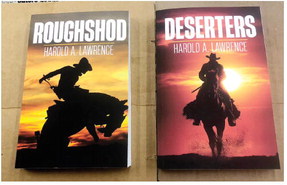
Lawrence, in 2021, moved into westerns, authoring a fivevolume series with the same lead character, Arch Ames. He undertook a significant amount of research for that series as well as the one that followed.
“I can tell you where the forts are, because they are real, where the creeks are. And, I did research on the area; I would buy books on the history of the area. It’s not all in my head.”
Lawrence wrote two of the Arch Ames westerns in 2021, two in 2022, and the finale in 2023. Those sagas were set in Texas.
“The problem with the west, in my opinion, and the reason I ended the Ames series is,” Lawrence reasoned, “by the time you get to 1880, the Indians are on the reservation; nobody rides in stagecoaches, they all ride on trains. There’s no more cattle drives. The west as we envision it is pretty much over.”
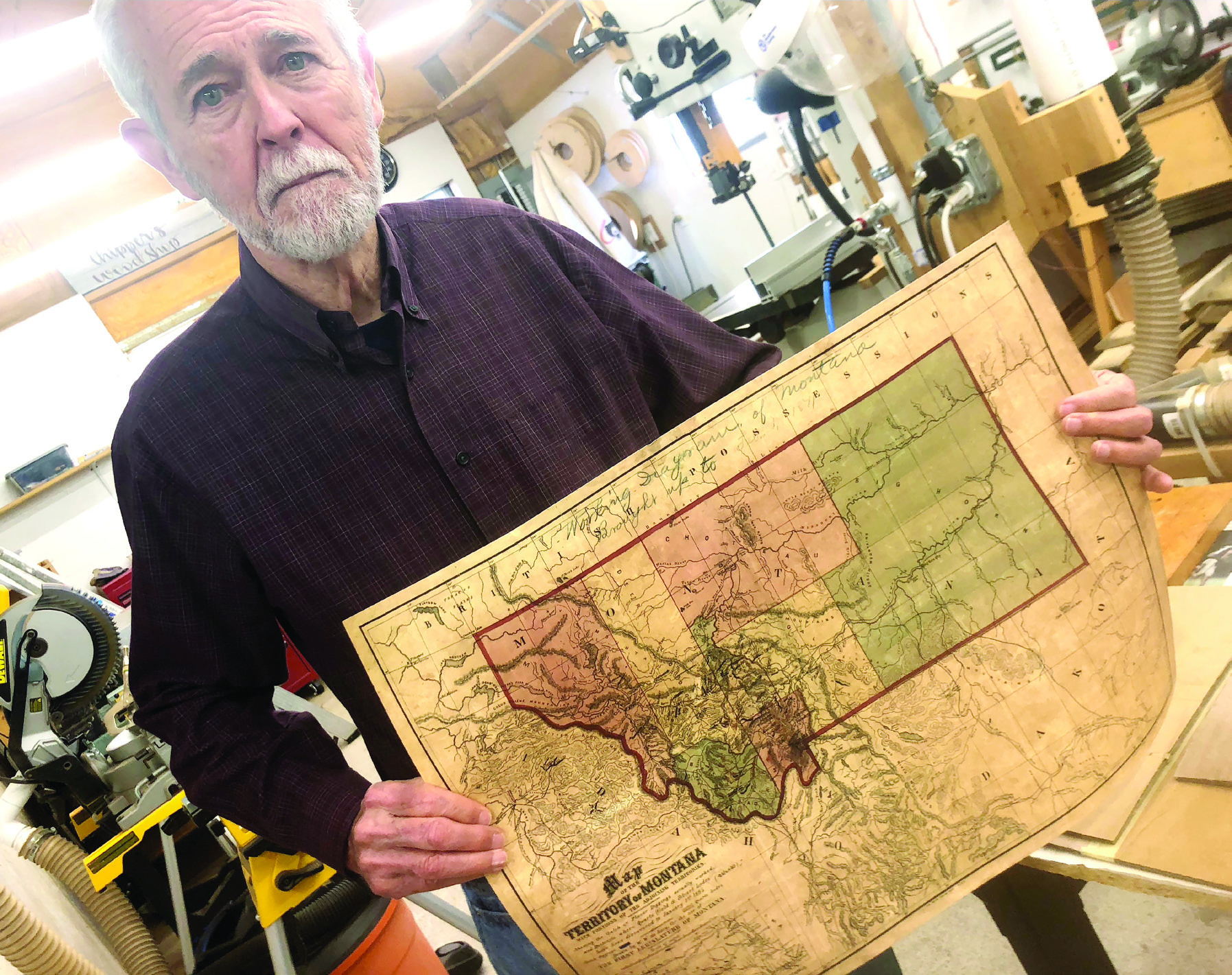
So, Lawrence began a new series, with a new lead character, and he has completed two installments. He is working now on the third volume of the Gabe Cutler story. In preparation for this saga, he ordered an actual map of its setting, the Montana territory.
“You won’t see any trains (in the book), because they didn’t come in there until 1884,” he explained. “And, it was a long time becoming a state because of its location. It gave me a fresh start, new characters, in that same time frame, 1870 to about ’74.”
There is obviously a difference between science fiction and westerns, and that has been part of Lawrence’s plan.
“I don’t feel that I’m pigeonholed into one type of writing,' he said. “I like to skip around and see what I can in a lot of genres. A short story is sort of a Southern Gothic. A western is a western. And poetry is sort of capturing the forgotten South, the fading South. So, there are different approaches.”
As part of his works, no matter the genre, Lawrence said he likes to get his readers involved, for them to form their own impressions of characters.
“In the Arch Ames series, I never tell you what anybody looks like,” he stressed. “I rarely describe the characters.
“I grew up listening to radio,” the author recalled. “And, when you listened to the Lone Ranger or Boston Blackie or some of those early shows, you made up in your head what a guy looked like. And it gave me the opportunity to participate in the radio show.”
The same is true in his profession, the author observed.
“And when you do that in writing, you give your reader participation in the story. You’re not just reading the story, you’re internalizing it.”
For interested prospective readers, Lawrence can be contacted at hlawrence079@gmail.com.
Click here for Part 2 of Lawrence's story: Harold Lawrence's wood-working hobby