
Humans tend to think a snake’s life is simple. They slink. They slither. They bask. They bite.
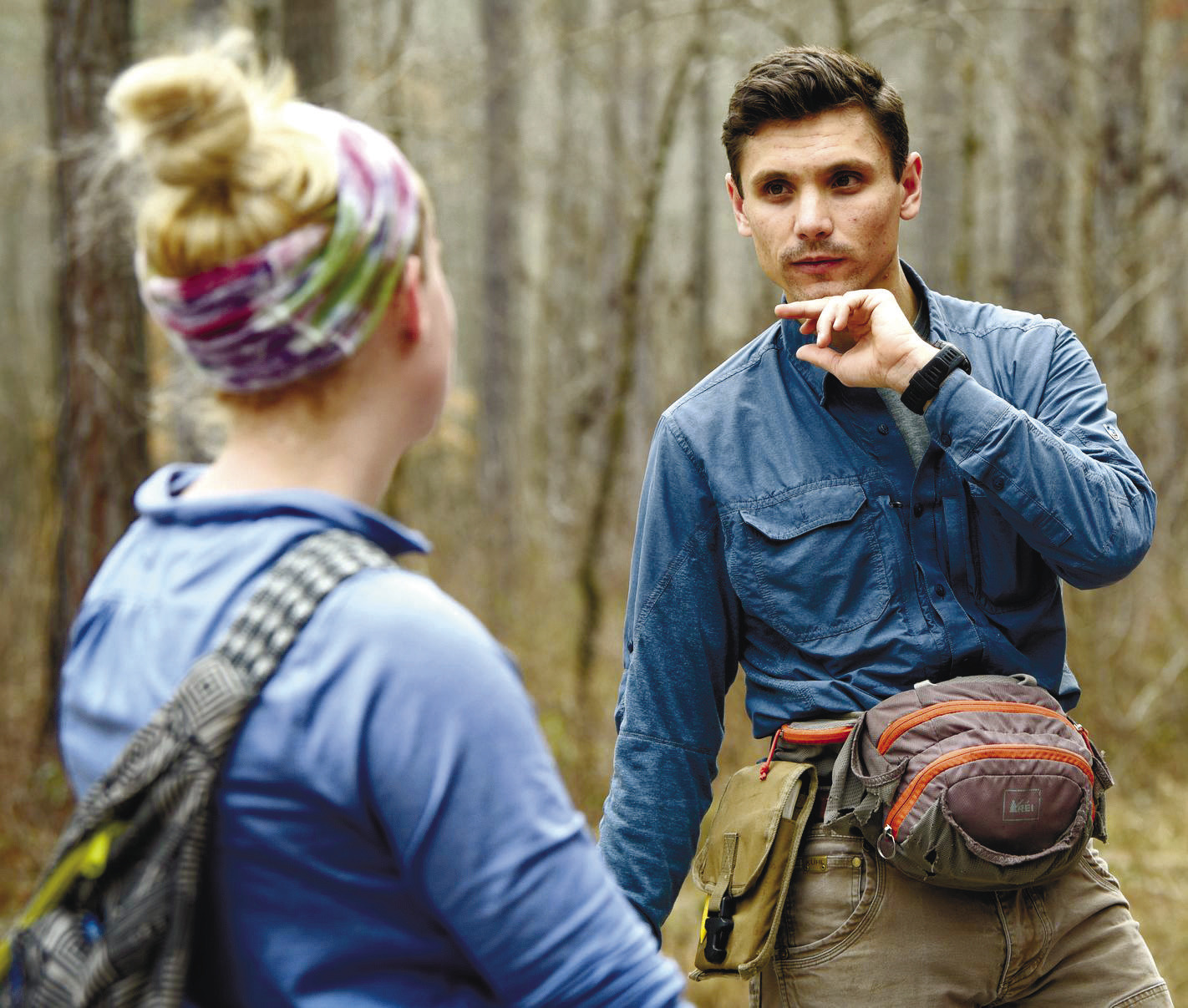
But a Georgia College & State University vertebrate biologist says we don’t really know much at all about what snakes do and why. Using stateof- the-art technology, Dr.
Dominic DeSantis and his students keep an eye on these coiling creatures – where they go, what they eat and how they interact – hoping to learn their serpentine secrets.
“The role of snakes, especially the largebodied rattlesnakes and pit vipers that we study, act as apex predators in the ecosystems they exist within. They're big, and they can eat a huge diversity of prey,” said DeSantis. “Rattlesnakes play a critical role, maintaining interactions between species. If we begin to lose them, I don't think anybody knows what those ecosystems devolve into.
“Snakes act as an important linchpin pretty much everywhere in North America, but we don't understand that role very well. We know it's important. We know they're really prominent in all these systems, sometimes in high numbers.
So, clearly, they've got this crazy-important role to play. We just don't know exactly what that role is yet.”
As an undergraduate at Texas State University, DeSantis researched salamander behavior. During his doctoral studies at the University of Texas at El Paso, he pioneered a technique to track snakes and monitor their behavior using accelerometers, a device that measures vibrations or changing motion.
DeSantis was hired in 2020 to teach courses like vertebrate zoology and herpetology. He launched a series of case studies at GCSU, using the same technology, putting Georgia College students at the frontier of new discoveries in snake behavior. Some examples of students and their research include:
• GraduatestudentAnna Tipton researched how snakes interact with roadways. Her thesis revealed a completely new finding that snakes sometimes move up and down one side of a road for weeks, flicking their tongues to assess the new sensory pathway, perhaps in confusion, before deciding to cross or turn back.
• Graduatestudent Morgan Thompson is wrapping up her thesis validating the use of accelerometers to record predatory strikes and swallowing of prey by rattlesnakes in nature. This represents the first and only available method for monitoring these aspects of snake behavior.
• Seniorbiologymajor Jack Powers will begin his master’s in biology at Georgia College in the fall and continue studying over-winter behavior in timber rattlesnakes. DeSantis calls this “a really important aspect of their ecology that’s almost completely overlooked in literature.”
• Juniorbiologymajor Danielle Bartlett is testing rattlesnakes and pit vipers for a fungal disease that caused significant declines in snake populations in the Northeast and Midwest. Pinpointing factors associated with severe disease could help predict declines in local populations.
In total, eight Georgia College students work with DeSantis. Half their research is driven by hypotheses centered on the behavioral ecology of snakes. The other half is defined by DeSantis as “next-generation natural history” driven by “cool emerging technologies,” like accelerometers.
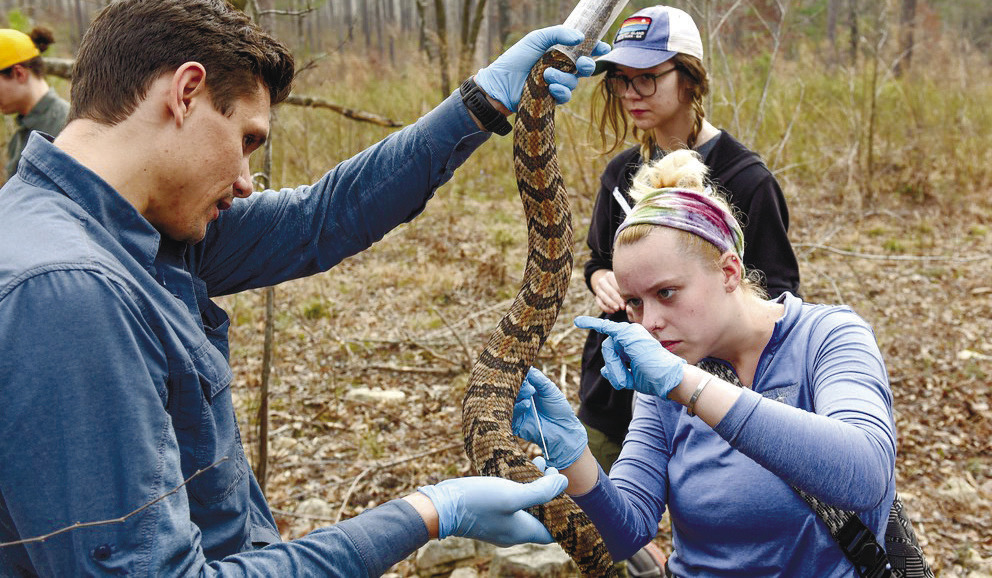
Twice a week, DeSantis’ group goes to Cedar Creek Wildlife Management Area, part of nearly 40,000 acres of forest west of Eatonton. The university has permits from the U.S. Forest Service and Georgia Department of Natural Resources to track and study snakes at this site – which includes adjacent national forest and nearby private land owned by people who call DeSantis to relocate snakes from their yards.
Students hike 10 to 15 miles each visit, working in pairs. They track 22 snakes – 19 rattlesnakes and three rat snakes – each implanted with small transmitters.
Using radio telemetry kits, handheld antennas and receivers, students adjust the tuning for each snake, which transmits its own frequency. They find and relocate snakes.
They also record observations, like whether a snake is resting or in retreat.
They note habitat, body temperature and wind speed.
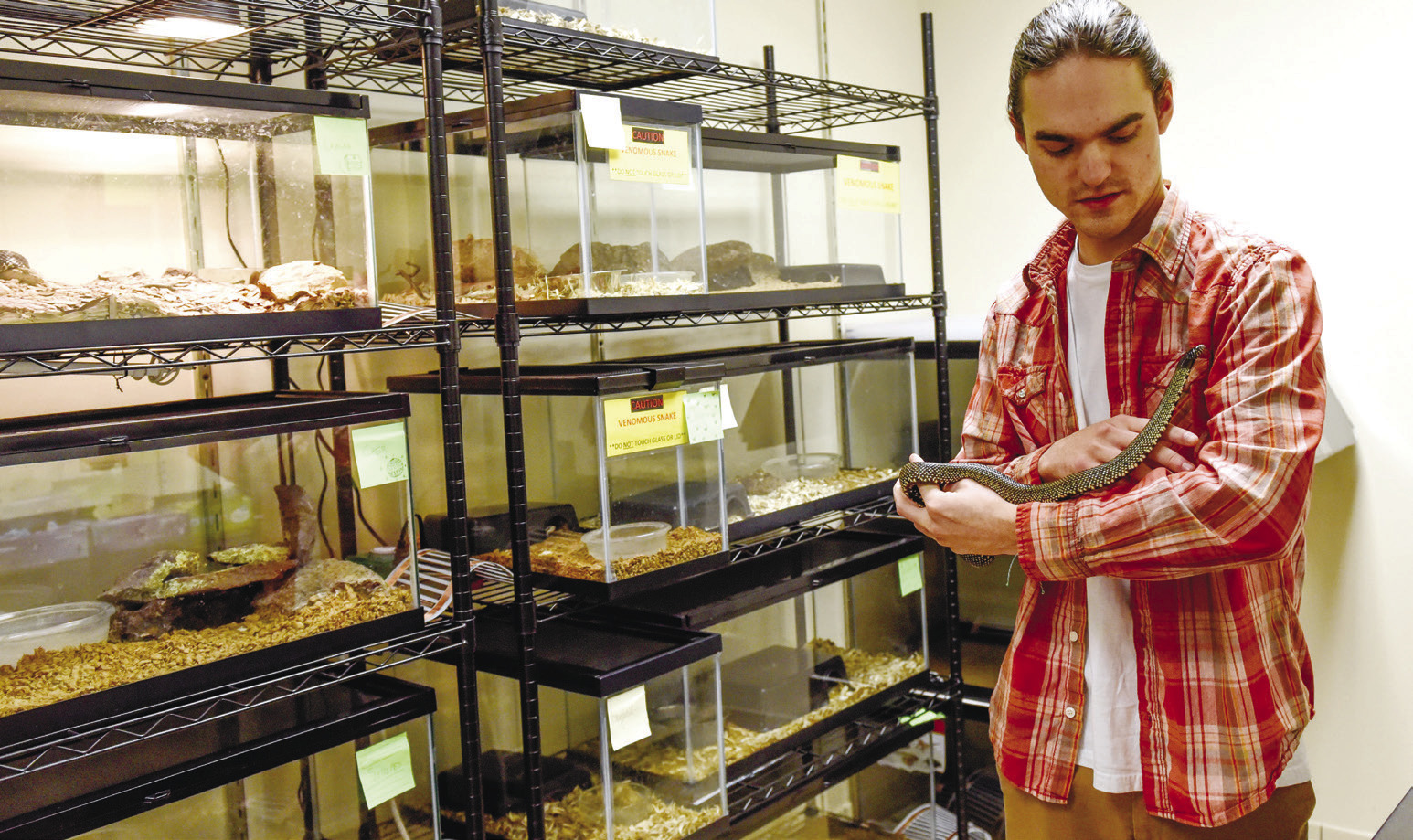
Typically, each snake moves between 2 and 300 meters a night. At the end of the monitoring period, about a year, snakes are brought back to the lab at Georgia College.
“Because of methodological limitations it was always really challenging to study the behavior of rattlesnakes in the field, and it still remains challenging,” said DeSantis.
“As we further develop, advance and validate these technologies we're using, I think they'll prove pretty transformative for the discipline.”
-Contributed