
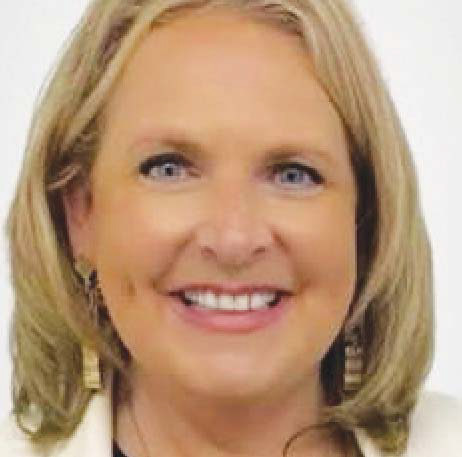
Editor’s Note: Kristina Brooks currently is in her second year as Baldwin County School District superintendent.
Recent reporting on Baldwin County’s eighth-grade mathematics scores highlighted a difficult number: just 14.7 percent of our eighth graders reached full proficiency on the most recent Georgia Milestones assessment.
I said when asked about that result, and I will say again, that 14.7 percent is unacceptable. Our students are capable of more. Our families should expect more. And our goal is to meet and exceed state averages.
But accountability also requires us to understand what the numbers actually tell us, and what they do not. When Baldwin County Schools responded to questions about these scores, we provided additional data showing that this same group of students has made measurable progress over time. In 2023, 58 percent of the cohort demonstrated partial proficiency or higher. That increased to 59 percent in 2024 and 63 percent in 2025. Across grade levels, our state-approved mathematics universal screener showed districtwide math performance increasing by 10.49 points, while our elementary students reached 105 percent of their typical annual growth goal.
Those numbers do not erase a low proficiency rate, but they do tell us that students are moving forward and that distinction matters. A proficiency ranking is not a teacher- quality ranking, and it is not, by itself, a school-quality ranking.
Proficiency tells us how many students have crossed a particular academic statewide threshold at a particular moment. Growth tells us how far students have moved from where they began. We need to pay attention to both. That is particularly important when comparing school districts serving very different communities.
Our local educational landscape adds another dimension to this. In the Baldwin County School District, 5% of the student population is not proficient in speaking English due to second language acquisition, 16% of our student population are identified as students with disabilities, and 100% of our student population identifies as economically disadvantaged.
These demographics represent both our strongest challenges, but also our greatest strength, as they represent the diversity in our community and allow our students to begin gaining the skills necessary to prepare them to become better citizens of Baldwin and of the world.
Again, none of this makes 14.7 percent acceptable. Context is not an excuse. Context is how responsible people understand a problem well enough to solve it. And we are acting on what the data tells us. This year, we opened the Baldwin Success Academy, where students who have not demonstrated sufficient academic progress receive focused instruction designed to help them master essential skills rather than simply advancing without them.
We have reduced our reliance on instructional software and returned strong, teacher-led instruction to the center of our classrooms. We have strengthened instructional coaching at Oak Hill Middle School. And through our new Five-Year Strategic Plan, we are placing renewed emphasis on mathematics achievement, literacy, hands-on learning, communication, and shared accountability among schools, students and families.
But the strategies of the school system will not, in isolation, allow students to reach their full potential alone. A full commitment from the community and families is necessary. This commitment begins in our homes. Parents and guardians whose children are enrolled in BCSD must actively engage in their students’ education. This begins with modeling to children that boundaries and rules are not negotiable. There can be absolutely no acceptance of acts of violence and aggression, and parents must model to their children self control and self regulation. These are not only employability skills that better our community; these are life lessons that protect children and keep them focused on a positive path to become productive, successful citizens in their community.
Children must attend school regularly and be on time. Screen time must be limited in the home environment and families must engage in conversations that promote dialogue and language use for their children. We are so appreciative of so many organizations and agencies who partner directly with the school system to assist in these strategies. These agencies also hold us accountable when we have not made adequate progress or when a decision is made that could hinder a student’s success. We appreciate their words of correction and their support as we all have the same mission for student success. Now, we ask that more families continue to demonstrate the same level of engagement because we all want to see children improve: academically, socially, and emotionally.
Our Baldwin students are capable and can meet the high standards of academic excellence.
Our community has every right to expect transparency from its public schools.
That includes publishing statewide testing results and asking hard questions about them. But citizens also deserve the full context necessary to understand those results.
When additional data is available, particularly data showing where students began, whether they are growing and what the district is doing in response, it deserves a place in that conversation too. We are in this work together to help ensure we all thrive in a Better Baldwin. This is our belief and why we Believe in Baldwin each and every day.