

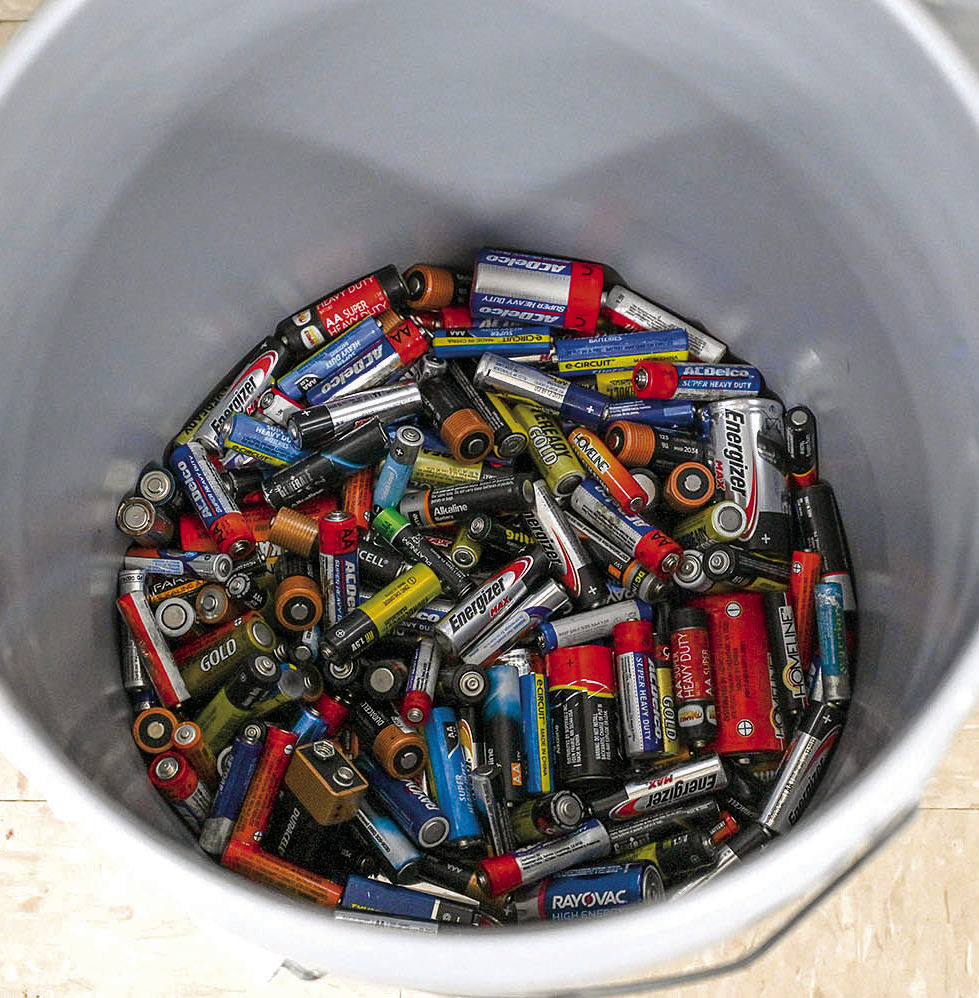
A team of five Georgia College & State University students organized a two-week battery recycling competition from Nov. 3-13 at Midway Hills Academy.
The students were all part of a campaign capstone class taught by Dr. Mengyao Xu. Last year, students learned how to create campaigns in different perspectives in Xu’s class and Xu stated that she recommends students to try the campaigns they crafted in class when approaching their capstone projects.
Mass communication students Olivia Gentry and Sairsha Connor were two of the leaders of the project and stated that the battery recycling campaign was an example from last year’s class.
“When planning for the project, we had to identify our target, which we chose elementary students because they are young enough to become invested in green habits early and can target their parents, which expands the impact of the campaign,” said Gentry.
“Midway Hills Elementary’s afterschool program was looking to do a similar project and so we chose them to be our target for this initial campaign,” added Connor.
According to Electronic Cycling and IT Asset Disposition, batteries contain multiple toxic chemicals in their make-up which can cause significant environmental pollution if not disposed of properly. Due to this, it is not always safe to throw batteries in the trash can.
“When a battery is spent, you have the steel, brass, zinc, manganese dioxide, and potassium hydroxide remaining. If you throw it out, over time, it breaks down and gets into the soil, groundwater, and even air. You might think it’s okay because it’s in a lined dump site, but it takes time for a battery to break down in a mound of buried trash,” the article states.
According to call-2recycle.org, Georgia is one of 17 states without household battery recycling requirements and battery drop-off locations in Baldwin County are limited.
Due to these reasons Gentry and Connor, alongside Clary Eidell, RJ Head, and Aidan McGowan, connected with multiple organizations to not only be able to collect the batteries but ensure the safe disposal of each one.
“I spoke with Josh Lassiter at the Battery Warehouse, and he explained that they ship the batteries in bulk to their certified recyclers every week by the full truckload. He also shared an article that outlines the full recycling process used by their certified partners to us so we could understand the full scope,” said Gentry.
The group’s goal was to collect 100 batteries, though the exact number was not counted, and the end weight was 27 pounds of batteries donated by elementary students.
“We were pleasantly surprised about how it turned out,” said Gentry. Connor added, “The kids became very invested and excited for the end celebration, where we partnered with Chick-fil-A to provide a meal. All our preparations for our skit, the appearance of the Chickfil- A cow, and more on the first day led the students to get excited and want to collect and donate.”
The initial visit to Midway Hills Academy also included a custommade coloring sheet. It was informational for students and parents to ensure they understood the competition and the environmental benefit of donating their batteries.
“This was as much about education as it was about competition. Students needed to understand why they were collecting and donating and what would happen to the batteries, if they were going to continue to make the best choice after the end of the competition,” said Connor.
GCSU’s Office of Sustainability collected the spent batteries and sent them to the Battery Warehouse, where they will be sent off by truckload. According to Electronic Cycling and IT Asset Disposition, the batteries are “often shredded in giant shredders that break up the batteries into small pieces. The shredded material passes through magnets to separate the metal components from paper, plastic, and the powders.” Steel can be melted down, as well as plastic, and reused to make new products.
“What’s called the black mass core, which is the magnesium oxide and other materials are processed in a kiln to transform them to materials that can be reused,” the article states. “ As you recycle larger quantities of batteries, it helps reduce the need for mining of raw steel ore. It reduces the amount of petroleum needed to make new plastic pellets. Recycling supports a circular economy, which is going to help the environment and raw mineral supplies in the long run.”
In December, Xu and her students will meet with Baldwin County Superintendent Dr. Kristina Brooks to discuss program expansion across the school district. Xu stated there are also plans for her future campaign capstone classes to continue the project and hold competitions in more schools. Connor stated she also plans to stay involved after this semester, as she will remain in Milledgeville after graduating.