
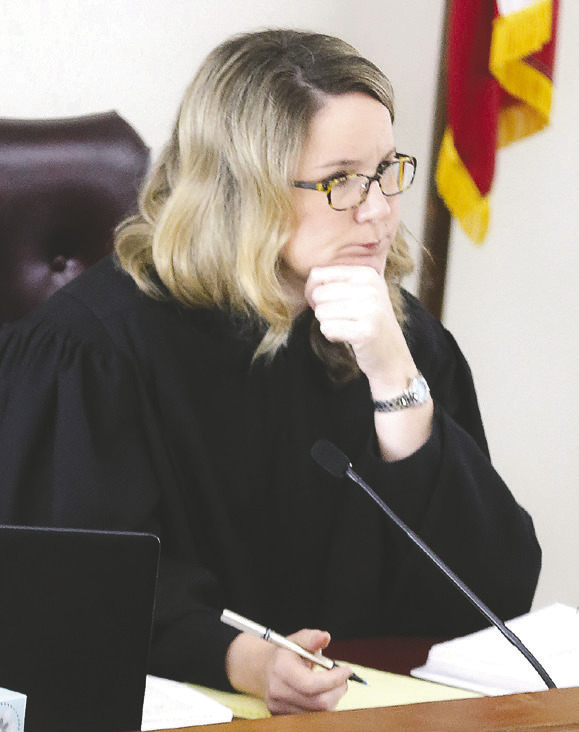
The Ocmulgee Circuit Chief Superior Court Judge was recently appointed to the state Judicial Qualifications Commission by the Georgia Supreme Court.
The announcement of the appointment of Judge Alison T. Burleson to the JQC was made in a March 4 press release by the high court. The judge was appointed to the Judicial Qualifications Commission Hearing Panel.
Burleson replaces Judge Brian M. Rickman, who was appointed as Court of Appeals Presiding Judge. Rickman replaces DeKalb Judicial Circuit Superior Court Judge Stacey Hydrick, who recently stepped down from the position.
Burleson replaces Rickman as the Hearing Panel Presiding Officer. She has served as a superior court judge since 2014.
Prior to becoming a judge, Burleson was an assistant district attorney in the Ocmulgee Circuit and an adjunct professor at Georgia State University College of Law, where she earned her Juris Doctorate.
The judge is a native of Florida and came to Georgia to attend college. When she graduated from law school in 2000, she stayed in Georgia and became a prosecutor to continue in her family’s tradition of public service.
Chief Justice Michael Boggs expressed his appreciation of the appointees.
“We are thankful for the leadership and commitment of Judge Rickman and Judge Burleson to take on these roles,” he said. “We are also appreciative of Judge Hydrick’s many years of service to the JQC.”
About the commission
The JQC is comprised of 10 members. Seven members serve on the Investigative Panel, and three members serve on the Hearing Panel. The Investigative Panel is responsible for investigating and prosecuting allegations of judicial misconduct. The Hearing Panel is primarily responsible for adjudicating hearings when the Investigative Panel brings such charges of misconduct.
The commission was created by constitutional amendment in 1972 and amended in 2016 to conduct investigations and hearings with respect to complaints of misconduct by Georgia judges. The commission is also authorized to issue opinions regarding appropriate judicial conduct.
The JQC operates under rules established by the Supreme Court, and complaints must be based on violations of one of the four canons of judicial conduct. Those canons are upholding integrity and independence; avoiding impropriety and the appearance of impropriety; performing duties fairly, impartially, and diligently and engaging in activities consistent with the obligations of the office.
More information about the structure and operations of the JQC may be found on its website gajqc.gov.
— Contributed