
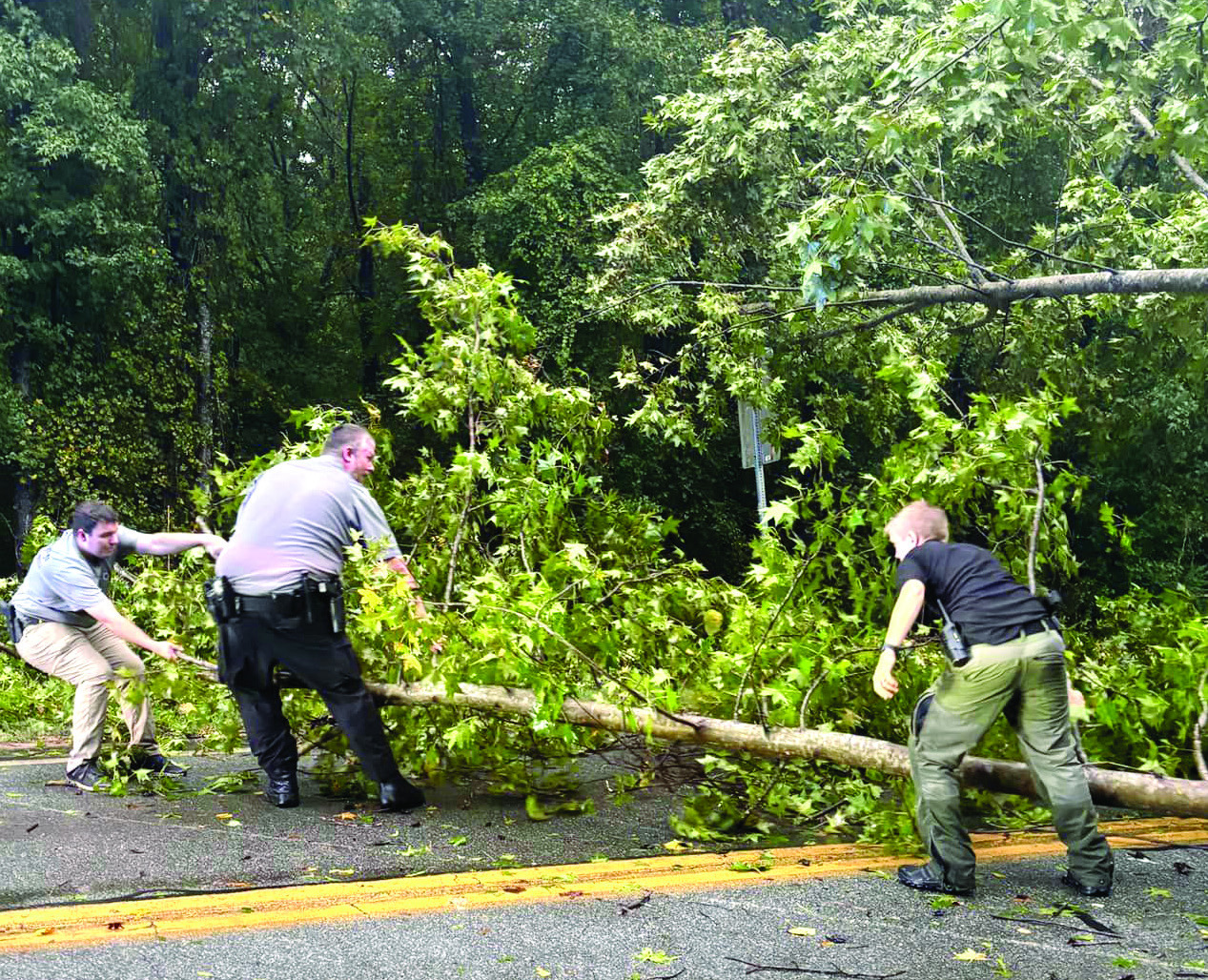

Over the past weekend, Hurricane Helene made landfall in the Big Bend area of Florida’s Gulf Coast and brought devastation from Florida to the Carolinas with impacts across multiple states. On Monday, Gov. Brian Kemp reported that 25 Georgians died in the storm, many inside homes hit by fallen trees.
According to Baldwin County Emergency Management Director Wayne Johnson, Baldwin County was not heavily affected.
“In comparison to the counties to the east, we didn’t have any problems at all. We did have trees down and had power outages, but we have recovered,” said Johnson.
According to Johnson, as of Wednesday morning, all roads are passable and there are no power outages. Baldwin County had no reports of injuries or death, and while debris is still needing to be cleared from the city and county right of ways, the focus is on assisting recovery efforts in surrounding areas.
“Baldwin County is back to functioning,” said Johnson. “We have continued our daily operations because we were not hit like our friends in the east. I’ve been coordinating with other counties to meet their needs and our local county fire department and volunteer organizations are collecting water and non-perishables to deliver to counties in need.”
On Tuesday, President Joe Biden approved a major disaster declaration for Georgia in the aftermath of Hurricane Helene. Funding through the Federal Emergency Management Agency will be available to affected residents in the counties in southeastern Georgia hit hardest by last Friday's storm: Appling, Brooks, Coffee, Columbia, Jefferson, Liberty, Lowndes, Pierce, Richmond, Tattnall, and Toombs.
Helene caused massive damage around the state with many videos and news reports revealing the catastrophic state of areas such as Augusta or areas around Atlanta; however, its effects spread north and also hit the Carolinas with massive devastation. FindEnergy, an independent organization that creates comprehensive data for evaluating the consumer energy landscape in the United States, reported that as of Wednesday morning, 385,021 out of 5,463,803 tracked meters were without power in Georgia. According to Capitol Beat, more than 1.3 million lost power at Helene’s peak. In comparison, according to FindEnergy, as of Wednesday morning, 40,693 meters in Florida, 491,048 meters in South Carolina, 338,677 meters in North Carolina, and 43,870 meters in Virginia were without power.
FEMA advises that the best way to assist recovery efforts is to volunteer, donate, and identify needs. Volunteer with a reputable group or organization and do not go by yourself to a disaster area. Support voluntary organizations or families with financial contributions.
Before donating supplies, connect with organizations working in the affected area to find out how much is needed and when it is needed. Ensure safety when discussing how to deliver these supplies as well.