
Looks can be deceiving
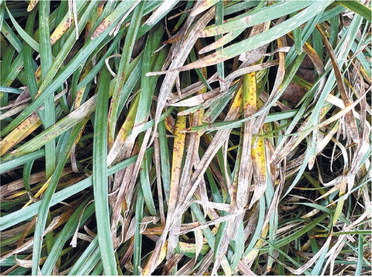
Diagnosing plant disease can often be tricky, as seeing a small portion of the plant or a picture only allows for the discovery of what is shown. Without the full picture of what is going on with the plant, it is hard to know if any discovery is the causal agent or not. Therefore, there are several questions that need to be answered to figure out what is negatively affecting the plants. These questions may include how much water the plant receives, what have the weather conditions been, how old is the plant, does it get fertilized and/or when, etc.
Recently, there was a need for some plant tissue to test out modifications that were made to the microscopes at the Extension office. So, a sample of Liriope (also called Lilyturfs and monkey grass) was chosen. Surprisingly, the damaged tissue collected was infected with both Anthracnose and Bipolaris. Each of those pathogens are fungal, and cause lesions on the surface of the host plant tissue. It would have been easy to merely say that both of these diseases were causing the necrotic or dead tissue on this plant; however, this would not be correct.
The necrotic tissue could be a result of the extremely dry conditions witnessed over the summer that went unnoticed or is just now displaying the damage. It could be freeze damage from the extreme cold weather witnessed at the end of December. In this particular case, an environmental factor, such as weather, has caused the dying tissue, and the pathogens are saprophytic or secondary. The rain and warmer temperatures create a more favorable environment for diseases. However, even though the pathogens are saprophytic they do need to be managed so that the disease density does not increase as temperatures rise in the spring and summer, which could eventually cause a lot of damage. The key will be to remove the damaged tissue and dispose of the clippings by cutting off all of the damaged leaf blades individually or mowing the liriope back enough to remove the infected area.
Managing disease is made much easier through early detection and keeping plants healthy so that their natural defenses can fend off diseases. If something appears to be off about a plant, then keep an eye out to what has been going on environmentally, have an idea about what has been done to the plant, and feel free to contact the Extension office for a site visit or to drop off a sample, call at 478-445-4394 or email brennan4@uga.edu.