
Getting a handle on soil compaction
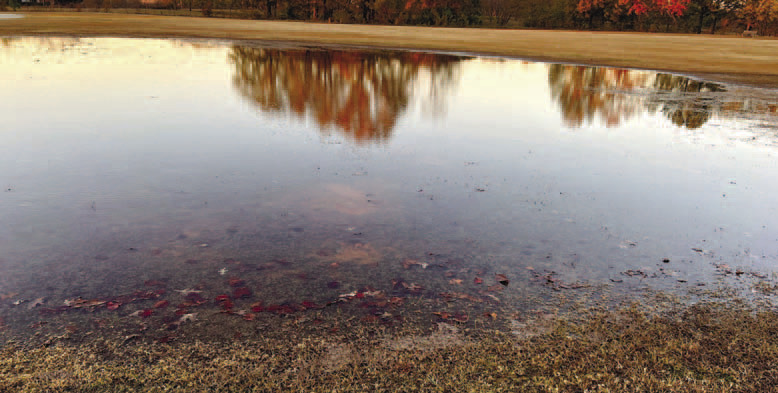
The accompanying picture may look like a beautiful pond reflecting the autumn colors and inviting people to walk around its edges to soak in the smells of nature. However, this ‘pond’ is actually a park with highly compacted soil and the water is a beast currently damaging the grass submerged underneath. This area is suffering from compaction.
If an area lacks the proper amount of topsoil, leaving only the subsoil, then compaction can happen rather quickly. Clay soils typically have less organic matter, and become hardened and compacted when dry. In turn, compaction can occur by walking on wet soil.
Significant compaction will occur with excessive rainfall, grazing livestock, driving on a yard or continuous heavy foot traffic. When any of these instances occur, soil particles are pressed together and reduce the space between them to allow for nutrients, air or water to flow. The result is poor producing areas, disease and water retention.
When a compacted area is located, determine what is contributing to the compaction and then stop this action. Secondly, aeration may be required. Aerating or coring removes a plug of soil from the compacted area that will allow water, nutrients and air to move into the soil. This practice can be performed every 3-4 years, but in extreme cases it should be performed more often.
Another solution is to add organic matter to the soil. This will benefit the properties of the soil, and may improve drainage. If there is compacted soils and varying topography, then consider having the area regraded if the issue is extensive. By grading the soil, rainfall can be diverted to a better location and the soil can be cultivated and break up the compacted area. This would be a solution if the area is fairly large, and it is the more expensive option listed.
When going through this process, remember that the soil did not become compacted overnight and the process for fixing it will take time. Note, that roots do not grow well or spread in compacted soils, and most plants do not do well being submerged in water for extended periods of time. Compaction has the propensity to not only create an unwanted pond on a lawn or property, but can damage or kill the plant life. Therefore, keep a watch out for puddles or ponds and make a habit to add in organic material to the soil and observe plants for signs of decline.
For any questions about compaction or other agriculture related topics contact the Baldwin County Extension office at 478-445-4394 or email brennan4@uga.edu.