
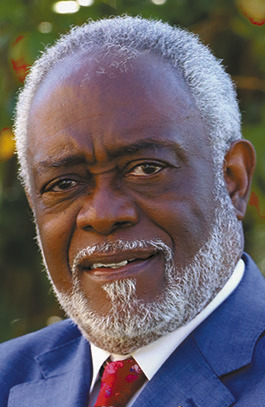
I was 18 in May of ‘62.
‘Old enough to fight, old enough to vote’ was the catch phrase of the day. I had registered to vote in my hometown of Milledgeville. It would be my first time casting my ballot and I was determined to fulfill this moral and ethical obligation.
John Fitzgerald Kennedy would be elected the 35th President of the United States. I would answer his call to action, intrinsically motivated to contribute to the public good. When he uttered, “Ask not what your country can do for you, but what you can do for your country” during his inaugural address, I took his impassioned words to heart.
There were countless others who did the heavy lifting needed to achieve those initial firsts. Social reformers, like Thomas Mundy Peterson who was the first “negro” to vote. He cast his ballot on March 31, 1870, one day after the passage of the 15th Amendment. It reads in part, “The right of citizens of the United States to vote shall not be denied or abridged by the United States by any State on account of race, color, or previous condition of servitude.”
I knew our country’s sorted history. In some states, only white male property owners could exercise their constitutional rights with the white supremacist government denying the majority of a half-million freed Blacks access to the ballot box. Many would put their shoulders to the wheel and join the movement, enlisting in a hard-won fight for freedom. Their framed images, like those of John and Robert Kennedy, Dr.
Martin Luther King, Jr. and sometimes Jesus, would grace the walls in “negro” homes across the south.
It was an exciting time. I was heading off to Tuskegee Institute (University) where I would face more firsts.
The movement was in full swing with protests igniting a firestorm that could not be extinguished. Like many of my fellow ‘golden tigers’ I was deeply involved in the student movement, protesting alongside civil rights activist and navy veteran, Samuel Leamon Younge, Jr., the first black college student murdered for actions supporting the civil rights movement.
Booker T. Washington noted that “a race, like an individual, lifts itself up by lifting others up.”
And I was willing to bear the weight. We stood in the midst of a social revolution, a whirlwind of change. My time at Tuskegee was instrumental; it shaped me into the man I am today.
Unbeknownst to me then, I would achieve many firsts in my personal and professional life. It’s a privilege I have never taken lightly.
When you earn the distinction of being the first, you may not live to see your contributions acknowledged. The sacrifices and all the blood, sweat and tears can be easily forgotten.
That’s when the efforts of those who came behind and their willingness to remember really count. When the fruits of our labors are sown; a renewed sense of unity consciousness can be birthed.
Many people, both young and old, grapple with a fear of an uncertain future. The foundation upon which ‘we, the people’ stand can seem so fragile. So many wrongs still need to be made right. Our faith in democracy ebbs and flows as the next generation of voters wait in the wings. What will their “firsts” be?
What new truths will be unveiled?
Whether you are a first-time voter or casting your ballot for the sixtieth time, your views, your voice, your victories matter. Exercise your constitutional rights. Your vote counts, first and foremost.