
Daddy longlegs: World’s most dangerous spider?
Baldwin County Extension Agent
Brennan Jackson
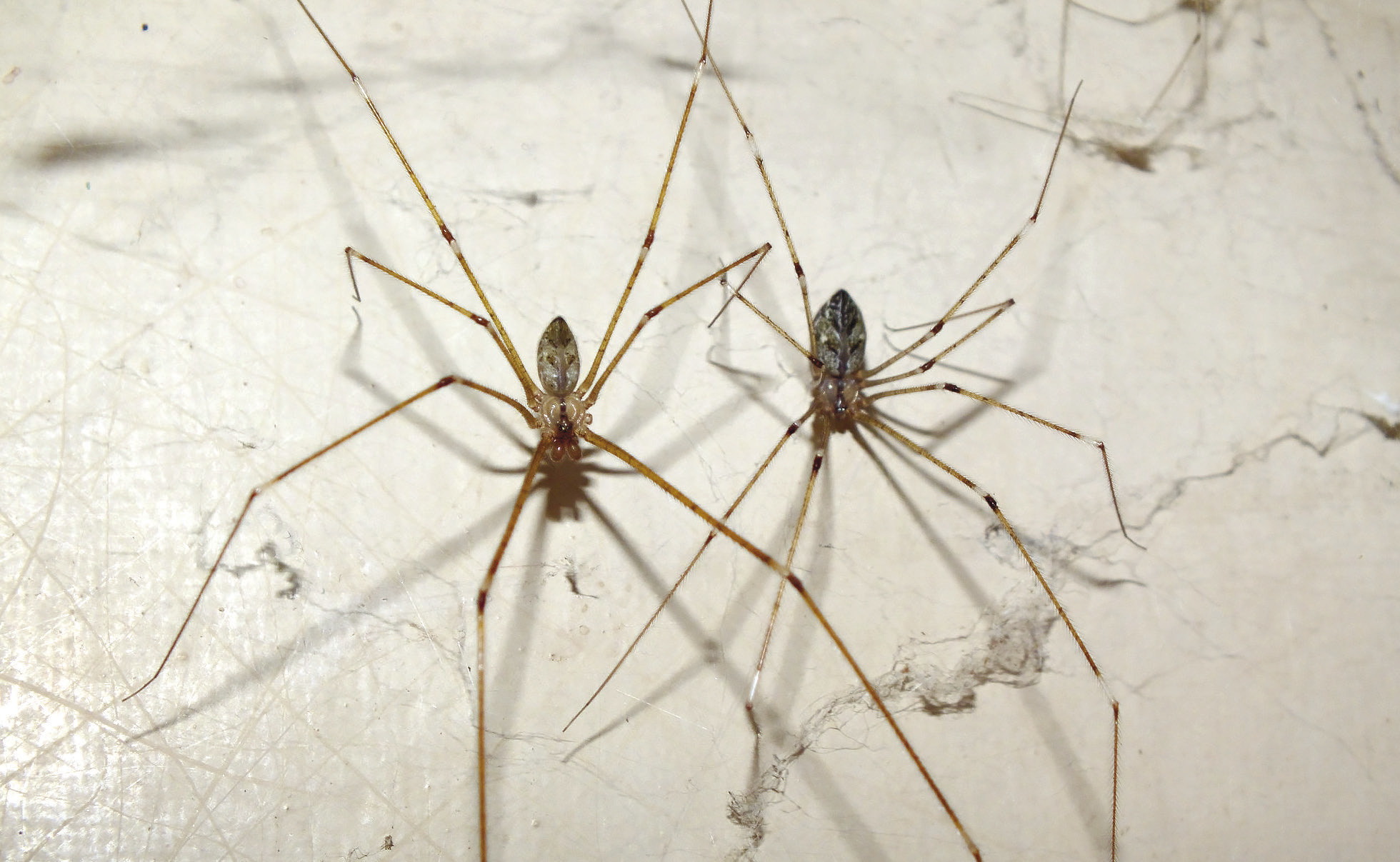
We’ve often heard that daddy longlegs—real name Pholcus phalangioides— are the world’s most dangerous spiders because their venom or poison is the most toxic. The only thing that saves us, supposedly, is their mouths and fangs are too small to be harmful to humans. Of course, that doesn’t stop many people from being deathly afraid of these “fearsome” creatures.
But the truth is that daddy longlegs do not produce venom and don’t even have fangs. Furthermore, daddy longlegs are not even spiders. Now, do they have the eight legs that a spider typically has? Yes. Can they produce silk? Yes. Do they look like a spider? Absolutely. But still, they are not spiders.
Spiders belong to the order Araneae that consists of more than 46,700 species. However, daddy longlegs is not among those species; they actually belong to the order Opillones. Also, spiders tend to be solitary creatures, whereas daddy longlegs tend to be more social creatures willing to congregate with one another. Spiders produce silk to make webs, and daddy longlegs do not have that web-making capability, though some can shoot silk quite far to trap their prey.
Spiders are predators that inject venom into their prey through fangs, while daddy longlegs have mouth parts that operate more similarly to crab claws in a pinching motion.
Regardless, these creatures are quite beneficial. Their diet consists of a broad range of things from rotting fruit, dead insects, other spiders and insects, including aphids that can cause considerable damage to plants.
This type of pest management is referred to as biological control. Biological control happens when insects prey upon other insects that cause damage to crops, ornamentals and turf. This process often can work extremely well and may significantly reduce the need for pesticides.
Insecticides should be used only in the most extreme cases of insect infestation. For more information, please contact the Baldwin County Extension office at 478-445-4394 or email brennan4@uga.edu.