
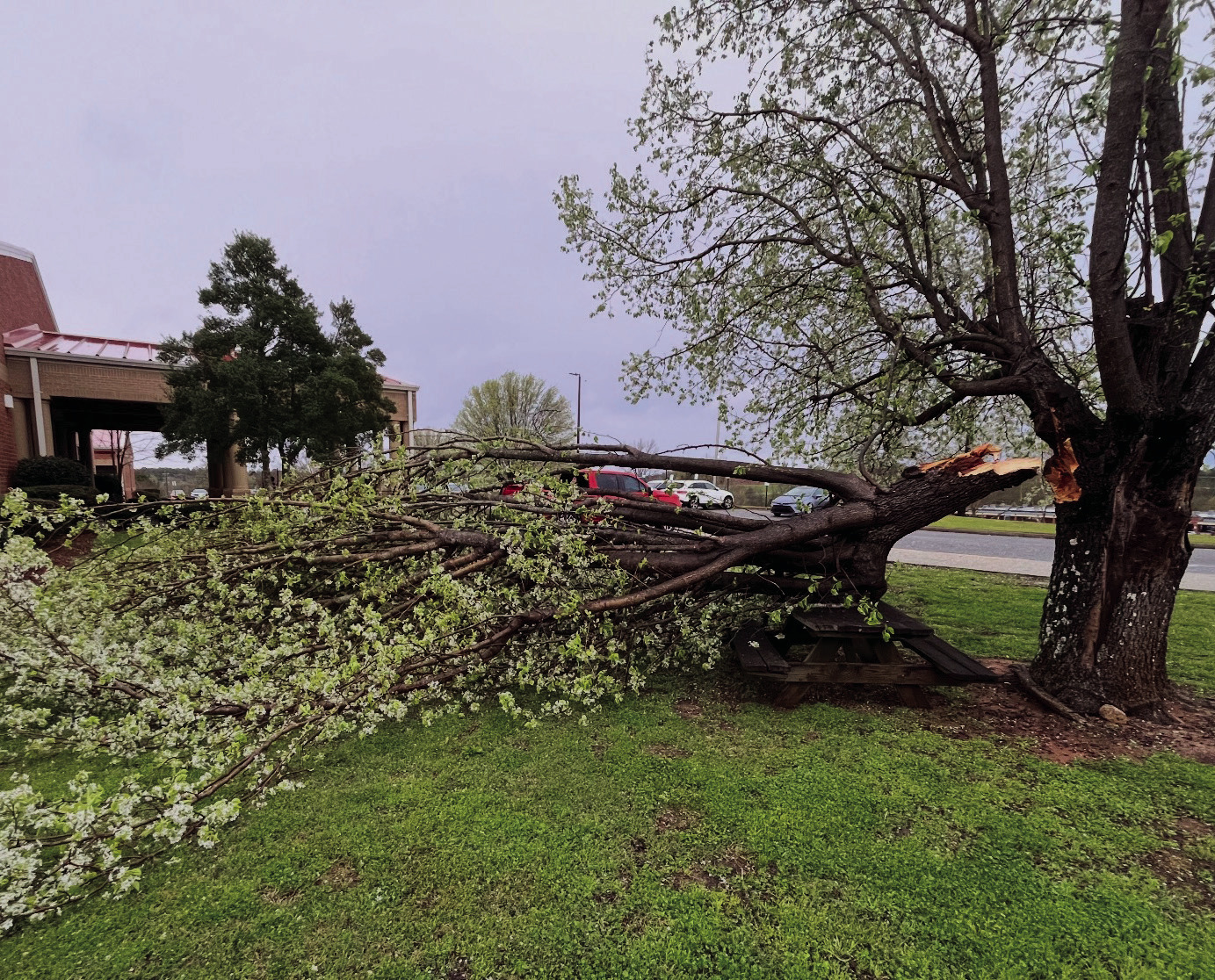
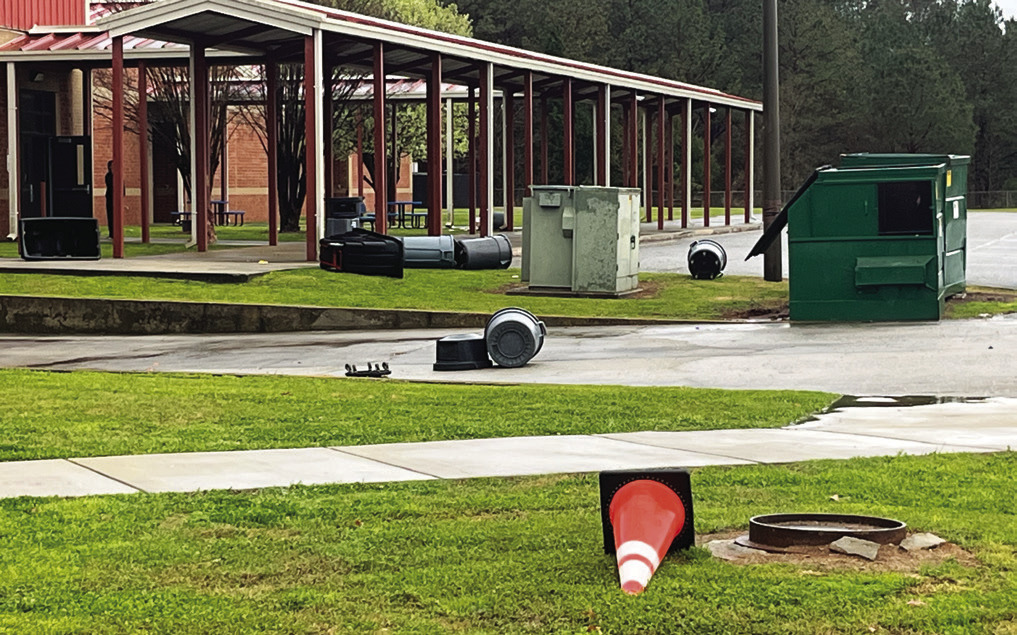

It was a very tense few minutes around Midway Hills Primary last Thursday morning, when the school was in the direct path of an EF0 tornado.
The sun was still coming up, which only added to the tension. Students were crying, and the trauma was real. Nevertheless, the students made it to the their predetermined “safe zones,” crouched down low, hands over their heads, just as they’d been taught.
The Baldwin County School District typically receives advance warning from the National Weather Service in the event of possible severe weather, usually the day before and in the form of a virtual meeting, according to Superintendent Kristina Brooks. Last Thursday, however, there was no virtual meeting, and the warning didn’t come until the last minute.
“The NWS did not host the standard weather briefings for school systems that we rely on for early planning. The emergency broadcast on Thursday morning came seemingly out of nowhere, and this is reflected in the fact that none of our region’s county schools were closed on March 12, and many implemented delayed starts while buses were already conducting the morning route and then they were forced to shelter in place, which is what we did,” Brooks wrote in an email to The Baldwin Bulletin.
Nevertheless, the training kicked in once the severe weather struck, and all teachers and students made it through the tornado safely.
“We run safety drills every month. These drills are completed to ensure our reaction is automatic, which is what we observed on March 12. For our central office administrative team and principals, the most important part of our drills actually happen after the drill,” according to Brooks.
All employees are given a Ready Reference “flip book” that “dictates exactly how to secure students within the first 60 seconds of an alert,” according to Brooks.
BCSD Safety Director Corey Goble added that the district trains for these situations throughout the year, on top of the four state-required tornado drills annually, two in November and two in February.
“The district provides emergency guidance documents for schools such that staff and substitute teachers can quickly familiarize themselves with the expectations of what to do in the event of severe weather,” Goble said.