
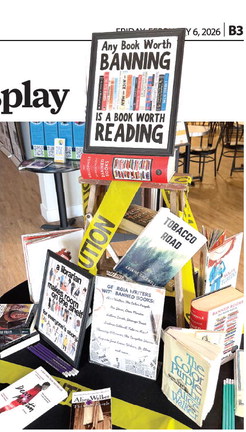
Why are books banned? It depends on whom you ask, and opinions range from those who see book banning as censorship that silences minority voices to others who believe it’s a parent’s right to limit children’s exposure in public schools.
Most everyone values freedom; most everyone values protecting children; but finding the right balance has been a debate in the U.S. since the 1850s with the publication of The Scarlet Letter and Uncle Tom’s Cabin.
But what about Georgia’s banned authors?
Some of Georgia’s most breathtaking voices and their award-winning books have not always been met with open arms, instead facing a censor’s “shushing.” You may be surprised to learn that several writers in the Georgia Writers Museum Hall of Fame have produced some of the most notable banned books from our state.
Back in 1944, while living in Clayton, Georgia author Lillian Smith released Strange Fruit. It wasn’t a book about citrus; it was a gritty look at interracial love in a small Georgia town. Labeled “obscene” at the time, it was banned from transport in the U.S. Mail. It took Eleanor Roosevelt’s strong urging of FDR to finally get the ban lifted. To learn more about Smith, visit the traveling exhibit at GWM sponsored by the Southern Literary Trail.
Erskine Caldwell’s Tobacco Road (1932) didn’t just walk the line; it danced over it. Also set in Georgia, it was universally banned by the state after
local libraries and officials condemned its crude depiction of impoverished sharecroppers. Even the library in Caldwell’s hometown of Moreland refused to carry it. The book was an international bestseller, selling millions of copies.
Alice Walker’s The Color Purple (1982) is another masterclass in resilience, a story of finding one’s voice when the world wants you silent. It won a Pulitzer Prize and a National Book Award. Yet it is No. 17 on the American Library Association’s list of “100 Most Frequently Challenged Books” because of its sometimes- explicit content.
Atlanta bestselling young adult author Nic Stone’s modern classic Dear Martin (2017) is a mirror held up to today’s headlines. Time magazine named it among its 100 best young adult books of all time. A number-one New York Times bestseller, some Georgia districts have blacklisted it for being “too uncomfortable.”
Book banning can be a dangerous tool of censorship that stifles intellectual growth and undermines democratic values. By removing literature, a society risks narrowing the “marketplace of ideas,” depriving readers of the diverse perspectives necessary to build empathy and critical thinking skills.
Come take a peek at GWM to see for yourself what all the fuss was about —and be a rebel — purchase a once-banned book!
Georgia Writers Museum at 109 S. Jefferson Ave., Eatonton, is open 9 a.m. to 3 p.m., Wednesday through Saturday.
— Contributed