
Last week was National Newspaper Week, which means a lot to me. I have the best job in the world.
Each week, I get to share my thoughts with you, courtesy of the editors, and then wait to see how you feel about those thoughts.
I’ve been at this for almost three decades and over that time I have made good friends with readers I hear from regularly but likely will never meet face-to-face.
You have been with me through good times and bad. You have chided me when I needed it, and if I ever wonder if the column is being read, an error of fact or an incorrect number will get me enough mail to know, yes, it is.
The most rewarding part of this job and the most humbling, however, is when you tell me that something you read here was impactful and that you took the time to share the column with others.
It serves as a reminder to me that words can make a difference and to choose them carefully.
My opinions and the space in which I am allotted to state them is only a small part of the role the paper plays in the community. There is no better source for local news than right here.
This is where you find out what your local government is up to, even if they are inclined not to want to tell you.
This is where you can check on the school board’s activities, learn about upcoming road closings, and read stories about community events, high school sports, and the good works of your neighbors. And according to the 2024 Trust in Media Study conducted by America’s Newspapers and Coda Ventures, local newspapers remain the most trusted news source in the country.
Big-city newspapers can’t say that, and it has cost them dearly. Frankly, the big boys have lost credibility with a lot of Americans because they have lost touch with them.
According to Oxford University’s Reuters Institute survey, more than half of people get their news from social media networks like Facebook, X, and YouTube. The survey says that politicians are “increasingly able to bypass traditional journalism in favor of friendly partisan media, ‘personalities’ and ‘influencers’ who often get special access but rarely ask difficult questions, with many implicated in spreading false narratives or worse.”
My definition of real fake news.
Ironically, online influencers and personalities were named as a major source of false or misleading information by almost half of people worldwide, putting them level with the politicians who seek them out. That is a sad state of affairs.
Journalism is all about trust and the further away journalists are from their readers, the less the trust.
You aren’t likely to run into the editor of The New York Times at the gas pump or see the publisher of The Wall Street Journal in your Sunday School class or attend the local civic club with the managing editor of The Washington Post. But here, you have those opportunities. You don’t like something you read? You can give those responsible instant feedback.
I had one editor tell me it sometimes took an hour to get out of the grocery store if the paper had published an article that aroused strong feelings among readers.
But he knew that means people were reading and engaged. And that is what local journalism is all about.
I get a bit of that myself. I had a reader come up to me at church once and tell me I was one of the best writers she had ever read. However, before I could get all puffed up and adopt my false modesty pose, she added, “I have never agreed with one thing you have ever written, but you write it well.”
I’m still processing that one.
National Newspaper Week has passed but not the emphasis on the role local journalism plays in our communities. It is an important one and I am glad the editors have let me have a small part in it and to share the opportunity with you. With their permission, if you will keep on reading, I’ll keep on writing. We are a team. And thanks to you, a good one.
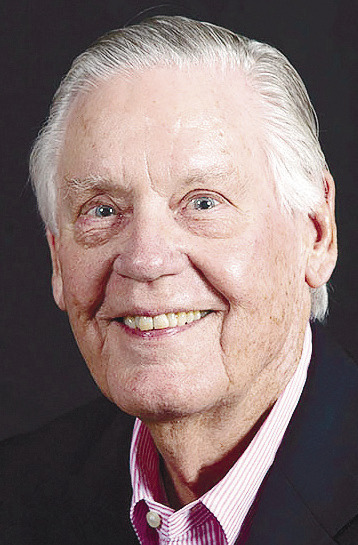
You can reach Dick Yarbrough atdick@ dickyarbrough.comor at P.O. Box 725373, Atlanta, Georgia 31139.