


Seeking Asylum debuted a new mini exhibit Oct. 26 in its “Fast Fading, A History of Central State Hospital” (CSH) exhibit. Fast Fading is the first exhibit to be housed in the former CSH train depot as part of an ongoing renovation project by Georgia’s Old Capital Heritage Center at The Depot to transform the facility into a cultural museum.
The new mini exhibit is titled “Death at the Asylum” and examines causes of death, and peculiar stories from when the mental institution was still in operation. All artifacts and information in the exhibit were provided via donation or through direct files from the museum’s record, including historical documents such as death records and receipts from patients’ bodies being transported home on trains.
Curator Jessica Whitehead, along with her two Georgia College & State University interns Alex Gray and Evelyn Evans, conducted the research to bring the mini exhibit into fruition and make a permanent display in the mini museum.
“My interns researched and created the graphic depicting the causes of death and their descriptions, that is in the right corner of Death at the Asylum,” said Whitehead. “Both of them worked very hard to ensure the information was accurate to what the deaths would be known as today and to be able to explain them so the average visitor can understand.”
According to Whitehead, their research began with the Georgia Lunatic Asylum, CSH’s original name, and its first patient named Tilman Barnett. Barnett died of what was then called “maniacal exhaustion.” Through their research, Gray and Evans identified that maniacal exhaustion or “exhausted mania,” is the fatigue and insomnia related to manic episodes associated with bipolar disorder.
According to their display, it is “associated with bipolar disorder, caused by excessive dopamine in the brain. Left untreated, this can lead to cardiorespiratory collapse.”
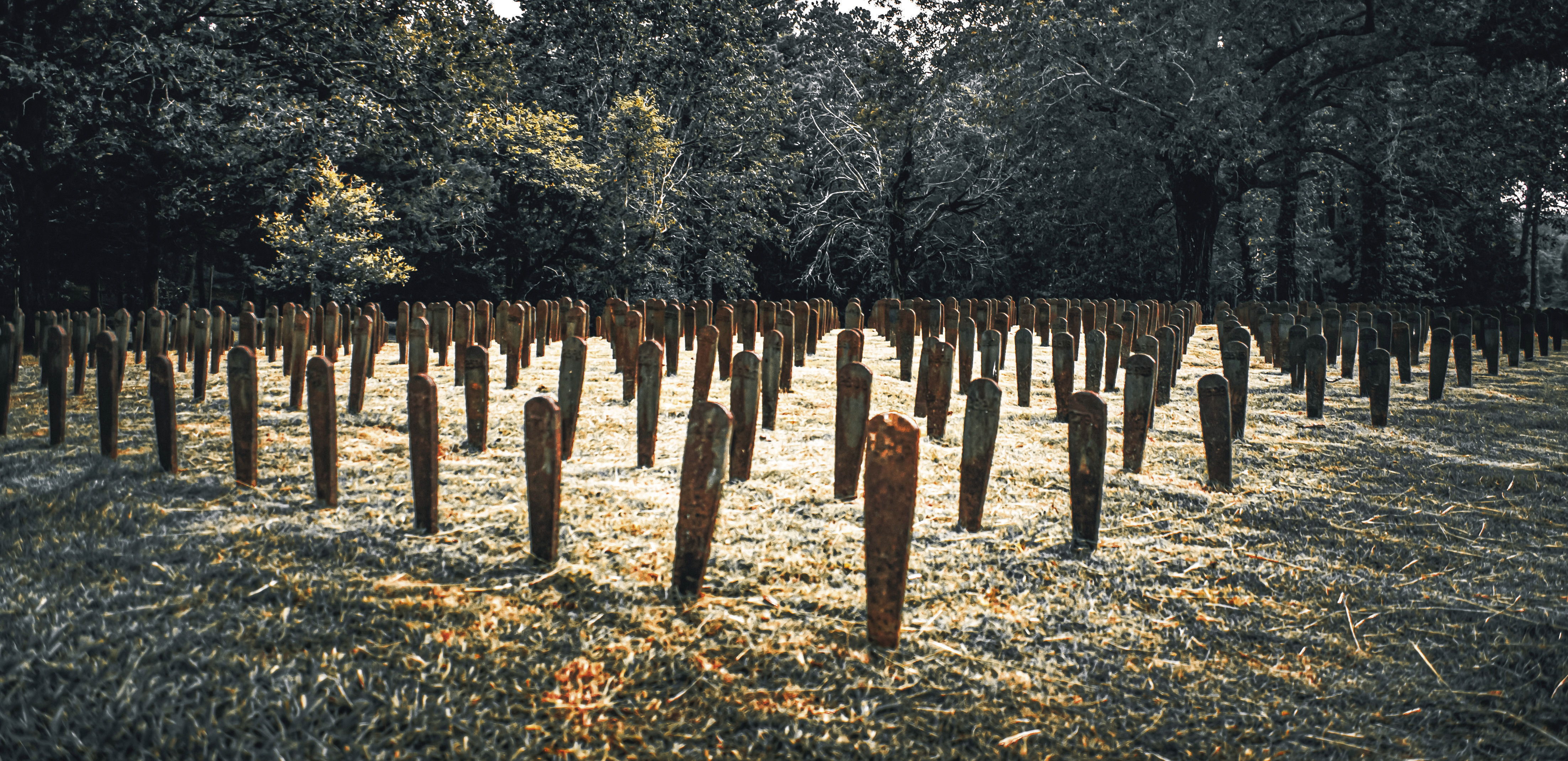
Barnett was the first of thousands of deaths at the hospital, with many of those who were passed and buried still lost to time. CSH’s Cedar Lane Cemetery displays 2,000 numbered iron markers displaced from graves over the years. According to the exhibit, there are upwards of 35,000 graves (marked and unmarked) on the grounds. As momentum to this resting place, Whitehead edited a photo she captured of the cemetery’s “guardian,” a life-size bronze angel, to include the quote “How can the dead be truly dead when they still live in the souls left behind?” by Carson McCullers to be displayed alongside the exhibit.
“I was touched and inspired by this quote to continue our research and as part of the exhibit, we chose to highlight a few notable deaths at the asylum. This included a well-known street performer named “Blind Willie,” the superintendent over African American patients, Joseph Ingram, and a serial poisoner who ran an old restaurant in Macon and was admitted and lived at the hospital for 18 years,” said Whitehead.
Whitehead interviewed State Senator Rick Williams about his experiences with Central State Hospital, as Williams Funeral Home took over mortuary services for the hospital upon the CSH mortuary closing in 1983. Williams provided information on the history of embalming and discussed his memories visiting the morgue in the Jones Building to retrieve the deceased.
“Some patients were as unwanted in death as they had been in life. Thankfully, many staff cared deeply for their patients and it was not unusual for Williams to retrieve a body that had been washed and shrouded by hospital staff,” Whitehead wrote in the exhibit’s informational display.
While researching for the exhibit, the interns studied CSH’s annual reports and identified that the same causes of death and afflictions were often referred to by different names as years passed or within a single report.
“The reports were an essential component of helping us piece this exhibit together and they show the progress that the mental healthcare field was making in such a short time period,” said Whitehead. “Everything was unknown and then being discovered, named, renamed or updated, so not everything was as uniform as today.”
Th exhibit is open by appointment or from 10 a.m. to 2 p.m. every Saturday. Whitehead stated that she and her interns hope the exhibit will shed light on the growth of mental healthcare and the lives of those who passed at Central State Hospital.
“We wanted to respectfully honor these deaths, educate, and provide a glimpse into not only their lives, but how they died,” said Whitehead.
According to Whitehead, the next exhibit is currently in the research phase and once it debuts will focus on Cuban refugees who fled to the United States, gained their licenses in the healthcare field, and worked at the hospital.