
>> GEORGIA COLLEGE
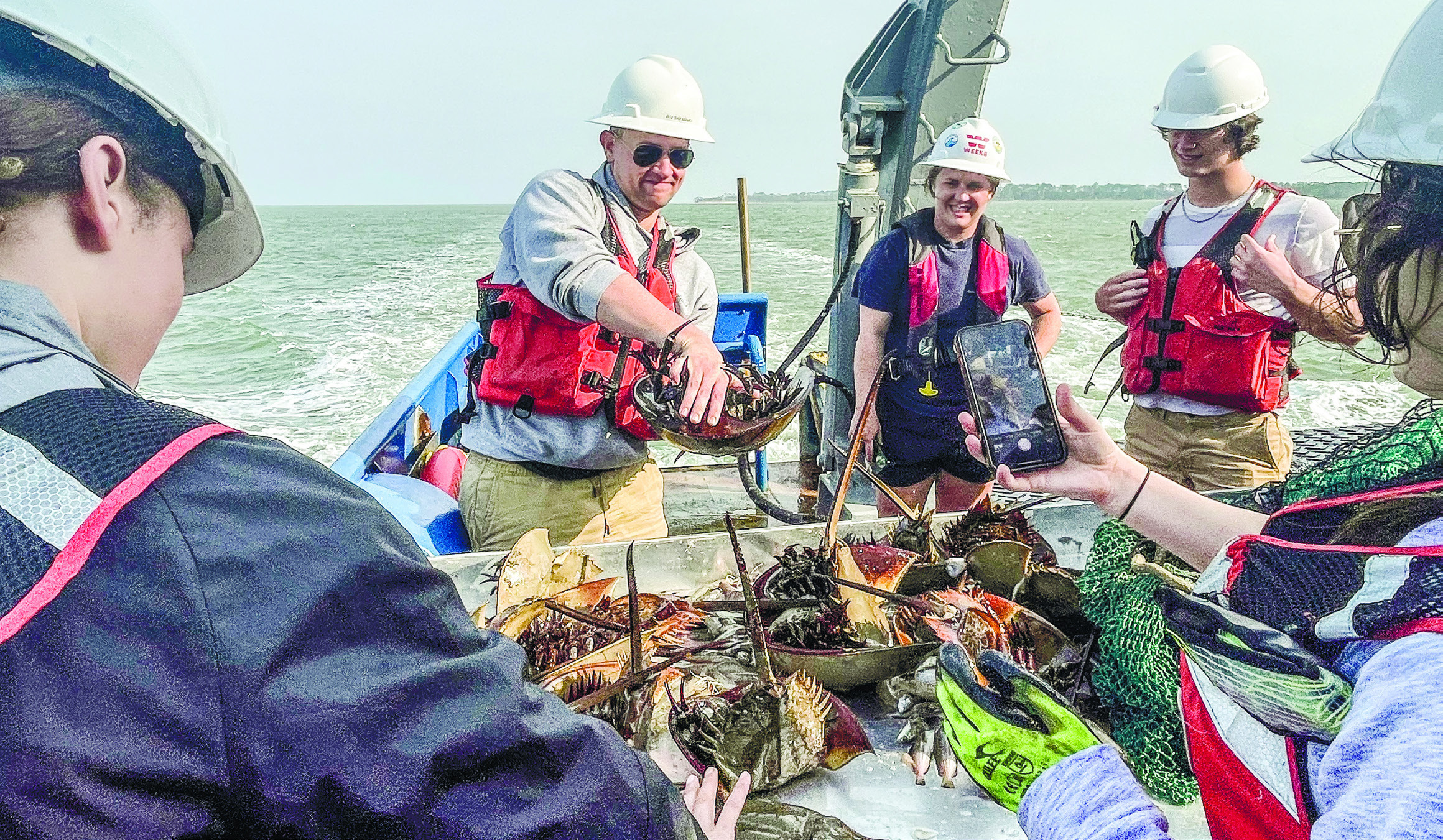
Georgia College & State University (GCSU) Associate Professor of Biology Dr. David Weese took his Intro to Marine Biology class on a recent research trip to Savannah and returned with newly-caught sea creatures for GCSU’s Aquatic Sciences Center.
The Aquatic Sciences Center was built to use faculty expertise and institutional resources to promote teaching, research, and community engagement on water-related topics and issues. As part of the center’s goal, students are to engage in active research and community-based projects. Which is exactly what Weese decided to do.
The day-long field trip was funded through the University of Georgia. Weese applied to be a part of a program through the University of Georgia’s Skidaway Institute of Oceanography. About 10 of his students in Intro to Marine Biology attended the excursion to learn first-hand how marine research is done.
“Last year, there was a call put out for educational days through this program and I thought it would be a great opportunity to take students out of the classroom. The excursion began around 9 a.m. as we left the docks and we returned at 5 p.m.,” said Weese. “It was about giving the students real-life experience in the water acting as marine researchers.”
The class used trawling nets to capture multiple ocean species, including crabs, mantis shrimp, miniature starfish, jellyfish, sea urchins and more.
The group also caught a pufferfish and stingray and returned them to the ocean after examination.
“Alongside studying the animals, students were able to deploy scientific instruments over the side of the boat. We measured things like the conductivity and temperature, pH levels, and more,” said Weese. “Typically, students learn these things through their textbook and pictures. Being able to take them on an excursion and have them do these measurements themselves and study these animals up-close was much more inspiring and memorable for them.”
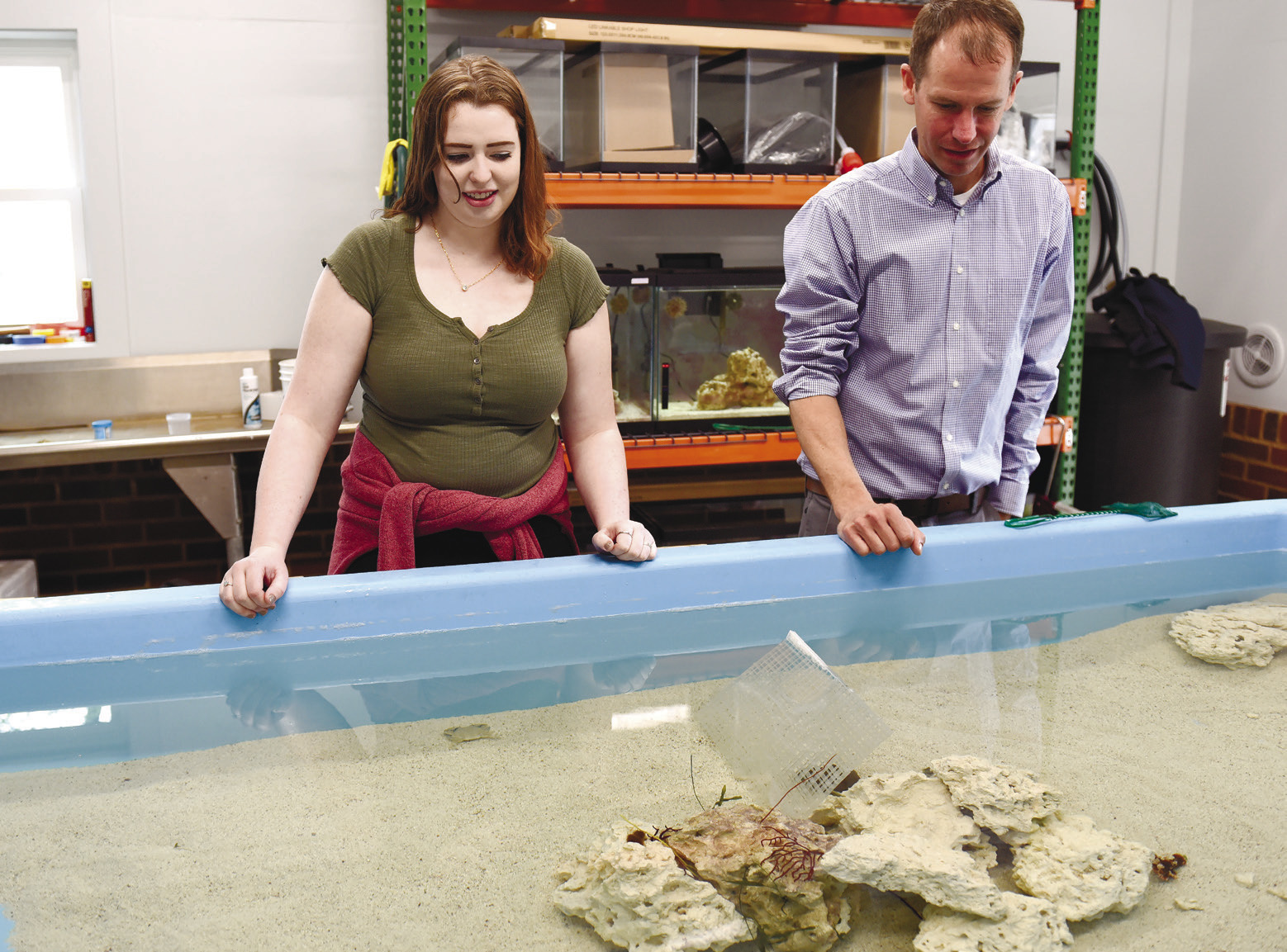
The marine lab is located behind the old greenhouse at Herty Hall. Inside, a 300-gallon aquarium is now the home to newly-caught translucent blue crabs, hermit crabs, mantis shrimp and miniature starfish.
“We hope to build more of a marine ecosystem in the lab. Our catches during our excursion are only a small step to that overall goal,” said Weese. “Students can hold and interact with marine organisms in the center and as we continue to grow the ecosystem, students will be able to expand their research and do measurements and more inside the center as well.”
The Aquatic Center is continuing to expand with short progress to offer students the hands-on opportunities that excursions like this give students. Weese’s students will continue to care for their newly caught creatures and classes in the future will also interact closely with the animals.