
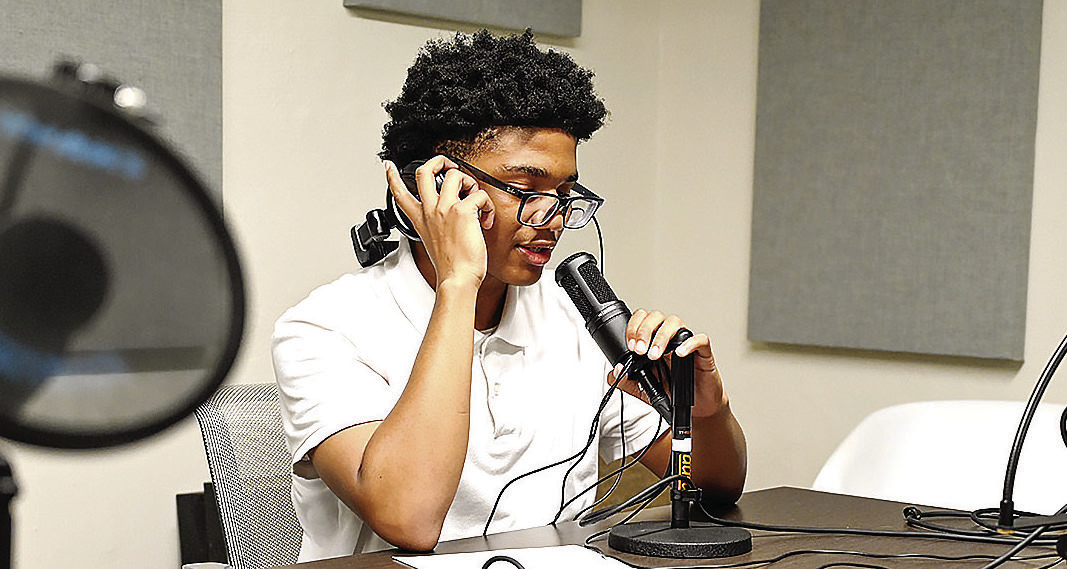
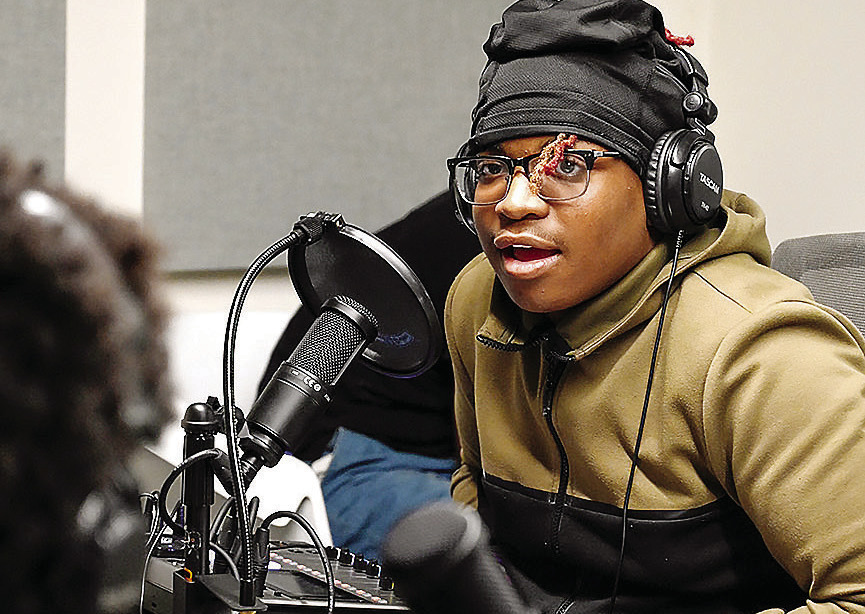
This past spring semester, High Achievers, an afterschool youth development program, had the chance to learn about podcasting and will be taking that knowledge with them into the future.
Dr. Benjamin “Chad” Whittle, an associate professor in the mass communication department at Georgia College & State University, taught the class twice a month during the semester. According to Whittle, the class was made possible through an Academic Affair grant that he applied for. The grant can be applied toward creative ideas and Whittle proposed a podcasting class as a way to get more involved with the community and allow youth to train with professional equipment.
“You can use the grants for research, creative ideas, and other activities. I wanted to introduce the next generation to podcasting and not just teach the medium but learn how to communicate through podcasting,” said Whittle.
Podcasting is a form of media that allows a person or group of people to speak their ideas and opinions on a variety of topics or create their own visionary project through the use of language. Podcasts can be educational, philosophical, a fictional series, and more.
“Having the opportunity to take their thoughts and ideas and present them behind a microphone is an important skill to have whether they go into media, pursue podcasting as a career, get into public speaking or more,” said Whittle.
The grant fund purchased all the equipment for a “podcast studio” that the students could use. Whittle aimed to teach them how to use professional equipment over other methods, such as using a phone.
“I wanted them to produce quality episodes and mimic a professional setting,” said Whittle. “I taught how to produce a podcast from pre-production (like how to find guests, create a show title, et cetera) to post-production (like marketing, editing, et cetera).”
Whittle’s lessons led to the students breaking into groups to produce a single episode of a podcast based around the chosen theme of “mental health issues.” The groups were able to choose the topic they wanted to discuss under this theme to put the skills they learned to use.
“The students recorded their podcast in the podcast studio in the mass communication department toward the end of the semester,” said Whittle. “High Achievers had a semester theme around mental health issues, which is a very important topic that impacts many young kids. It hits close to home for a lot of them, so each episode focused on an aspect of that, incorporating their own experiences, feelings, and thoughts.”
The episodes that the students recorded were not released to the public but were produced with the idea of speaking to an audience. A large part of the curriculum was to teach them how to “paint the picture” of a topic into their audience’s head.
“Podcasts are a great way to publicly speak and communicate because there is no element of video. Audio and video are important … but with video you can physically show something on a screen while podcasting is the theater of the mind. You have to paint the picture and share your thoughts without any assistance,” said Whittle. “The key is to learn how to entertain and share your thoughts through your voice to paint that picture for them.”
With an extensive background in radio and podcasting, Whittle explained that a podcast allows people to explore topics that may not be able to be discussed on the radio or be as impactful in video. Podcasting also holds the door open for the presentation and discussion of personal ideas and interests that may be restricted in other forms of media. That is why it is important to allow others to explore the medium and learn how to connect with the “theater of the mind” and carry those skills with them.
“The equipment that I purchased through the grant was gifted to the High Achievers program so they will have access to it for future students,” said Whittle. “I hope they will continue to put these skills to use going forward into the future.”