
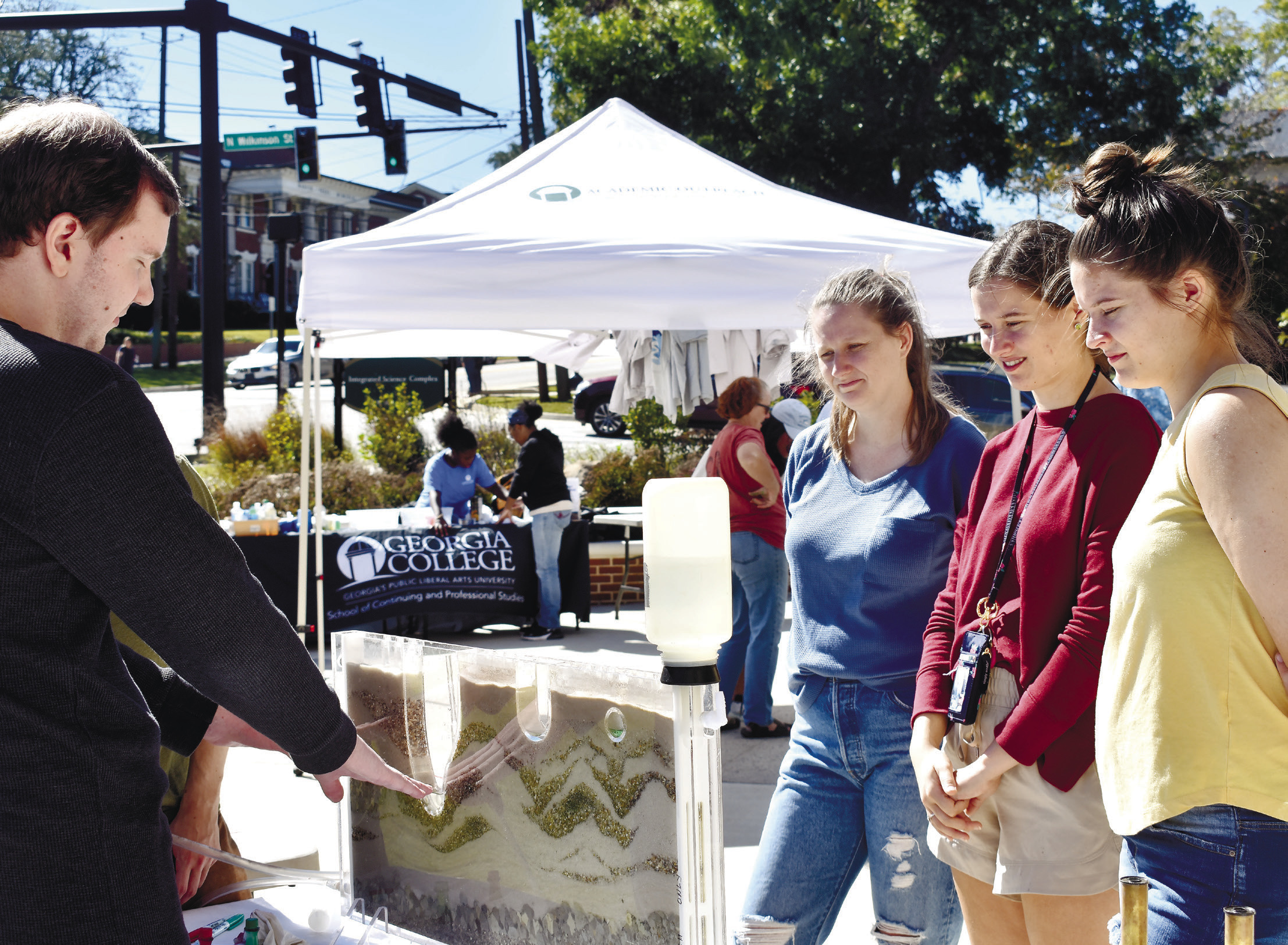
Georgia College & State University’s (GCSU) Academic Outreach Department and Aquatic Sciences Center hosted Water Education Day Oct. 21.
Debuting alongside Deep Roots, the event was hosted outside of the Integrated Science Center. Director of the Aquatic Sciences Center Dr. Samuel Mutiti and Director of Academic Outreach Ruth Eilers planned the event as a partnership between their Environmental Hydrogeology and Integrated Life and Earth Science classes.
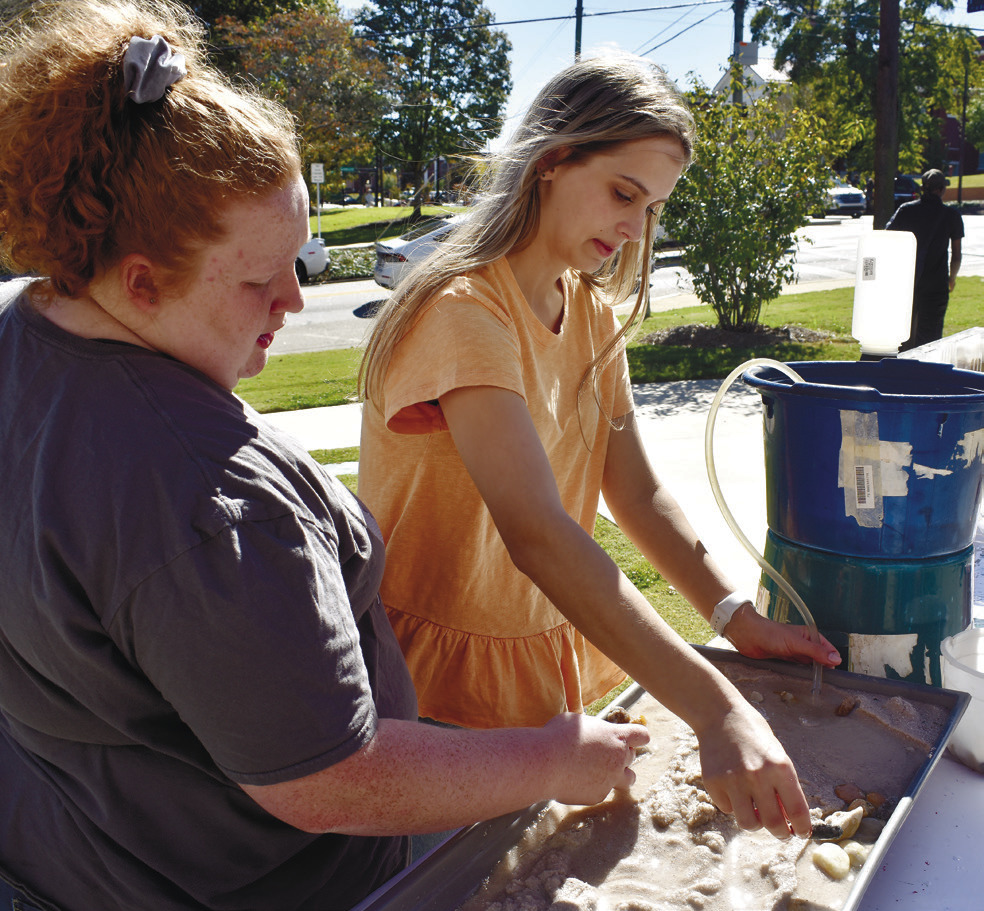
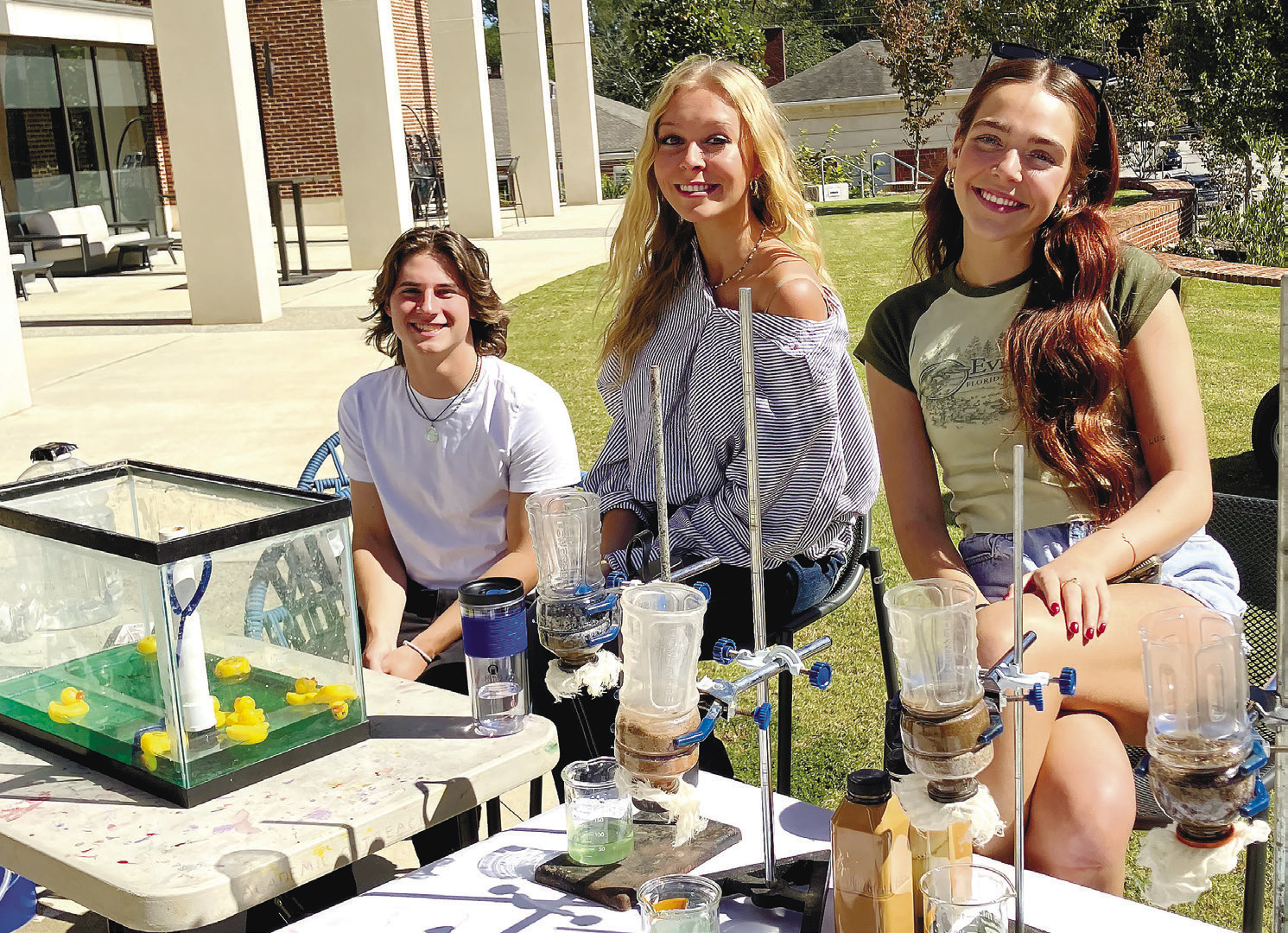
“Water Education Day is an opportunity for Georgia College students to get some community-based learning hours where they plan the activities for the community and then teach the public,” said Eilers. “Secondly, the day is an opportunity to teach the community about local bodies of water, wastewater treatment, and other qualities/activities to do with water that affect us.” Fourteen students and four Academic Outreach workers taught at the event about a variety of different topics. Lessons ranged from water properties to showing how contaminants are tested for within the water. Each table was a hands-on activity that the public could either do themselves or visually see what was being discussed. According to Eilers, many visitors loved participating in the pH test kits and testing water from Lake Laurel, Champion Creek, a rain barrel, tap water from Herty Hall, two different types of bottled water, and groundwater from Eilers’ well.
“There were about seven activities based on what students had learned in class, their personal interests, and real-world events,” said Eilers. “We let the students pick and explore what they wanted to convey to attendees and assisted them with whatever they needed.”
This was the second year that Water Education Day has been hosted but the first year of its inclusion in GCSU’s GCSU Thirst for Knowledge program. The course is based around community- based engaged learning and civic engagement to have students use classroom concepts in a realworld setting. Students complete 20 or more hours of coursework including at least one Georgia Adopta- Stream training or Educational Workshop, a community event or alternate break experience, and attend at least five hours of GCSU Thirst for Knowledge lectures/workshops covering a variety of topics around water, water quality and water education. Water Education Day is a designated community event for the program.
“Students facilitate community events, like Water Education Day through GCSU Thirst for Knowledge to take on the role of a leader and teach about what they have learned. Other events that they will do similar educational booths at are the ArtHealthy Festival, Art in SpArta festival, and science nights/field trips. Each student is able to choose what events they would like to be involved in,” said Eilers.
Another aspect of the GCSU Thirst for Knowledge course and Water Education Day is promoting and introducing the public to the Georgia Adopt-a- Stream program. Academic Outreach hosts monitoring sessions, that are open to anyone, throughout the year at Champion and Tobler Creeks alongside chemical or macroinvertebrate training. By getting connected with these programs, the community helps to unveil the story of local creeks and can become trained to adopt their own body of water to be monitored.
“With limited government resources, it’s often up to the community to closely monitor our local water sources so Water Education Day introduces the Georgia Adopt-a-Stream program and also helps to show event attendees examples of how we monitor our creeks,” said Eilers. “Attendees were able to do tests and activities at Water Education Day, like pH tests, that we do monthly at the creeks.”
Water Education Day helps to ensure that the public learns about water quality and is also well-educated to be able to recognize problems themselves.
“Being educated on the topic is not only crucial to identifying problems and finding solutions but it can be fun,” said Eilers. “Every body of water has a story to it and a different ‘build’ that can be studied. We hope the event inspired more people to get involved and helped them learn a bit more about how water is treated and observed.”