
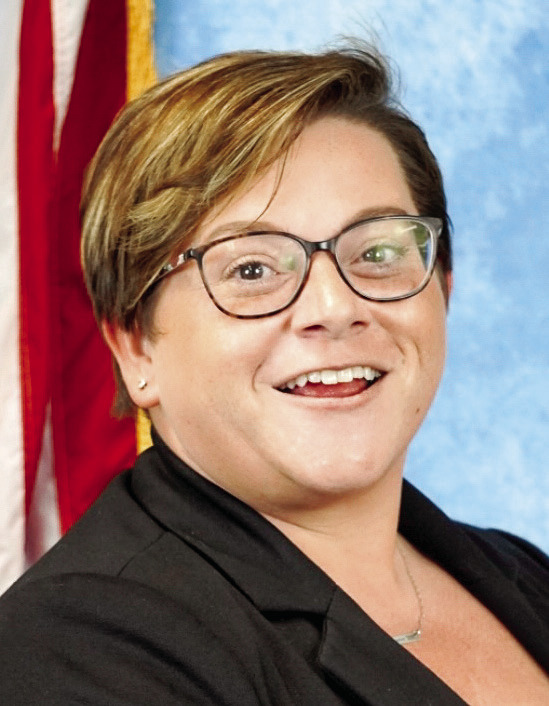
National Law Enforcement Week is from June 14-21. Throughout the week, communities honor the courage and salute the sacrifice of law enforcement officers. According to the National Law Enforcement Officers Memorial Fund, there are more than 800,000 law enforcement officers in the United States. Lauren Boyer works for the Department of Community Supervision as a community supervision officer in Milledgeville.
Earlier this spring, this reporter interviewed Boyer shared her experience on being a community supervision officer.
Q: Why did you become a community supervision officer?
Boyer: My brother, a correctional officer, lost his life in the line of duty in 2019. During his funeral service, statements written by inmates who my brother had supervised were shared. These statements expressed how my brother treated them with respect and dignity, listened attentively and offered guidance. I was inspired by these sentiments and my existing associate's degree in criminal justice, so I decided that pursuing a bachelor's degree in the same field would enable me to honor my brother's memory and continue his legacy.
Q: What does your job entail on a daily basis?
Boyer: My daily responsibilities necessitate flexibility and the ability to manage multiple tasks effectively.
Prioritization and time management are essential due to the unpredictable nature of my work. My position allows me to engage with both individuals under supervision and members of the community. A typical day may include office work, fieldwork, court appearances, interactions with supervisees, training sessions and occasional unexpected events.
Q: What do you find most rewarding and most challenging about your work?
Boyer: The most rewarding aspect of my position is interacting with individuals under supervision. I find that sobriety and rehabilitation are the most inspiring elements.
Witnessing an individual progress from what may be one of their lowest points in life to finding sobriety, overcoming addiction and ultimately improving their life is quite remarkable. The most challenging aspect is witnessing the effects of addiction on supervisees, their families or the persistent grip it may maintain. Addiction can be a constant, relentless struggle that individuals must face.
Q: How do you see your role as a community supervision officer contributing to public safety?
Boyer: As an integral part of the criminal justice system, we protect and serve the state of Georgia through effective and efficient community supervision while providing opportunities for successful outcomes.
During natural disasters, security threats and statewide events, community supervision officers are tasked with the supervision of individuals on probation and parole and are called upon to assist other agencies during these times in addition to warrant services and special operations.
Q: What are common misconceptions people have about community supervision officers?
Boyer: Common misconceptions about community supervision officers are that we are 'out to get” someone. We are tasked with enforcing the order of the courts and conditions set forth by the parole board. I truly want to leave someone better than I found them.
Q: What kind of support do you offer to individuals under supervision to help them successfully reintegrate?
Boyer: The Department of Community Supervision stands at the forefront of innovative and progressive community supervision practices nationwide. Our officers, counselors and community coordinators forge strong relationships with individuals under supervision, working collaboratively to develop comprehensive plans tailored to their unique needs. These plans encompass a wide array of resources, including assistance with employment, housing and treatment programs. Additionally, we offer support in obtaining vital documents — such as birth certificates and social security cards — and facilitate access to educational opportunities like classes and vocational training.
By providing holistic support and guidance, we empower individuals to achieve stability, self-sufficiency and successful reintegration into the community.
Q: What advice do you have for someone interested in becoming a community supervision officer?
Boyer: I strongly encourage anyone thinking of applying to take the time to learn more about our department by exploring our website. We offer valuable opportunities for internships and ride-along programs, which can provide first-hand experience and insight into our operations. The Department of Community Supervision is proud to offer diverse career paths with potential for growth and development. Personally, I find my career incredibly fulfilling, and I genuinely look forward to coming to work each day.