
Georgia College & State University's Department of Continuing and Professional Education, within the School of Continuing and Professional Studies, hosted Fall Foraging on the Farm on Nov. 4 at Andalusia Farm.
In the spring, Continuing and Professional Education hosted Foraging with Friends as the inaugural event to this series. According to Program Coordinator for Continuing and Professional Education Nancy Finney, the foraging series was started at the request of the public.
“I had a few friends and other community members approach me about starting a program that would teach about local flora and fauna in Baldwin County. With the support of Director Angie Woodham, we came up with Foraging with Friends,” said Finney.
“The first class was a huge success with a large turnout and many of our attendees asked for more than one class which led to Fall Foraging on the Farm.”
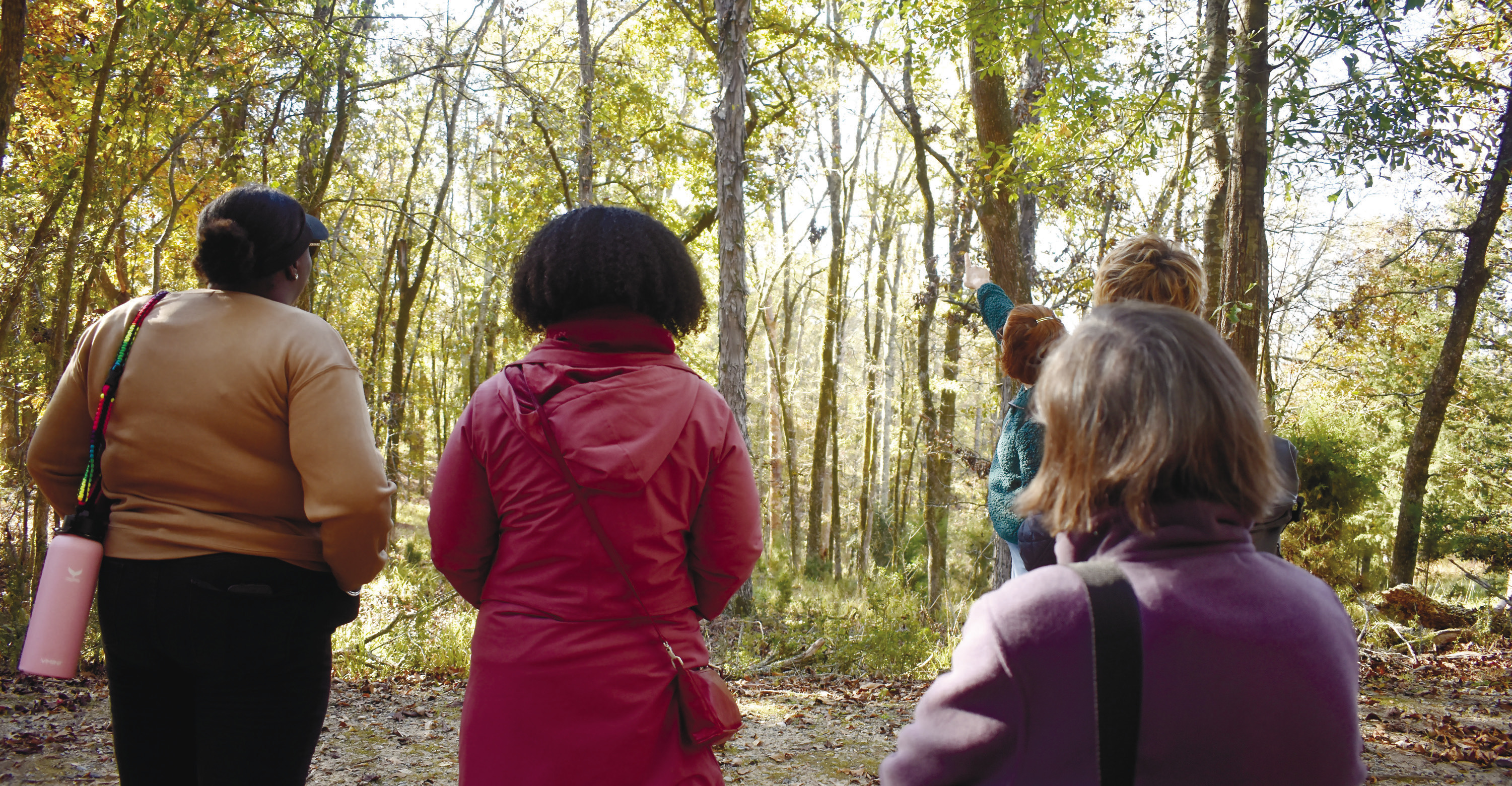
Fall Foraging on the Farm led attendees around the former dairy farm where American author Flannery O’Connor lived a portion of her life. She wrote the majority of her novels and short stories inspired by the farm and its surroundings. Academic Outreach, another department within the School of Continuing and Professional Studies, Director Ruth Eilers led the class.
“Originally Jacob Ryals and I were meant to teach the class together, but he was unable to make it.
However, he and I walked the grounds before the class date and discussed plants and fungi present,” said Eilers. “For example, he is more of an expert on mushrooms, so discussion of that topic was through the notes he left me.”
The class began at 9 a.m. with a small group gathering around a table with leaves and materials organized across it.
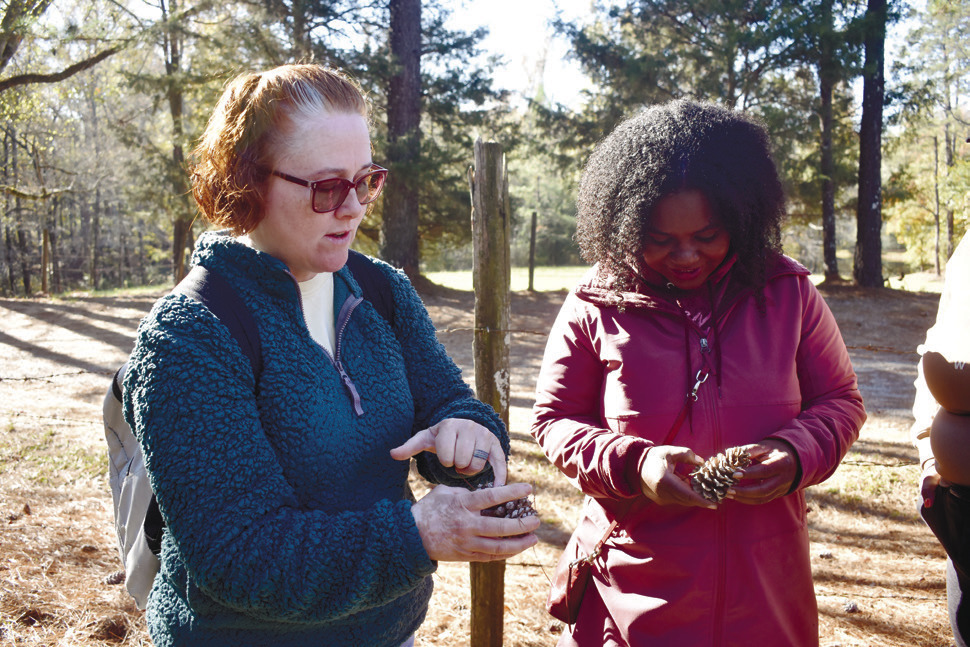
Attendees learned the basics of identifying trees by their bark and leaves, what to look out for on the excursion, and discussed native versus non-native flora around the farm.
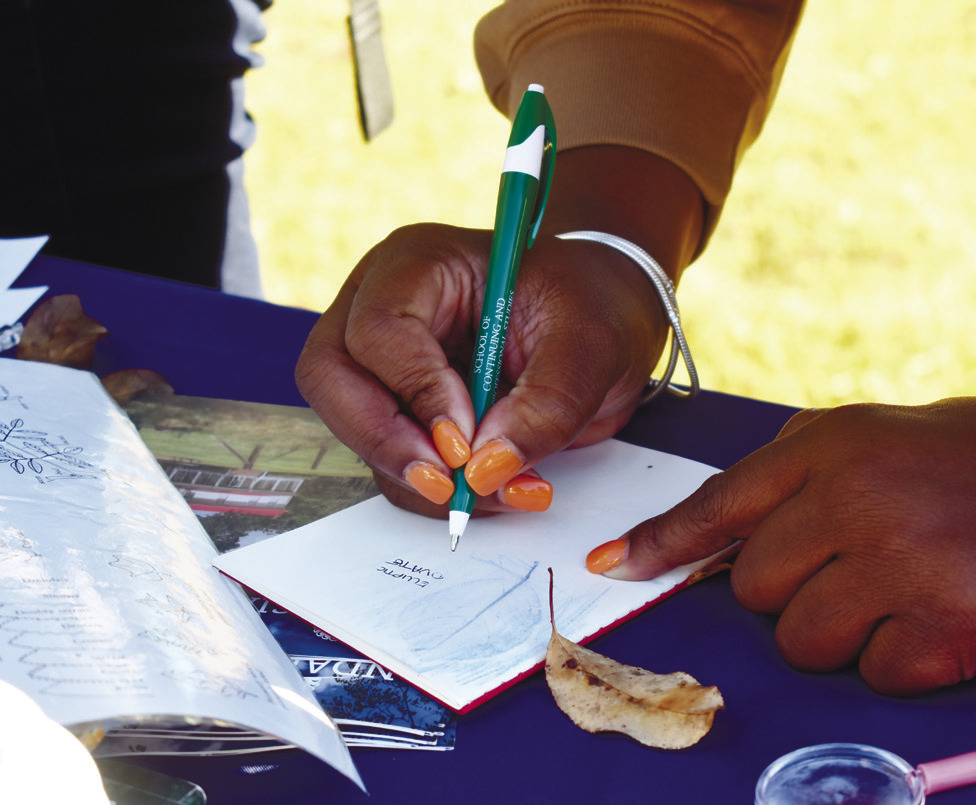
Before setting off, each participant practiced leaf rubbings with the leaves on the table and identified different aspects of the leaf to determine what type of tree it was from.
“Leaf rubbings are something that everyone can do at home and are a great way to create both a memento of your excursion and a record of the local flora,” said Eilers.
“The best way to do this is to use crayons and rub with a stronger grip to define the lines and veins of each leaf. Always be careful of what leaves you are picking up though if they are picked off the ground.”
As the excursion began, the group walked from the interpretive center around the home, past the peafowl, and then down to the pond identifying trees, trying edible plants, learning about the benefits of controlled burns and foraging, and the origins of old wive’s tales.
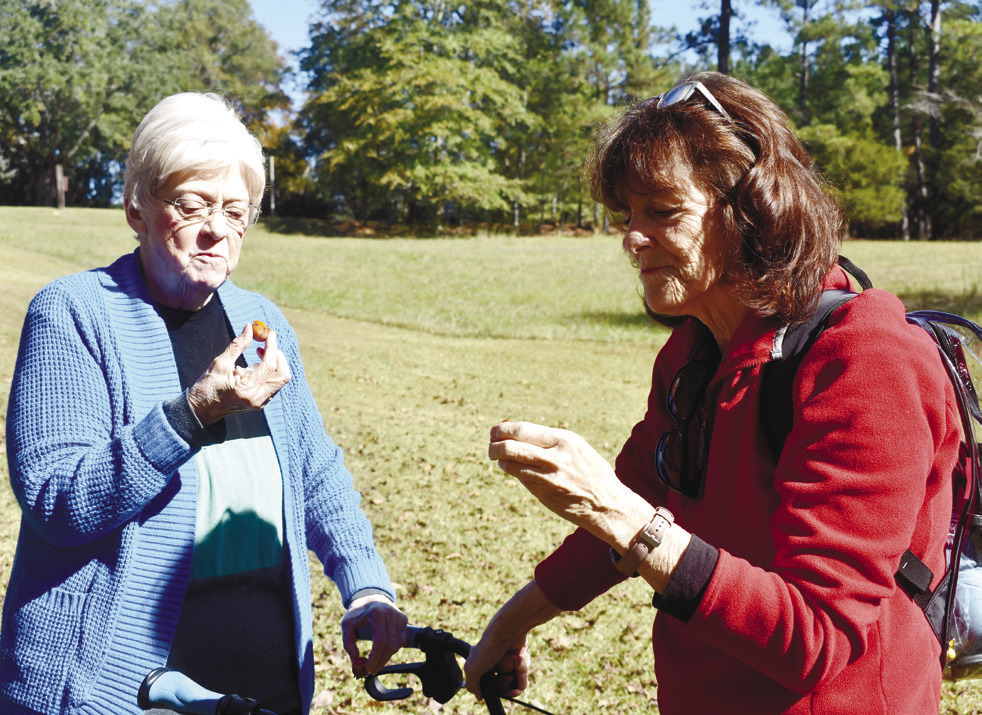
The excursion concluded at the pond where attendees tried two different types of sourdough, drank pine needle tea, and tested out an old wive’s tale predicting the winter based on persimmon seeds.
“A lot of tales originate from how a plant grows, blooms, or things people observed from the seeds or its life cycle,” said Eilers. “Nowadays it can still be hard to prove or deny these tales, but we can identify what likely originated the story and see it for ourselves. Just like when cracking the persimmon seeds, we saw five spoons that according to the tale indicate a strong and harsh winter.
But there was also the possibility of seeing a fork or a knife that would indicate a different type of winter. We will just have to wait and see if our prediction was correct.”
Attendees of the event were a mix of newcomers and participants of Foraging with Friends.
According to Finney, another foraging event or something similar may be hosted again next spring.
If anyone is interested in planning a program or looking for a specific class, contact Continuing and Professional Education at continiuing@gcsu.edu or call 478-445-5277.